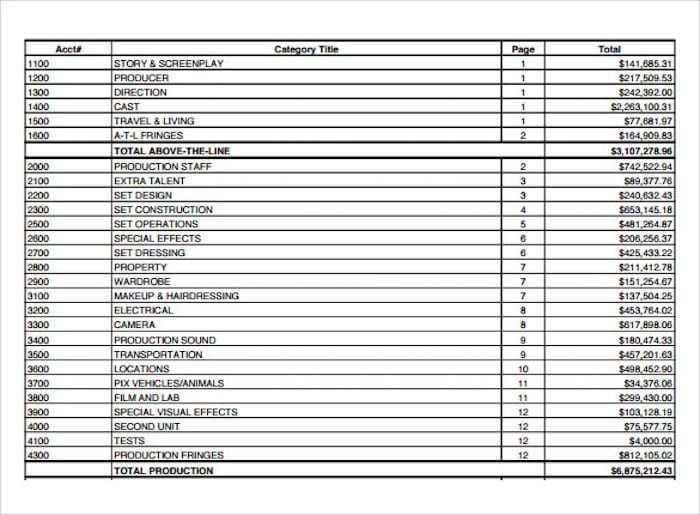
Reader Question: Could you break down the numbers related to a movie’s budget?
From John Agerholm:
Scott,
I have 2 questions (sorry), and they’re both finance related (double sorry). But I’ve always wondered about them, they’re important, and you did ask. So . . .
Let’s use the 2011 film HUGO as our example.
The critical acclaim for HUGO was wonderful.
But financially . . .
Source = BoxOfficeMojo:
— — — — — — — — — — — —
HUGO’s Budget = $ 170 M
==========================
HUGO’s Domestic B.O. = $ 74 M
HUGO’S Foreign B.O. = $ 112 M
— — — — — — — — — — — — — — —
HUGO’S Total B.O. = $ 186 M
==========================
(let’s ignore any side revenues like toys, games, kid’s clothes, or any other licensing money later)
— — — — — — — — — — — — — -
*** Question # 1) It appears to me that Hugo made a little money = $ 16 M net.
($ 186 Revenue — $ 170 Cost).
BUT — what about the Marketing Costs involved? When they list “Budget”, is that only the studio’s Production Costs? If yes, and if the marketing costs of ads, posters, TV commercials, etc, exceeded $ 16 M, then it’s a different story. Yes?
In Moscow (at least) they absolutely plaster the streets with movie posters — on walls; lighted sign boards; bus stops; kiosks; etc. Those placements cost money.
— — — — — — — — — — — — — -
*** Question # 2) regarding “Budget”, that money comes out of the studio’s accounts by corporate checks, or by EFT wires. So $ 170 = $ 170. Let’s call that “a good number”.
But for “Total Box Office”, does that $ 186 M represent what the studio gets back from ticket sales?
(If Yes, then we could easily compare “apples-to-apples”).
Or, is “Total Box Office” what the theatre operators took in at the cashier window? If Total Box Office represents this, then the studio would get less, I would imagine. Do the theatre operators pay rent for these films, or do they share some contracted % with the studios?
Thankyouverymuch.
No one ever discusses this.(Just not sexy, I guess).
I don’t claim to be an expert on such matters, so any GITS reader who is, please chime in. Here’s my two cents.
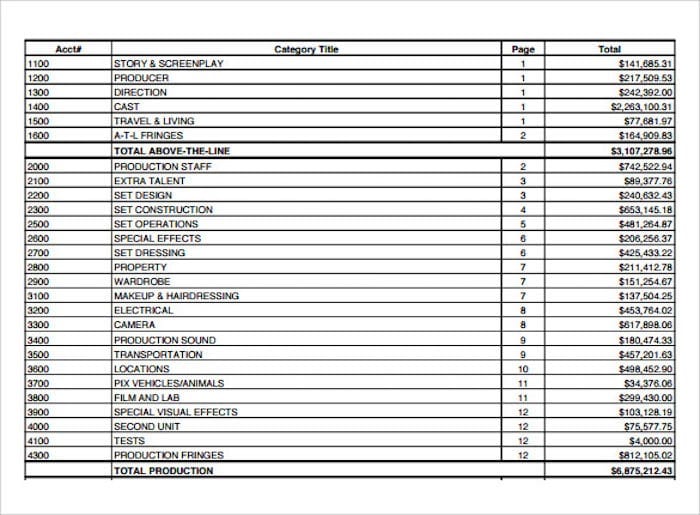
First thing: You can’t compare box office to production budget as an apples-to-apples thing because as you suggest there are additional costs. The largest is typically called P&A which stands for Prints & Advertising. Since movies are digital nowadays, I’m not even sure if the term “Prints” is still relevant although there must still be some costs associated with delivering a digital version of a movie to exhibitors.
It’s the Advertising — or marketing costs — which blow a hole through studio expenditures. I don’t have the 2011 figure at my fingertips, but I seem to remember from a few years back, the average cost of marketing a major studio movie was on the order of $50M.
Then there is what we may call ‘creative accounting practices.’ For example, if a major studio is funding a movie, generally they will create a holding company / loan-out corporation for that production. The studio will then lend money to cover the costs of production. But wait. The studio will also charge interest on that loan. That is an expense tied to production. Yet it’s actually income to the studio.
What this means is when a movie gets into so-called ‘profit’ is an enigma wrapped in a mystery shrouded in bafflement.
In terms of total box office, that is all the revenue generated by movie theater ticket sales. Nowadays you really have to take into account international performance as that represents around 70% of revenues. Of course, there are a whole host of ancillary revenue streams: DVD, cable, VOD, and so on.
Bottom line: When I was working on Alaska for Castle Rock, Alan Horn said that they looked at expenditures related to making movies this way: For every dollar they spent on acquiring, developing, producing, marketing and distributing a movie, they needed three dollars back just to break even. Since he went on to run Warner Bros. and now is at Disney, I think we’re safe in taking his word for it.
What this means for a screenwriter is when we put on our producer’s hat and assess a script we write, if we think it may cost $15–20M to produce, which may not seem like much in comparison to a $200M+ budgeted movie like Marvel’s The Avengers, still our ‘little’ movie will have to generate $45–60M in revenues just to break even. That is one of the best tests you can use, even down to when you come up with story concepts. Do you honestly believe this idea can spark enough interest in moviegoers to generate 3x1 box office-to-cost dollar?
Anybody else have any insight into these matters, please weigh in.
Comment Archive