Interview — Part 5: Sean Hartofilis (“Beach Pillows”)
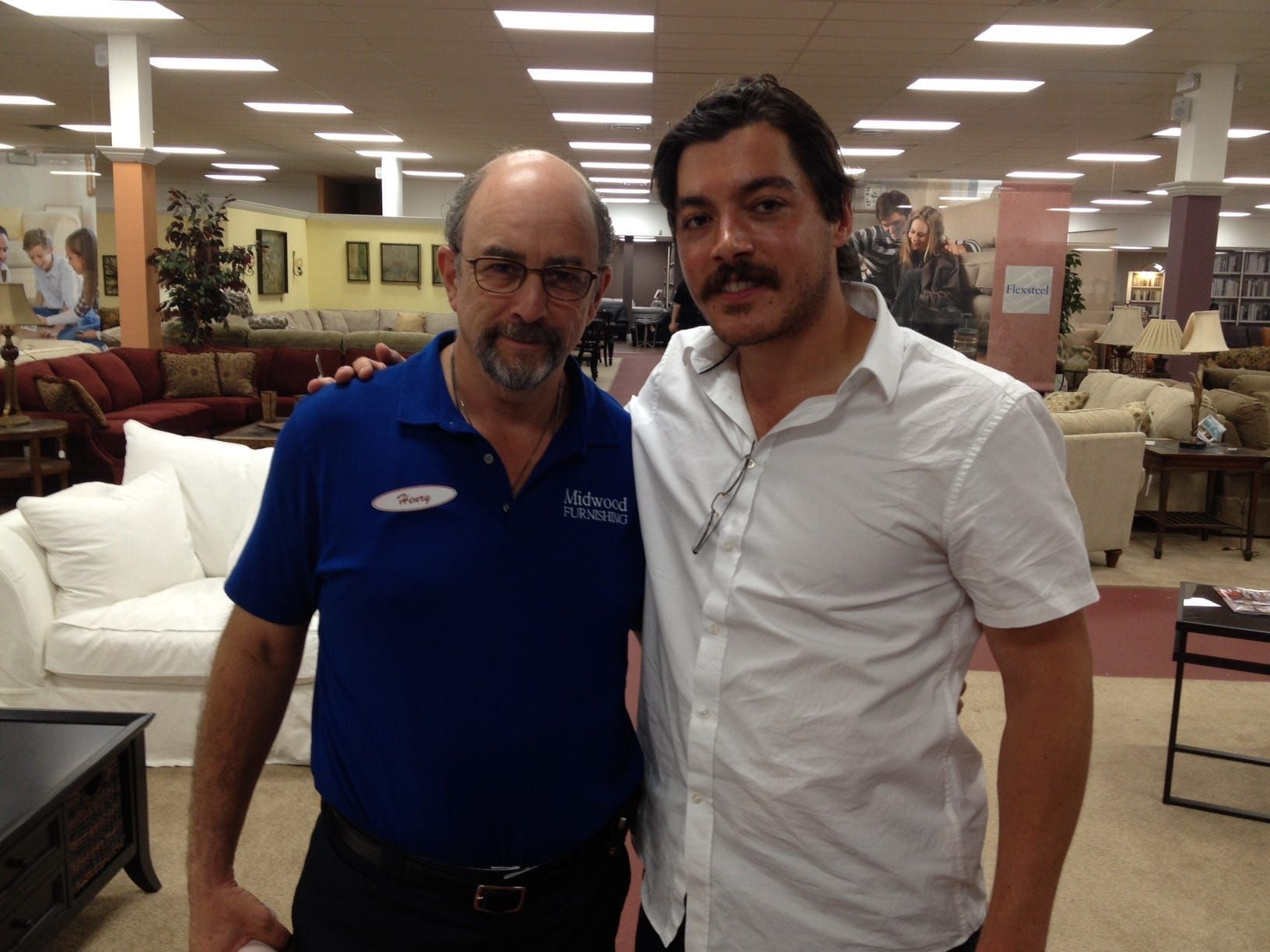
From Ivy League lacrosse star to writer-director of the new indie film Beach Pillows starring Geoffrey Arend, Vincent Kartheiser, Annette O’Toole, and Richard Schiff, the career path of Sean Hartofilis has been an interesting one. Recently I spoke with Sean about life as an indie filmmaker and Beach Pillows which has just been released on iTunes, Amazon and other digital platforms.
In Part 5, Sean reflects on what some of what he learned in making an indie film and what advice he has for aspiring filmmakers.
Scott: The movie comes out on Video On Demand and iTunes in January. Any further plans for it?
Sean: It’s going to be On Demand, Amazon, iTunes, and assorted online platforms, which I think makes it available to most people in the world with a TV or computer, which is exciting. But I’ve only licensed those digital or streaming rights. There’s still an opportunity, as least from a legal standpoint, for a theatrical run or eventual DVD release. Hopefully we’ll have some opportunities.
For a movie of this scale, this VOD model provides such a great opportunity because we don’t have to spend a ton of money to distribute it. Whereas even a limited theatrical release in New York and LA, that would cost thousands of dollars to just put it in theaters, or to market it in a way that would make any sense to put it in a theater.
Right now I’m just trying to create awareness, through social media and other platforms that I’m honestly unfamiliar with but excited to learn about, because I don’t want to rest on my laurels after we’ve come this far.
Scott: It’s similar in the same sort of framework that Edward Burns has been doing with these micro‑budget movies. He just bypasses theatrical and releases them on DVD, VOD, everything on the same day.
Sean: He’s a New York filmmaker. I couldn’t say, because I haven’t been involved with any of his productions, but I think he’s made a few of these new movies for as little as 20 grand.
Scott: 20 grand, right.
Sean: That’s great. He’s got a built‑in audience so people will check those out. I think that’s smart. The challenge for me is just creating awareness because I don’t have a brand, per se. I know Vincent and Mad Men have a lot of fans, Richard and Geoffrey have a lot of fans. People love Annette’s work. I mean, she was one of a few bombshells when I was growing up.
Anyway, it’s just about making people aware that this exists, because I think people will enjoy it and relate to it. We’ll see.
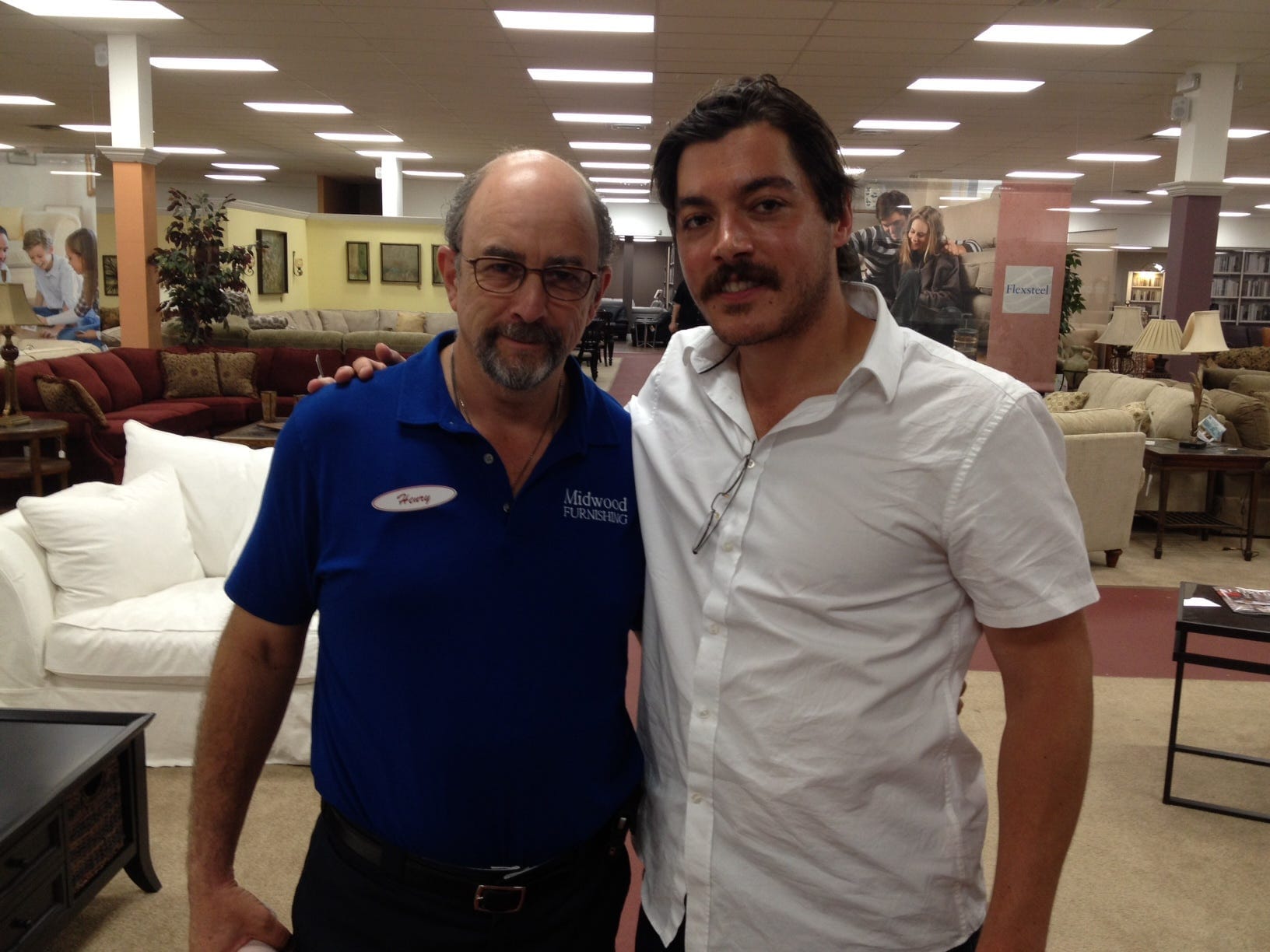
Richard Schiff, Sean Hartofilis
Scott: What’s next for you?
Sean: Just continue to get the word out. On our Facebook and Twitter and YouTube, again this is new territory for me, but I’m trying to release production stills, storyboards, set photos, songs, just interesting stuff that I’m not sure movies typically roll out prior to release, but that hopefully engages people and excites them about the process.
We’re definitely open to any press opportunities or chances to discuss the film. We believe in it and want people to know about it.
I’m excited to get this movie out there and see what people think. I definitely have more stories I want to tell, scripts written that I want to make. I have a pretty good idea of what order I want to make them in. But we have to see what this does and what opportunities result. If there are any folks with a few million dollars in the Go Into the Story audience, in addition to my fellow starving artists, let’s make a movie.
This has been — again, we discussed this — a decade‑long journey bringing this to people. I’m hoping the next one doesn’t take so long, because I’m ready to go, but the financing part of it can obviously be tricky.
My wife and I took a lot of personal risk. If I’m being honest, I have a movie coming out and can’t even afford to pay our cable bill right now.
I’ve worked in production in New York and embrace any of those opportunities and new ones. But hopefully I can just get this going and get ready to make the next movie.
Hopefully people hear mine as a unique voice, one that they appreciate. I like artists that have a signature style or spirit. But they’re not all going to be about a couple of guys on Long Island lying around a pool. There are bigger ideas, different settings and characters and stories. I’m excited to tell them, and hopefully I will.
Scott: Finally, what advice can you offer to aspiring filmmakers about learning the craft and breaking into the business?
Sean: First of all, I don’t think writing is as much an act as a way of being. Or at least not for me to be effective. It’s not just sitting down at your desk for a few hours and expecting something to happen. It’s the living and thinking that makes the writing. I think about these stories constantly so that when I sit down, I’m ready to go. I’m excited. I can step into the world of the story and experience it with the characters, or as the characters. I can get in and out of situations and solve problems and have fun, because I at least know where I am, if not where I’m going. Sitting down with an empty head is why people get blocked. You need a seed to grow. Fill your head…fill you heart…then sit down. And, yes, at some point, you’ve got to sit down. But I think you’ll find it so much easier to sit down if you’re always thinking about it. Unless you’re Thomas Wolfe. I think he wrote on top of his fridge.
Other than that, watch and read and write as much as you can, and make sure you get your stuff to the point where people are responding well to it. Whether that’s people who can do something with it or just friends and trusted sounding boards. You want your stuff to be good, because it’s going to be a lot of time and heartache for anybody to sell material that isn’t really coming across. It’s hard to enough to sell stuff that works.
There might be some kind of innate talent that plays a factor, but it’s not the talent that separates people; it’s the work and the want to do it. This isn’t groundbreaking stuff. There are a lot of people with talent. What can separate you, make you great, is how much you’re willing to put into it.
I played lacrosse in college at a pretty high level. In addition to academic pursuits, where I focused a lot of time and effort throughout my life, I was learning to play lacrosse maybe from the age of 11 to 21. I spent a lot of time on it and got good at it. This last decade plus has been just focused on telling stories and making films and learning as much as I can about that. I feel like I’ve gotten pretty good. And I’m just going to keep working.
When I lived out in LA for three years, I basically locked myself in a shed with a television, a library card, and went to this place Rocket Video every day and just rented old movies. I pored through filmmakers’ catalogs and got a sense of what I responded to, how these movies were made and put together, read as much literature on filmmaking as I could. I continued to make movies and work on all these things so that I became confident in my faculties. I don’t think anybody does it without a lot of work and preparation. I would say that’s it, and I guess it’s nothing new. I ‘m sure most of the people reading your site are very much of that mindset, and are dedicated film fans and filmmakers.
The next part, from the point of view of getting a film made, is what I discussed earlier. If you’re a first‑timer, not many people are Wes Anderson and get their movie produced by James L. Brooks. As deserving as Wes Anderson was of that and as wonderful as something like Bottle Rocket turned out to be, those opportunities, irrespective of your talent, I’m not sure those really exist anymore. And regardless, he created that opportunity himself by writing a script and making a short.
What you have to do is develop your craft to the point where you feel like you’ve written something great that you can tell on a small budget. That’s another reason I wanted to tell this kind of story, because these locations are a lot of the locations that inspired the story. These are friends’ houses and pools. A lot of these clothes are mine. We shot in my apartment in Astoria, stuff like that, so that you can make it inexpensively, but also authentically and with freedom, and, again, attach actors that will give you an opportunity to raise some money.
For me, I guess it was very similar to the Coen brothers’ model of legend. It was friends, family, doctors, bankers, guys I went to school with: they funded the movie. I think we did great with what they gave us, and hopefully we can get some of it back for them.
For Part 1, go here.
Part 2, here.
Part 3, here.
Part 4, here.
Beach Pillows is available on iTunes here and on Amazon here.
Comment Archive