Reader Question: What does it mean to tell a “simple story”?
Question from Nicola:
I’ve been thinking about this advice/idea to “tell a simple story with complex characters — not the other way round”. I find that very attractive. Initially I thought the idea would refer to a simple, clear story goal and we get to see all sides of the character as he moves towards it. And I still believe that’s its key meaning. However, the complex character part is straightforward, I get that. But the simple story? What, in its execution, makes a story simple? I dug around the net but nothing really came up. It seems that some people think subplots and many twists make a story too complex and complicated. I doubt that’s the answer. So maybe you could take that topic on?
Interesting question. First, let’s acknowledge this fact: Simple stories can be great. Complex stories can be great. There’s no rule, for or against. No formula either. Stories come in every shape and size, complexity and simplicity, and if they work… they work. And if they don’t? Well, we all can figure that one out!
That said, if you aspire to succeed as a Hollywood screenwriter, there is some value in this advice: A simple story with complex characters. Why?
A simple story almost inevitably is tied to the underlying story concept. The more concise and/or focused it is, the easier to market the movie. And with a general populace inundated by media, oftentimes it is the simplicity of a story’s concept that enables it to cut through the noise. The movie is about this idea, this central conceit. The fact that idea takes a few seconds to communicate can make all the difference in eliciting a widespread consumer response to an ad campaign versus a more complicated story which requires more attention and focus from potential moviegoers.
In my online class “Pixar and the Craft of Storytelling,” one of the approaches to narrative the filmmakers there consistently use is what I call Small Story / Substantial Saga. That is their story concepts tend to have broad, sweeping plots, but against this backdrop, there is always an intimate, personal storyline involving (generally) two characters.
In Finding Nemo, Marlin goes on a harrowing quest across the ocean in a desperate attempt to locate his lost son Nemo. Small story: Marlin’s relationship with Dory, the latter a perfect foil to compel Marlin to move from a fear-based state (anxiety over the Future) by learning to embrace the randomness of the Present.
In Wall-E, the little robot goes on an interstellar journey that involves the future of the planet Earth. Small story: Wall-e’s relationship with Eve, which enables Wall-E to find an Attractor with whom to share contact and a meaningful relationship.
In Up, Carl goes on an adventure to South America to fulfill a promise made to his deceased wife, only to find himself ensnared in a dangerous battle to save the life of a rare exotic bird. Small story: Carl’s relationship with Russell (and to a lesser degree Dug), which allows Carl to find a new ‘family’ thereby giving him a new lease on life, symbolically Resurrection.
So as I compose this off the top of my head, the quick answer re a ‘simple story’ is two-fold: The story concept itself should have a concise focus to it, ideally a high-concept; The story should have a specific, personal dimension to it.
Re your thought about “some people think subplots and many twists make a story too complex and complicated,” that just depends upon the execution. Every movie, at least in the traditional Hollywood mode, is going to have subplots. My working theory is Subplot = Relationship, basically every single primary relationship, especially with the Protagonist is a subplot and must have its own point, reason for existence, and Beginning, Middle and End. And if the writer does his/her job and ties each of those subplots to the Protagonist’s journey, both Physical and Psychological, they won’t confuse or complicate matters, rather the subplots will enhance the narrative, providing depth of meaning.
Same with twists, if they’re done well. Apart from The Big Twist at the end a la Malcolm Crowe discovering he is dead in The Sixth Sense, most plot twists are going to be Obstacles, Roadblocks and Reversals. And those are a common requirement of any good mainstream commercial movie. As writers, we want to create twists for our Protagonist as that creates more tension and conflict, makes the journey more difficult and in general makes for a more entertaining story.
Again it all comes down to execution.
One additional note: This is why so many Hollywood movies feature a single Protagonist. If a writer can drill down into the character and determine what is at work in the psyche — Conscious Goal, Unconscious Goal, Disunity, Backstory — that dictates the arc of the ensuing journey, both Physical and Psychological. That in and of itself can lead to the emergence of a ‘simple’ story, yet one with a complex emotional life and multidimensional characters.
Anytime a writer opts to write a script beyond the scope of a Buddy Story, which is really about the evolution of one ‘couple’, the writer sets him/herself up for a more complicated narrative. Nothing wrong with that, it just is what it is by virtue of having to pay attention to multiple characters with multiple backstories and multiple agendas.
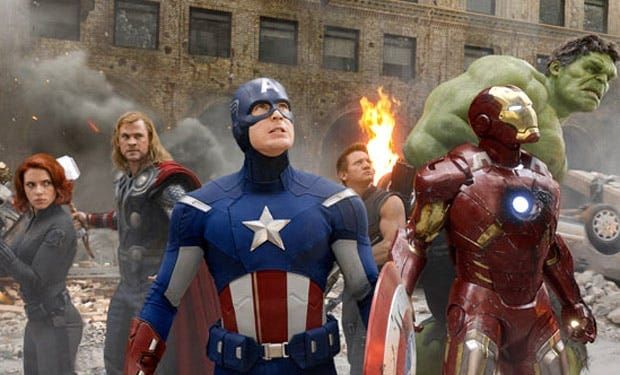
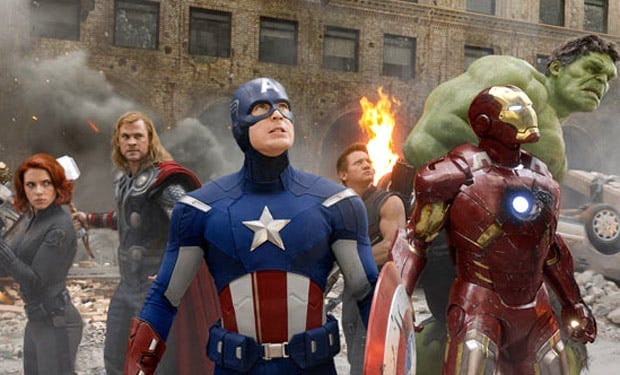
Even there, it’s possible to benefit from a ‘small’ story. Consider Marvel’s The Avengers. Joss Whedon expertly wove together the individual subplots of all those superhero characters — Tony Stark / Iron Man, Steve Rogers / Captain America, Bruce Banner / The Hulk, Thor, Natasha Romanoff / Black Widow, Clint Barton / Hawkeye — each with their own Beginning, Middle and End, into a an overall narrative bound together by a simple dynamic: A dysfunctional group becoming a functional ‘family’.
Final thought: Having a ‘simple’ story does not necessarily translate into a simplistic story. That is where the complexity of the characters comes into play which in turn can lead to twists and turns in the Plot as well as nuances in the characters interrelationships.
How about you, readers? What are your thoughts about how to tell a ‘simple story’?
Comment Archive