Interview: Stephany Folsom (2013 Black List) — Part 3
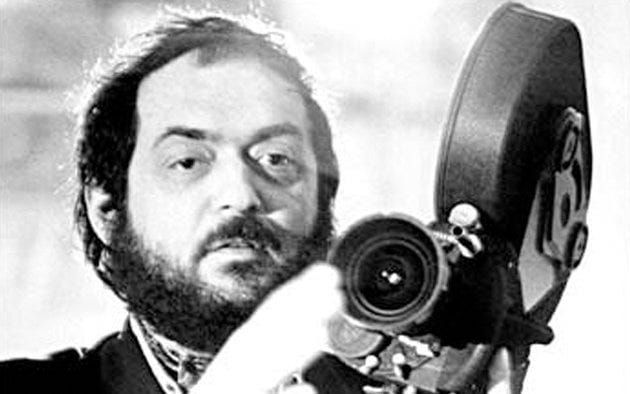
I’m a big Stanley Kubrick fan and Dr. Strangelove or: How I Learned to Stop Worrying and Love the Bomb is my favorite satire of all time. So when I saw this script make the 2013 Black List — “1969: A Space Odyssey or: How Kubrick Learned to Stop Worrying and Land on the Moon” — I knew then and there I had to interview its writer. That turns out to be Stephany Folsom, and we had an informative and fun one hour plus conversation.
Today in Part 3, Stephany describes how she approached crafting the character of Stanley Kubrick and how much fun it was to write his dialogue:
Scott: You have two parallel storylines. One is the filming of this fake lunar landing, and the other is over in the Soviet Union with some events going on over there.
I don’t want to get into the details and give away the plot, but I’m wondering, from a writing standpoint, if part of your thought process in creating that structure was you’re able to cross‑cut between the two and create a visual representation of the space race. It’s like you’re adding that tension to the story.
Stephany: That is exactly what I was thinking. When I first started thinking about ways to tell the story, I didn’t want to make it solely about filming a fake moon landing, because at the end of the day, what are the stakes in finishing a film? There needed to be more at risk. I really wanted to make it clear how close our country came to not landing on the moon.
I really wanted drive home, “Hey, if we don’t land on the moon first, we’re not going to win the Cold War.” I wanted to make it very clear the stakes were high, so that if Barbara and Kubrick can’t get this movie made, it’s going to be detrimental to the entire United States, not just, “Oh, shucks, we didn’t get the film made.”
Scott: I’ve read where you describe the story as a drama with some humor, but I thought the script was really quite funny. And a big part of the humor for me was conceptual in nature.
Broadly speaking, it’s the idea of putting this right brain creative type, Kubrick, smack in the middle of all these left brain science types, NASA. It’s such a fun idea, and you milk it really well in the script. Was that something you were consciously trying to mine or did those dynamics more or less emerge organically?
Stephany: I think it was a little bit of both. For the movie to be taken seriously, it had to be handled with a little bit of humor. Without acknowledging the absurdity of a fake moon landing, you don’t buy into any of the stakes or care about the mission. The humor was done on purpose as kind of a wink-wink, yes, we know this is a little absurd, but come with us on this journey.
Scott: I laughed out loud several times because Kubrick has some really funny sides. One is such a tiny thing, but it caught my attention.
Kubrick is insisting on bringing his assistant, Kara. But she’s nine months pregnant and in fact, goes into labor while they’re filming a lunar landing and she’s rushed to a hospital.
Later, Barbara shows up on the set and she finds Kara there. She turns to Kubrick and says, “Kara’s back. What did she have?” Kubrick responds, “A child,” which is such a tiny little thing, but it’s so indicative, I thought, of the type of obsessive myopia of his character. He couldn’t have bothered to say “a boy” or “a girl,” he just says, “a child.” There’s a lot of these wonderful sides of dialogue from Kubrick’s character. I’m just imagining, you must have had a lot of fun writing him.
Stephany: I had a blast writing him. In my research, I got the impression Kubrick was very aware of the persona he was creating. I felt like his every move was calculated, and a lot of his unorthodox behavior on set was so he could manipulate situations, and get his crew and cast to deliver the best film possible. He’s just a great, layered personality to play with.
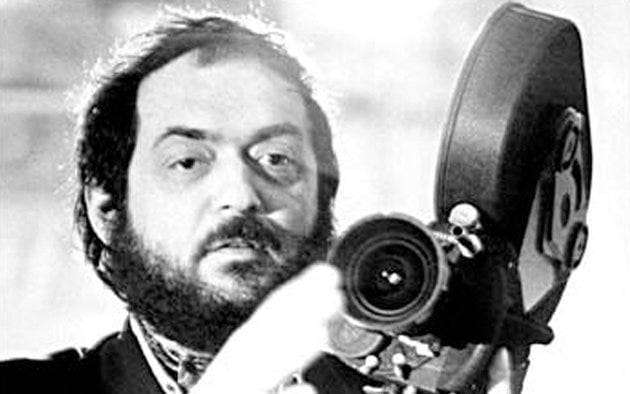
Stanley Kubrick
Scott: There were some films that came into my mind as I was reading your script. For example, the fake lunar landing recalls the plot of Argo where they created a fictional movie project to help get the trapped Canadian embassy workers out of Iran. I was wondering, were you at all inspired by Argo?
Stephany: Completely. I watched Argo knowing how the story ended in real life and the movie still put me at the edge of my seat.
Being able to create that kind of anticipation, when you know how the real story ends, takes very careful, careful pacing and plotting. Argo was definitely an inspiration on how that can be done well.
Scott: I’m guessing Argo, because it was hugely successful, that can only help your project.
Stephany: Yeah. So far, so good.
Scott: There are a few moments in the script where Kubrick inserts himself into history. For example, the origin of the line “the eagle has landed.” That reminded me of Forrest Gump impacting history. Were you cognizant of that dynamic?
Stephany: Not at all. I must have done that subconsciously.
Scott: Another movie that came to mind was Shakespeare In Love. Will Shakespeare is constantly seeing and hearing things at random that later ended up in his plays. In your script, there are a couple moments like that.
For example, at one point, Kubrick tells Barbara, “All work and no play will make you very dull,” which is, of course, the famous bit of business from later on with The Shining.
Stephany: I layered in references to Kubrick’s work throughout the script, but I tried to be subtle. It’s a fine line to walk between clever and creating an eye roll moment.
In Part 4, Stephany describes what it was like to discover her script had made the 2013 Black List and reveals which powerhouse Hollywood producers are now attached to “1969: A Space Odyssey”.
For Part 1 of the interview, go here.
Part 2, here.
Stephany is represented by Verve and Kaplan/Perrone.
Twitter: @StephanyFolsom.
Comment Archive