Interview (Part 2): Chris Sparling
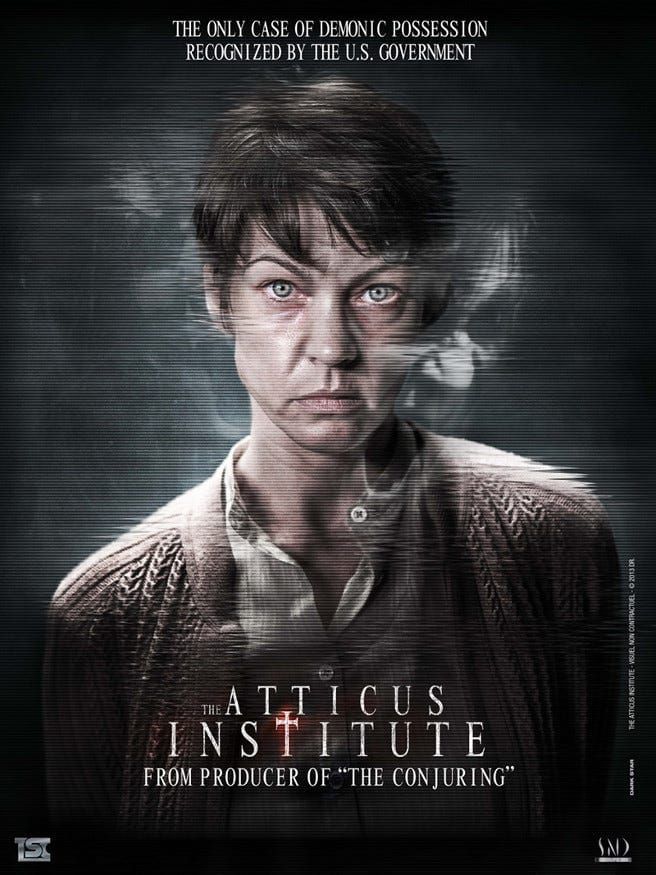
Variety recently named Chris Sparling as one of their 10 Screenwriters to Watch. With good reason. Chris made his first splash in the business with his script for the movie Buried, starring Ryan Reynolds and followed that up with another contained thriller ATM. He has multiple projects in development and two movies slated for release: The Sea of Trees, starring Matthew McConaughey, Naomi Watts and Ken Wattanabe, directed by Gus Van Sant, and The Atticus Institute, written and directed by Chris. It comes out on iTunes on January 9, then on VOD and Blu-Ray/DVD on January 20.
Chris and I had an in-depth interview about how he broke into the business, analyzing some of his movies, and his thoughts on the craft of screenwriting. I will be featuring the interview throughout the week.
Today in Part 2, Chris discusses how Buried went from script to movie and the genesis of his movie The Atticus Institute:
Scott: So you not only took that original idea, which was a horror‑conceit, and genre‑bent it into more of a drama‑thriller. You also geo‑bent it, switching locations to Iraq.
Chris: Yeah. And so I was going to do that movie. I was going to do it for five grand. Then, one night, I sent the script to the person who’d eventually become my manager. I had sent him the feature I had made, three years prior, and he liked that movie enough to at least start a dialogue. Well enough to say, “Hey, I liked it. What else you’re working on?”
What happened was, I just continued to write scripts after that, for about three or four years, and send him those scripts. He would like them well enough, apparently, but there were never anything that clicked in a significant enough way for him to take me on as a client.
So now here I was, about to make my five thousand dollar version of BURIED, and for whatever reason I never sent him the script. It was literally the only script I’d written and did not send him. I figured he’d have no interest in my “tiny, guy in a box” movie. But, six months after the script was done, I finally sent it to him, and he surprisingly called me two days later.
He asked me, “What are you doing with the script? I loved it.” I was like, “Well, I was planning on making it about a month from now.” He asked, “Would you be willing to not direct it and instead go out with it as a spec?” And of course I said, “Absolutely. I’m dying here, for 10 years, trying to catch a break!”
So that’s what happened. Instead of me making the five thousand dollar version of the movie, I ended up getting signed by a manager who then helped get me an agent and an attorney, and then we went out wide with the script — which opened a ton of doors for my career.
Scott: The script goes out, gets you a lot of attention. Eventually, it attracts Rodrigo Cortes, who directs it. Then it debuts at Sundance. Were you there for that?
Chris: Yeah, I was there. It was an amazing experience. I was also in Barcelona for a good portion of the shoot. Rodrigo and I had a really, really great working relationship. We’re currently working together again on something else, actually. We became fast friends. I was very lucky he wanted to make the movie. He’s a huge talent.
Scott: I’d like to talk about THE ATTICUS INSTITUTE. You didn’t get a chance to direct BURIED, but you did direct this new movie that comes out on iTunes January 9th, 2015.
Chris: That’s right, and then on VOD and Blue-Ray/DVD on January 20th.
Scott: I’d like to dig into that story if we could, because I really enjoyed the script. Here’s an IMDb plot summary:
“In the fall of 1976, a small psychology lab in Pennsylvania became the unwitting home to the only government‑confirmed case of possession. The details of the inexplicable events that occurred are being made public after remaining classified for nearly 40 years.”
What was the inspiration for THE ATTICUS INSTITUTE?
Chris: A couple things. After BURIED, I had a movie come out that I wrote, called ATM, and then I had a couple scripts that were looking good in terms of their chances of getting made. I was watching my career progress, which is the goal.
I was getting to a place where I began thinking more about directing. I started saying to my reps, “Let’s have discussions about me maybe directing this next one.” The conversations were real, as were the conversations with producers. Everyone was legitimately open to it, which was awesome.
But what I kept finding was that, as the movie itself would get closer to becoming real, I kept running into the first‑time director roadblock in terms of securing financing and everything else. Yes, I had directed a movie before, but because it wasn’t good — it was basically my film school, my learning on the job — it did more harm than good in that way. Naturally, you want to do what’s best for your script; you want it to get made. You don’t want to start creating obstacles, especially if you are the obstacle. So I stepped aside.
I eventually realized that if I ever wanted to direct a movie, I first had to direct a movie. So, I conceived of an idea I felt was, from a business perspective, difficult to say no to, be it from a producer and/or financier.
It’s in a genre that historically does pretty well. Plus, you typically can make those kind of movies inexpensively. You don’t have to rely on A‑list talent for them to succeed, and your fan base is loyal. You’re talking about the genre fan base. Those are probably among the most loyal movie fans out there.
That’s why I landed on that, as opposed to trying to go out and make a drama or a comedy or something like that, which really isn’t my wheelhouse anyway, but still. It was that, that was how I came to the idea of making the film the way I did, in that particular style and everything else.
But the idea itself, the idea of having the government step in with a possessed person and attempting to weaponize them — that’s actually a missing piece from that description you read. That’s a huge part of the movie — that the Defense Department comes in to weaponize this entity, this demon, if you will.
Before that, long before that, I always had an idea for a film, or not even a film, just a thought, really, that with all these stories of possession that you hear, be it in books or movies, that are supposedly true… I’m not saying they are or they aren’t. I have no idea. Anyway, what inevitably tipped me in the direction of “I guess it’s not real,” is the fact that, if there really were people out there, possessed people who have the ability to do the impossible things that possessed people supposedly can do — like levitate things and read minds, there’s no way the government would allow that person to just roam free. That person, or whatever is inside that person, is a threat to national security. It’s almost like they’re an X‑Men mutant.
So, it became the quintessential screenwriting question of, “What if…?” What if the government did step in? What if there was an incident, and there was a case where the government stepped in because this time, it actually was real? What would happen? What would they attempt to do? And once they confirmed it, would they just be content with confirming it, or would they try to go further? I posit that, no, they would attempt to weaponize it. This is a powerful, powerful force that they can use to their advantage, strategically and militarily.
Scott: It’s like you’ve taken this familiar conceit, the idea of people being possessed by demons, something we’ve seen many times before. But just like with BURIED, which is taking a contained thriller and putting the emphasis on “contained,” like literally — guy stuck in a coffin. With THE ATTICUS INSTITUTE, you found a unique angle, which is, OK, so what if we could get the government, basically, taking control of a possessed person who’s got supernatural powers, what would the Powers That Be do with that.
Chris: I’ve always been fascinated with the scientific approach to things that are typically attributed to spirituality. We talked earlier about watching movies as a young person and everything else.
The first one that jumps to mind is POLTERGEIST. I always thought it was so cool in the scenes where you see the high‑tech instruments the scientists had, measuring this and that. I guess that’s a little more common now because of those shows you see on TV, like “Ghost Hunters” and stuff like that.
But back then, it was like, “Wow, they’re really utilizing the scientific method to see if this is real.” THE ENTITY did the same thing in a way, using a scientific approach to explain the supernatural.
To me, that was a fascinating take, and so that’s what I tried to do here.
To read Part 1 of the interview, go here.
Tomorrow in Part 3, Chris digs into the two lead characters in The Atticus Institute and one of the key themes of the movie: “Possess the possession”.
Chris is repped by UTA and Kaplan / Perrone Entertainment.
Twitter: @chrissparling.