One Reason for Pixar’s Success: Special Subcultures
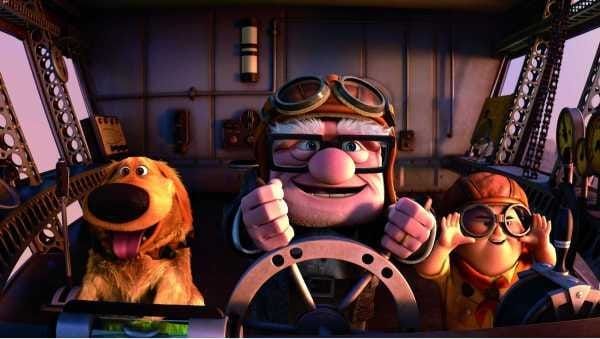
I’m three days into the latest session of Pixar and the Craft of Storytelling and once again, diving into the company’s 14 movies with dozens of writers who have enrolled in the class is proving to be a fantastic experience. For example, here is an excerpt from Lecture 3: Special Subculture, one of 7 lectures I wrote for the class:
Every Pixar movie explores a special subculture. Common or fantastical, limited or endless in scope, each setting provides a particular geographical, logistical, and thematic template within which to tell a story. Here is a list of each Pixar movie subculture:
Toy Story A child’s toysA Bug’s Life Insect kingdomToy Story 2 Collectible toysMonsters, Inc. Imaginary monster communityFinding Nemo Aquatic lifeThe Incredibles Real superheroesCars Automotive environmentRatatouille ChefsWall-E Future humanityUp AdventurersToy Story 3 Pre-school toysCars 2 European spy ringsBrave Ancient ScotlandMonsters University Monster college
The subculture of a story helps to narrow and shape the dimensions of the narrative, providing a specific context out of which characters and events emerge, and into which they must fit.
Thus a specific subculture not only provides inspiration, but also guidance into how a writer approaches every idea they derive from brainstorming, every insight they discover from character development, and every possibility they conjure from plotting.
After the lecture posted, a lively discussion has ensued on the online course forums including this analysis of the movie Up by Jonathan Melikidse:
“Adventure is out there!” — The vivid imagination of a child, playing adventurer — idolizing a real life adventurer.
The adventure of marriage with its ups and downs, joy and pain.
The Wilderness Explorer in Russell looking for someone to connect to. Someone who will do things, have adventures with.
The adventure of leaving society, going after lost dreams.
Ellie’s message to Carl, “Thanks for the adventure, now go have a new one.”
The concept of adventure as a metaphor for how we spend our lives and who we spend our lives with is a strong subculture here. There is an adventure in everything you do if you attack it with that ambition. An adventurer looks for new land, things others have never experienced. It is in that paradigm that Carl finally realizes his whole life has been an adventure. Ellie understood this. Russell, perhaps too naive to know the difference, attacked life with the recklessness an adventurer has to have.
Adventure is out there!
One other sub-subculture in Up that was great was the talking dog’s. They had a hierarchy based on the Alpha. Whatever the Alpha said went. But, when the Alpha lost his strong voice and eventually wore the cone of shame, a new leadership was born. Their subculture was based around Obedience. The had their masters. The master commanded their actions.
It was such a great subculture to add because we are ultimately masters of our own will. Carl was a follower with Ellie and he was a follower of Muntz. He turned on Muntz when he saw Muntz’s true nature, just as Dug turned on Muntz and the Alpha. But, he was still under the control of Ellie until she gave him permission to let go.
These subcultures directed the decisions the characters made driving the story to its deserved ending.
Here is my response:
Excellent analysis, Jonathan. It’s funny. The whole adventurer dynamic is so front and center, one can tend to forget how seamlessly it works as one of the story’s key themes. After Ellie’s death and we go through Carl’s ‘Day In The Life’ morning routine where he ends up walking out the door only to sit down on his front porch, he is in effect a life-less individual. His spirit / soul / whatever you want to call is in effect dead. From a meta viewpoint, we can see how Carl needs the adventure he goes on in order to be ‘resurrected’ into a full-life state, one with Russell, who becomes a kind of replacement for Ellie, along with another companion Dug.
What’s also interesting is that adventure — as a key theme in the story — works on multiple levels. There is the Plotline in Up with the whole jungle / Muntz / Kevin set of events. That’s a big story, a sizable adventure. But as Ellie indicates in her final written message to Carl, our seemingly mundane lives — work, household chores, cars getting flat tires, picnics — are also in sum an adventure. So when she writes, “Thanks for the adventure, now go have a new one,” we can read that to mean this, too: It’s okay to embrace Russell as part of your family. You need that. That will be a new adventure for you, just like our married life together was for us.
This is one example of how Pixar not only makes smart choices in terms of the subcultures they explore in their stories… and how those subcultures not only influence the choices they make in terms of character development… they also prove to be the soil out of which a story’s themes emerge.
There’s still time to jump into the Pixar and the Craft of Storytelling class. There’s so much to learn from these master storytellers, the special subculture dynamic just one of 7 lectures. Plus online resources and exclusive interviews about the company as well as a logline workshop, teleconferences, and exciting forum conversations like the one featured above. It’s the only time I offer this class in 2015 and due to the level of activity among participants, I’ll be keeping the site open for an additional week. So it’s not too late to join us! If you’re interested, go here.
And how about the story you’re currently writing? Does it have a special subculture? If so, how deeply have you immersed yourself in it? What sort of impact does the subculture have on your key characters? How can you maximize the entertainment value of that subculture in the scenes you write?
Exploring your story’s subculture is all part of the process. Embrace it as part of your writing adventure!