Script Analysis: “The Social Network” — Part 3: Sequences
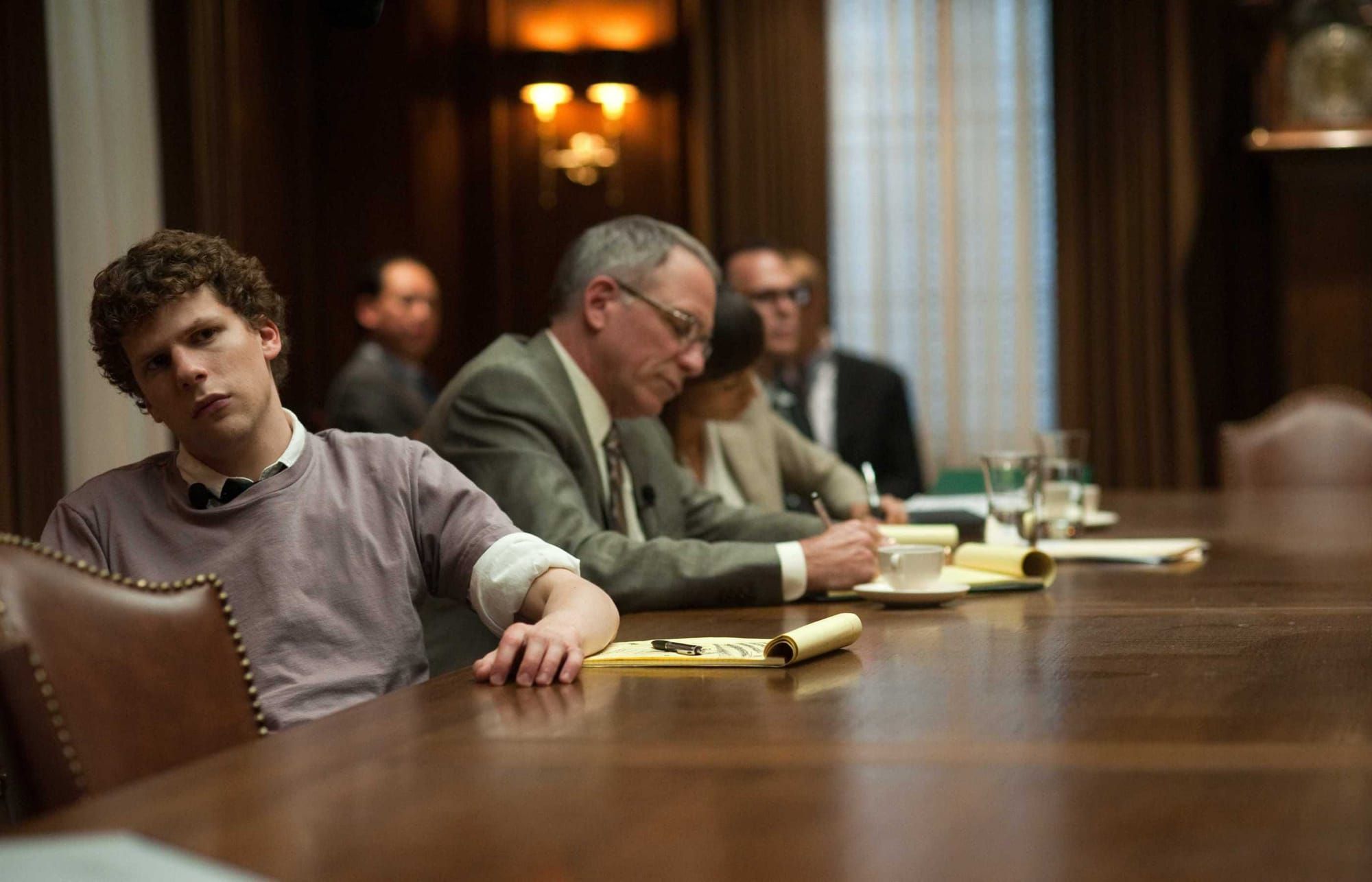
Reading scripts. Absolutely critical to learn the craft of screenwriting. The focus of this weekly series is a deep structural and thematic analysis of each script we read. Our daily schedule:
Monday: Scene-By-Scene Breakdown
Tuesday: Major Plot Points
Wednesday: Sequences
Thursday: Psychological Journey
Friday: Takeaways
Today: Sequences.
A sequence is simply a collection of scenes in a screenplay that have their own narrative arc and they have been around since the earliest days of cinema. Arising from this is something known as the sequence approach. Here is a description from Wikipedia:
The sequence approach to screenwriting, sometimes known as “eight-sequence structure”, is a system developed by Frank Daniel, while he was the head of the Graduate Screenwriting Program at USC. It is based in part on the fact that, in the early days of cinema, technical matters forced screenwriters to divide their stories into sequences, each the length of a reel (about ten minutes).
The sequence approach mimics that early style. The story is broken up into eight 10–15 minute sequences. The sequences serve as “mini-movies”, each with their own compressed three-act structure. The first two sequences combine to form the film’s first act. The next four create the film’s second act. The final two sequences complete the resolution and denouement of the story. Each sequence’s resolution creates the situation which sets up the next sequence.
That’s too formulaic for my tastes. Some screenplays may have eight sequences. Some may have two or three times that many. We should never let a formula control where our stories want to go. That can restrict our creativity and lead to formulaic writing. Nevertheless the idea of a sequence has considerable merit:
• Working with sequences breaks down crafting and writing a script into smaller, manageable parts.
• Each sequence has its own beginning, middle, and end which can help to give the story a solid structure.
• With each sequence flowing directly into the next, a writer can give their script a strong narrative push.
When analyzing a script, there are multiple benefits in identifying its sequences:
• We can identify these mini-stories and see how well they track — beginning, middle, end.
• We can track the transitions into and out of them, one sequence to the next.
• We can explore how the sequences influence the pace of the narrative.
An indicator of sequences are the plot points: When a plot point happens, that generally marks the end of a sequence, building to a significant climax that spins the plot in a new direction.
For Part 1, to read the Scene-By-Scene Breakdown created by Nick Dykal, go here.
For Part 2, to read the Major Plot Points, go here.
Screenplay by Aaron Sorkin, book by Ben Mezrich.
IMDb plot summary: Harvard student Mark Zuckerberg creates the social networking site that would become known as Facebook, but is later sued by two brothers who claimed he stole their idea, and the co-founder who was later squeezed out of the business.
Writing Exercise: Go through the scene-by-scene breakdown and identify the sequences.
Here is something you can do: Imagine each sequence as a runner in a relay race and as an individual sequence ends, it ‘hands off’ the baton to the next sequence. This is how we create a sense of narrative flow. So look at the sequences as articulated above: How does each one ‘hand off’ the story’s momentum to the next sequence?
In the comment thread in yesterday’s post, PaulG did a great job breaking down the narrative structure. Here is his analysis:
Okay, here’s my (fractured) break out of major plot points in terms of the chronology of events. I note the points by the page on which they occur as well as what percent of the script has elapsed.
The story hits the floor running. A discussion between Mark Zuckerberg and his girlfriend Erica leads to a falling out that triggers a chain reaction of events that leads the crash of the Harvard network (page 21, 13% of the script), getting Mark in trouble with the Harvard administration.
I take this to be the inciting incident because it brings his superior coding skills to the attention of Dinvya Narenda and Winklevoss twins who ask him to code their exclusive social networking site. Mark agrees (page 31, 19% of the script).
But shortly thereafter (page 39, 24% of the script) Mark decides to build his own social networking site with Eduardo Saverin pitching in startup money. This I take to be the marker for the end of Act 1 because Mark takes the initiative. He takes his fate into his own hands. He makes the choice to be the main actor in his own story, not a supporting actor in the Winklevoss story.
In the first half of Act 2, Mark codes the site while keeping the twins in the dark with one excuse after another. Finally, the Facebook site goes live (page 55, 34%). Mark crosses his Rubicon. There is no going back now.
The Winklevoss twins react by trying– and failing–to shut it down playing by the rules as “gentlemen of Harvard”.
Reversal: Whereas in Act 1 Mark was a pariah with women, now he is a campus celebrity, has no problem attracting girls.
Except for Erica. Mark approaches her (page 76, 47%) only to be rebuffed — a setback, a bump in the road of his upward social and emotional trajectory.
Midpoint: Enter Sean Parker (page 83, 51%) whose influence will pivot Mark’s life in a different direction and destroy his friendship with Eduardo Saverin.
All Is Lost Moment: There is none in terms of Mark’s objective goal. Facebook keeps growing exponentially.
But the story does build to an All Is Lost Moment in terms of Mark and Eduardo’s friendship as Mark falls under the spell of Sean Parker as soon as they meet in New York City (page 98, 60%). Later, while Eduardo is hustling for advertising in New York City that summer, Sean reconnects with Mark in Palo Alto (page 118, 72%) and effectively displaces Eduardo.
Meanwhile, after a bitter rowing loss on the Thames and discovering that Facebook is expanding overseas, the Winklevoss twins (finally!) get mad enough to sue Mark. (page 129, 79%).
Frustrated and humiliated, Eduardo (finally!) freezes the bank account he set up for the venture (page 136, 83.4%). It’s a decisive rupture in the central relationship of the story. This is where I mark the End of Act 2.
Act 3: But the best for Mark and worst for Eduardo is yet to come. Thanks to Sean’s connections, Mark gets a generous infusion of venture capital. And it seems the breach between Mark and Eduardo might be healed.
But come to find out the infusion comes at Eduardo’s expense: his share of the stock is diluted to 0.03% (page 150, 92%). Eduardo storms out vowing to sue. The nails are hammered into the coffin of their relationship just as the Mark achieves another milestone: the number of Facebook members passes the one million mark.
Sean Parker gets busted for using drugs and providing them to a minor (page 157, 96%) — a genuine scandal for Sean and Facebook. This is an ironic payoff to the inflated “scandal” of Eduardo “abusing” a chicken — much ado made about very little in the litigation. Has Mark “friended” the wrong guy?
Denouement: Mark achieves his objective goal. Facebook is a spectacular success and he will become the youngest billionaire in history. The script ends with a summation to the jury (the audience), by the lawyer, Marilyn, who tells him how the litigation is destined to play out. The price he has to pay for achieving his success. In the long run, it’s chump change, “a speeding ticket”.
Bu what has been the cost to his integrity, his soul? Mark is left alone with the social network site he has built.
Bookend: He finds Erica on Facebook, sends her a “friend” request.
Tomorrow we consider the script’s structure in terms of its psychological journey and the dynamic of transformation.
This series started here and we have 27 volunteers to do scene-by-scene breakdowns of contemporary movie scripts. The scripts we have already analyzed are in italics.
American Hustle: Jon Raymond
Argo: Nora Barry
Barney’s Version: John M
Belle: DaniM
Beginners: Ali
Boyhood: Jacob Jensen
Enough Said: Ali
Flight: 14Shari
Frankenwenie: Will King
Frozen: Christina Sekeris
Gone Girl: NateKohler1
Gravity: Matt Duriez
Hanna: John Arends
Lincoln: pgronk
Looper: erikledrew
Moonrise Kingdom: Daniel Bigler
Mud: Alejandro
Paranorman: OhScotty
Prisoners: Melinda Mahaffey Icden
Short Term 12: Carolina Groppa
The Artist: Traci Nell Peterson
The Grand Budapest Hotel: Rob Hoskins
The Imitation Game: Sean Sauber
The Social Network: Nick Dykal
The Way Way Back: Ricky
Wadjda: iamdaniel
Whiplash: Steven Broughton
If you’d like to participate and do a scene-by-scene breakdown yourself, please indicate which script in comments or email me. We are using scripts available on our site here. Many of the 2014 scripts are now available there including Belle, Birdman, Boyhood, Calvary, Get On Up, Gone Girl, How To Train Your Dragon 2, Kill The Messenger, Locke, St. Vincent, The Boxtrolls, The Fault In Our Stars, The Grand Budapest Hotel, The Theory of Everything, and Wild.
For new volunteers and those who have already volunteered, but not sent me a breakdown yet, please do so as soon as possible. Thanks!
Circling back to where we started, reading scripts is hugely important. Analyzing them even more so. If you want to work in Hollywood as a writer, you need to develop your critical analytical skills. This is one way to do that.
So seize this opportunity and join in the conversation!
I hope to see you in comments about this week’s script: The Social Network.
Comment Archive