Movie Analysis: “Ex Machina” — Plot
Another in our bi-weekly series in which we analyze movies currently in release. Why? To quote the writing mantra I coined over 5 years ago: Watch movies. Read scripts. Write pages. You will note which one comes first. Here are my reflections from that post about the importance of watching movies:
To be a good screenwriter, you need to have a broad exposure to the world of film. Every movie you see is a potential reference point for your writing, everything from story concepts you generate to characters you develop to scenes you construct. Moreover people who work in the movie business constantly reference existing movies when discussing stories you write; it’s a shorthand way of getting across what they mean or envision.
But most importantly, you need to watch movies in order to ‘get’ how movie stories work. If you immerse yourself in the world of film, it’s like a Gestalt experience where you begin to grasp intuitively scene composition, story structure, character functions, dialogue and subtext, transitions and pacing, and so on.
Let me add this: It’s important to see movies as they get released so that you stay on top of the business. Decisions get made in Hollywood in large part depending upon how movies perform, so watching movies as they come out puts you in the same head space as reps, producers, execs, and buyers.
This week’s movie: Ex Machina, written and directed by Alex Garland, starring Alicia Vikander, Domhnall Gleeson, and Oscar Isaac.
Our schedule for discussion this week:
Monday: General Comments
Tuesday: Plot
Wednesday: Characters
Thursday: Themes
Friday: Takeaways
For those of you who have not seen the movie, do not click MORE as we will be trafficking in major spoilers. If you have seen Ex Machina, I invite you to join me in breaking down and analyzing the movie.
The plot of Ex Machina is a simple one: A billionaire genius inventor invites a young programmer to his secluded estate to evaluate a female A.I. Yet as with all good simple stories, there are layers of complexity to it:
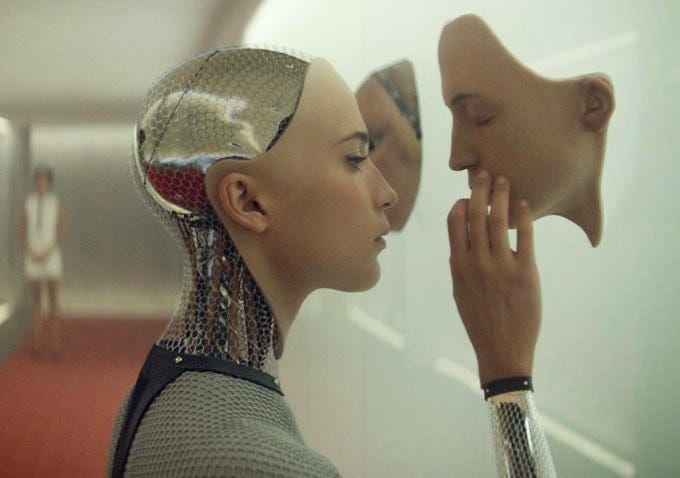
* The initial mentor-student relationship between Nathan and Caleb, the shifting set of ‘masks’ Nathan wears, eventually revealing himself to be a Nemesis.
* The Protagonist-Attractor relationship between Caleb and Ava, and this, too, has a twist with Ava revealing herself to be a Trickster.
* The psychological deconstruction of Caleb to the point where he think he himself may be an A.I.
* The setting into motion one mystery, seemingly solving another while initiating another one, a wonderful string of questions and answers which all get spun on their head by the ending.
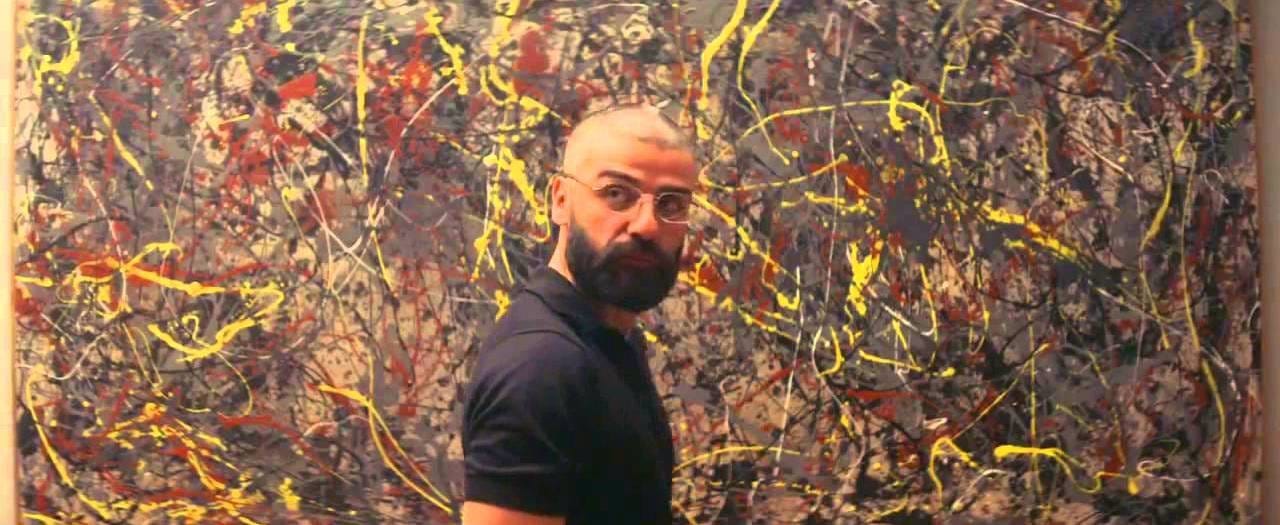
As far as structure goes, the movie slots easily into Three Act Structure:
Act One: Arrival, meeting Nathan, meeting Ava, the wonder of it all, the initial concern of Nathan’s uneven temperment, and the clue from Ava not to trust Nathan.
Act Two: Essentially a lengthy seduction (as it turns out), directly by Ava, but also by Nathan as he provokes Caleb to think about the world and himself from Nathan’s perspective. Caleb’s unraveling, leading to the decision to escape with Ava.
Act Three: The reveal that Caleb was set up, Nathan plans to kill him, the idea that Ava has been using Caleb, Ava’s turn against both humans, and the fantastic denouement at a street corner, set up by Ava earlier in the story.
A simple story rich with complex characters.
How about someone taking a crack at the major plot points of the story? Or better yet, a sequence breakdown?
Just in general, what strikes you most about the plot?
Please join me in comments to further analyze Ex Machina.
Comment Archive