Movie Analysis: “Casablanca” — Characters
Another in our bi-weekly series in which we analyze movies currently in release. Why? To quote the writing mantra I coined over 5 years ago: Watch movies. Read scripts. Write pages. You will note which one comes first. Here are my reflections from that post about the importance of watching movies:
To be a good screenwriter, you need to have a broad exposure to the world of film. Every movie you see is a potential reference point for your writing, everything from story concepts you generate to characters you develop to scenes you construct. Moreover people who work in the movie business constantly reference existing movies when discussing stories you write; it’s a shorthand way of getting across what they mean or envision.
But most importantly, you need to watch movies in order to ‘get’ how movie stories work. If you immerse yourself in the world of film, it’s like a Gestalt experience where you begin to grasp intuitively scene composition, story structure, character functions, dialogue and subtext, transitions and pacing, and so on.
Let me add this: It’s important to see movies as they get released so that you stay on top of the business. Decisions get made in Hollywood in large part depending upon how movies perform, so watching movies as they come out puts you in the same head space as reps, producers, execs, and buyers.
This week’s movie: Casablanca, screenplay by Julius J. Epstein & Philip G. Epstein and Howard Koch.
Our schedule for discussion this week:
Monday: General Comments
Tuesday: Plot
Wednesday: Characters
Thursday: Themes
Friday: Takeaways
For those of you who have not seen the movie, do not click MORE as we will be trafficking in major spoilers. But seriously, if you haven’t seen Casablanca, stop whatever you’re doing and watch it! If you have seen Casablanca, I invite you to join me in breaking down and analyzing the movie.
Those of you who have followed GITS for some time or taken some of my Screenwriting Master Class courses likely know I have developed a theory that many movies feature a specific set of five character archetypes: Protagonist, Nemesis, Attractor, Mentor, Trickster. They derive from these seven questions:
* Who is the story’s Protagonist?
The first, most basic question of any story.
* What does the Protagonist want?
This is the Protagonist’s conscious goal and is tied to the Plotline’s end point.
* What does the Protagonist need?
This is the Protagonist’s unconscious goal and is tied to their Transformation end point.
* Who is trying to keep the Protagonist from their goal?
This is the story’s Nemesis who functions in opposition to the Protagonist.
* Who is connected to the Protagonist’s emotional growth?
This is the story’s Attractor who is most connected to the Protagonist’s emotional development.
* Who is connected to the Protagonist’s intellectual growth?
This is the story’s Mentor who who is most connected to the Protagonist’s intellectual development.
* Who tests the Protagonist to prepare them for the Final Struggle?
This is the story’s Trickster, sometimes ally, sometimes enemy, a way testing the Protagonist.
These five are the Primary Character Archetypes and they function as integral parts, both in relation to the plot and with regard to the Protagonist’s psychological metamorphosis.
In Casablanca, we have a perfect example of these five character archetypes:
Protagonist — Rick Blaine
Nemesis — Major Heinrich Strasser
Attractor — Ilsa Lund
Mentor — Victor Laszlo
Trickster — Captain Louis Renault
Strasser provides opposition manifesting itself most obviously in the Final Struggle, attempting to get the plane carrying Victor and Ilsa to return. In classic Protagonist vs. Nemesis fashion, Rick has to vanquish the Antagonist.
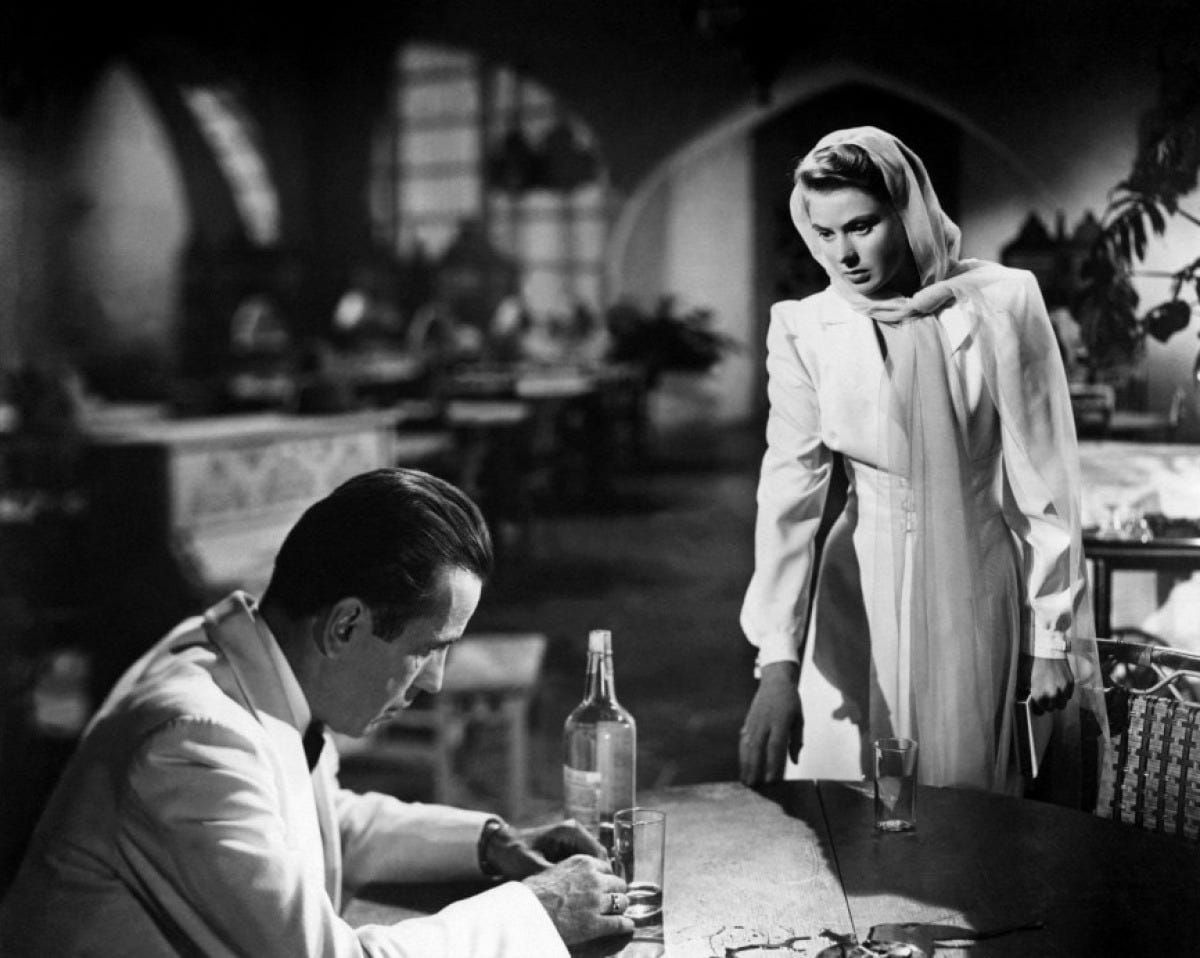
Ilsa reawakens Rick’s ‘cold’ heart while Victor helps Rick get back in touch with his idealism and support of causes which are in the right.
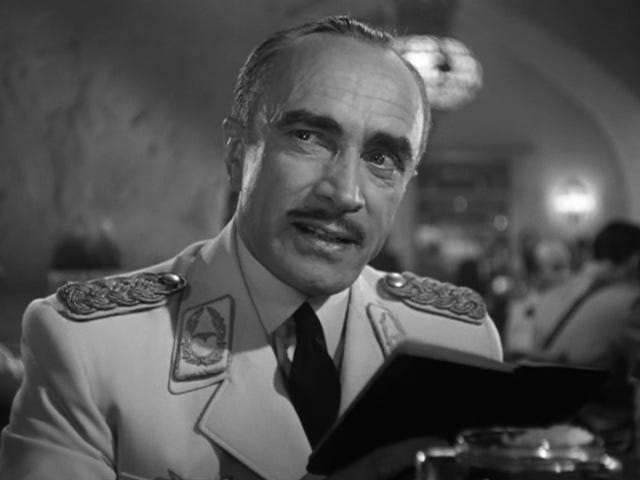
And Renault? One of the most memorable Trickster characters in movie history. Both friend and foe to Rick, depending upon the Captain’s needs at the time, ultimately turning out to be an ally.
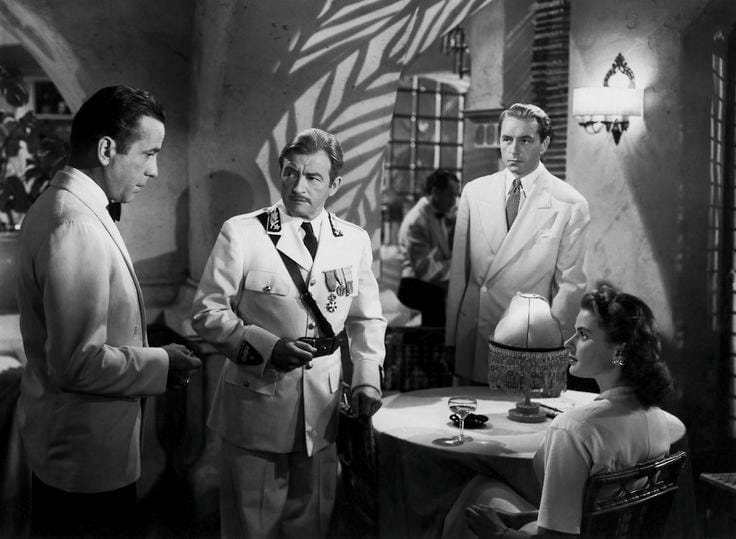
All of these characters in one way or another service Rick’s transformation journey. That’s why his choice at the end to give the letters of transit to Ilsa and Victor is such a perfect moment, an act of selflessness in support of a great and just cause. As Victor tells Rick, shaking his hand, “Welcome back to the fight. This time I know our side will win.”
How about you? What’s your take on the characters in Casablanca? Let’s not forget all the wonderful secondary characters, each of whom has their own distinctive personality and contribution to the overall story.
Comment Archive