Reflections of Black List San Francisco Mini-Lab Writers
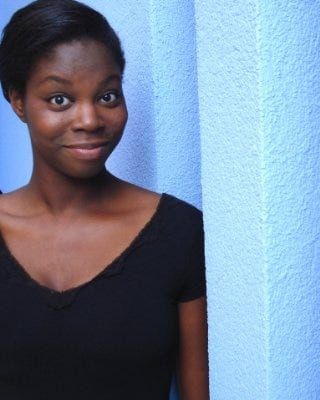
On the weekend of October 16–18, four writers gathered in San Francisco for an exciting event: The fourth Black List Mini-Lab. The writers — Rachel Bublitz, Sarah Archer Moulton, Elizabeth Oyebode, and Joe Rechtman — had been selected on the basis of scripts they had uploaded to the Black List website and a personal statement about the story they were writing and their creative aspirations.
Over the weekend, they hung out with the Black List team and met one on one with Franklin Leonard, and screenwriters Matt Aldrich and Victoria Strouse to discuss their scripts, then participated in two workshop sessions with me as group leader.
Here are some reflections about their individual and collective experience from the weekend they spent together. Their observations are both illuminating and inspiring.
Rachel Bublitz
The Black List mini-lab turned my brain to mush in the best possible way. I am new to writing screenplays, Girl Friend, the script that was workshopped, is actually my first attempt to write for the screen, having only written plays up until now, and so I knew I would have a lot of catching up to do. We started off the weekend with a peer review session, lead by the brilliant script-whisperer Scott Myers. He had us answer some hard hitting questions, things from, what inspired you to write this script, to, what about your script needs the most work, and after a brief discussion of our answers told us not to worry and to stay strong. This was my first moment of wondering, what have I gotten myself into? I’ve had many peer review and workshop experiences in the theater, but maybe they’re more cruel in the movies? It wasn’t long until I understood exactly what he meant.
My first mentor session came up, I was working with Victoria Strouse. She started by asking me if I was up for hearing the hard truth, and after telling her I’d be fine she dove right in. Her feedback was incredible and cemented some ideas that I already had been kicking around, as well making it pointing out the reasons behind some flaws that up until that point I had known were issues, but couldn’t for the life of me explain why. With each note she gave me, I got a new idea, she was lighting hundreds of light bulbs in my head. All I wanted to do when we finished up was to lock myself behind a door and start writing, but I couldn’t. It wasn’t until after my second mentor session that I understood Scott’s warning, it wasn’t about hurt feelings, it’s that our brains were going to be on idea over-load.
My second session, after a quick lunch — because these wonderful folks FEED you as well — was with Black List founder, Franklin Leonard. “Tell me your life story,” he said. So, light stuff. I had a moment when I considered what story to give, we all have different versions of the same events that we go back and forth between based on who we’re with. Typically if it’s someone who could potentially connect you with a job, you’d give them the polite version, but this was not one of those times. After I was through telling him the basics of my life, he followed up with why I hadn’t incorporated more of it into the script, and more light bulbs went on like crazy. Again, I wanted only to find a room with a power cord and a door to lock so that I could pound away on my computer. But like last time, I didn’t have time, after our second session we were off for a fabulous dinner, quickly followed — for me anyway — by as much sleep as I could get before the following morning.
Rachel Bublitz
Sunday morning, my last mentor session was with Matthew Aldrich, and, I didn’t know it at the time, but this was the point in which so many light bulbs were turned on in my brain that it would overheat, liquifying the contents. We talked about structure, about character arcs, character archetypes (the protagonist that changes vs. the steadfast protagonist), and the core idea in my script that if taken away would make my script no longer my script. More than once I asked Matt to repeat himself, trying to memorize his words. It was an epic session in which everything I thought about the screenplay I was writing was turned on its head. I didn’t have the urge to write after this session, no, I wanted to sit and think for a few years in a quiet dark place. As you might guess, that wasn’t exactly an option.
Before the goodbye dinner, we get one last extra-long peer review session, we share the notes we each got from the mentors, the notes we have for our peers, and Scott then goes over his notes he has on each of our projects. Thank God for Scott. In that meeting he helped restart our brains, slowly turning off light bulbs that weren’t going to help us on our journeys. He made sense of the -sometimes conflicting- notes from the mentors, and afterward I felt much, much, much, much better.
The lab was fantastic for so many reasons, how often do you have industry professionals read your work and then respond to you in person? For me? Never. Never before, at least. But, and while this is amazing, it doesn’t scratch the surface of the benefits. Writers can’t help but write in vacuums, we all know this. So often we’re one person with one computer, typing away all by ourselves. It’s hard to see the forest when you’re running through the trees. The lab gives you four professionals, each with a different helicopter, that offers a different view of the forest you’re creating, and the final one also passes along a few mapping options to boot. Not only did I rethink how to tell the story I wanted to tell, but it made me rethink how I’m going to tell stories going forward in my career. I can’t recommend this lab enough.
Sarah Archer Moulton
The weekend of the Black List San Francisco Mini-Lab encompassed probably the most productive two days of my writing career thus far, which is remarkable considering that I spent those days not actually writing. When I received the invitation to join the Mini-Lab, I was thrilled, knowing that the Black List name promised something worthwhile, but knew little of what to expect in terms of specifics. But as I prepared by reading the scripts of the three other writers, my excitement only grew. A batch of scripts displaying such diversity in genre and in the types of stories we were telling was a clear indicator that this event, whatever it was, was not about churning out cookie-cutter screenplays.
Megan Halpern from the Black List team put us all at ease from our first evening together (and did a masterful job of picking the restaurants for the weekend, by the way). As we eased into the workshop the next morning with introductions, we were lucky enough to hear some amusing career anecdotes from our two writer mentors, Matt Aldrich and Victoria Strouse. More than that, they shared valuable, clear-headed insights into their own success. The fact that they’ve both advanced their careers through writing scripts they were truly passionate about became a centerpiece of the weekend for me, focusing my approach to my own script.
As I went through the one-on-one sessions with Franklin, Victoria and Matt, I was consistently grateful and impressed at their close reading of my work and the thought-provoking, yet not didactic, way in which they walked me through their notes. I went into the sessions with ideas about how I wanted to improve my screenplay within the context of what it already was, and left with ideas for how to make it something totally new (and better). But while the feedback I received was honest and eye-opening, it was also sensitive to my vision for the screenplay and emphasized that, ultimately, I have to make the decisions for my own work. I have a feeling that possibly the most educational aspect of this whole experience for me will be learning to take a range of notes, sometimes conflicting or divergent, and sift through them, seeking in each case the note behind the note and respecting its intention while also finding an expression of it that fits the total picture of what I’m aiming to write.
Sarah Archer Moulton
The start of this sifting process came in our group wrap-up session with Scott Myers. Given the variety of scripts we had brought to the table, it was fascinating to see how he was able to apply the same fundamental concepts and questions to each of them. The feedback I got from Scott and the other writers on my script, in the context of the feedback I had already received from the mentors, helped to set me on the right path as I embarked on the rewrite journey and also encouraged me to stay true to what attracted me to the world of my screenplay in the first place. Just as informative, though, was listening to the notes the other writers had received in their sessions and watching as Scott walked each writer through his or her story. While I had read all of the scripts and compiled my own notes in advance, Scott pointed out potential problems and things to think about that hadn’t even occurred to me, which I realized I could also translate into my own writing. I can’t wait to see how the other writers’ scripts turn out and predict that having each other to bounce ideas off of going forward will be one of the best things we all take away from this experience.
Overall, the Mini-Lab seemed to me to be emblematic of what Franklin and the whole Black List team are doing on a larger scale. Working with The Black List is probably the single most viable way for a screenwriter to get his or her voice heard from outside of the Hollywood system. This workshop was not about who you knew, what your credits were, what industry experience you had — the entire weekend was one hundred percent about the writing. It was about quality, intelligence, and truthfulness in storytelling. It offered hope that those ephemeral qualities of inspiration, creativity and boldness do have professional relevance in today’s industry. It brought us all back to why we wanted to make movies in the first place.
Elizabeth Oyebode
As one of four writers selected to attend The Black List’s San Francisco Mini-Lab, I suspected I would be in store for quite a productive weekend. I was not disappointed. As a writer, it’s easy to get demoralized, to start to question your voice, to wonder whether the stories you’re so passionate about will be limited to an audience of 1.
This mini-lab weekend was all about reinvigorating our spirit and reminding us that the light that sparked inside us did so for a reason and that our stories are likely to ignite that spark in others. It became apparent very early on in the mini-lab how committed everyone was to seeing us develop the best scripts possible.
The one-on-one mentoring sessions with Matthew Aldrich, Victoria Strouse, and Franklin Leonard were very intensive and eye-opening. First and foremost, each mentor was deeply committed to getting to the heart of the story I had written. Each had a unique perspective on the script, so I ended up getting not just one approach, but several and each had merit. From the art of the biopic, to the unyielding nature of the protagonist’s central conflict, to development-side considerations, each conversation introduced a puzzle piece that made finding the “right” version of the story just that much easier. Their input was incredibly incisive and constructive.
Elizabeth Oyebode
We also were given the opportunity to workshop each other’s scripts with the awesome Scott Myers as our moderator. Scott’s approach was both systematic and personal. Scott asked a series of thought-provoking questions, which later aided us in discussing our personal ties to the scripts at present and to the stories we ultimately wanted to tell with them. Overall, the peer workshop was very collaborative and quite liberating. My fellow participants were gracious, insightful, and eager for feedback. As we dove deep into each of the scripts, it was enlightening to hear what resonated with them and why. We got the opportunity to speak highly about what worked and openly about what we felt could be improved. We even started taking our stories in new directions that had not been considered before.
Over the course of the weekend, the Black List team and mentors were so welcoming and I very much enjoyed all the great grub (Megan Halpern has earned supreme foodie status in my eyes) and trading stories about our journeys to becoming writers.
The takeaways for me were: Trust your instincts as a writer and write the story that most excites you.
I left the mini-lab feeling inspired not just about the workshopped scripts but also about the shift that’s taking place in how scripts are getting introduced to the industry. The Black List team cares so much and is so knowledgeable about today’s films, the history of film, and the state of filmmaking. I’m so grateful to Franklin Leonard and The Black List team for all they’re doing to help advance the careers of emerging writers.
Joe Rechtman
It’s easy to start feeling burnt out as a writer. The discipline and self-imposed isolation that it takes to pursue a career in screenwriting can quickly become overwhelming. But after attending the San Francisco Black List Mini-Lab, I feel rejuvenated. Though we were worked hard throughout the weekend, I came away encouraged, inspired, motivated and, most importantly, eager to write.
I had no idea what to expect from the Mini-Lab, but that sure didn’t stop me from being nervous as hell. I could barely sleep the whole week leading up to it. But as soon as I arrived and started shaking hands, it became apparent there was nothing to worry about, because everyone was there for the same reason: we all love writing. There was no competition, no networking, just a few aspiring writers being given a generous opportunity to learn and grow. So that’s what we did.
Here’s how it worked. On the first day, all of the writers met together with Scott, who helped prep us for our one-on-one sessions with the other mentors. This was a great way to get back in touch with our scripts, what we liked about them and what we thought needed work. I’m glad we had the chance to warm up and get our minds in gear for receiving notes.
Joe Rechtman
The one-on-one sessions were nothing short of incredible. There’s nothing better than an hour and a half alone with an industry professional who has given your work a thorough read, and has plenty of thoughtful notes and advice. And you get three of them! The mentors were all amazing, each of them offering a different point of view and opening my eyes to things about my script I had never even considered. I felt especially lucky to be attending the San Francisco Mini-Lab, as the two screenwriting mentors brought with them the wisdom of Pixar. And of course, being able to pick Franklin’s brain about the development side of the business was invaluable.
Finally, the writers met back up with Scott to sift through the feedback we had all gotten, and share our own notes on each others’ work. It was a great way to organize the three mentor’s different opinions and figure out which direction we wanted to take our next drafts. Scott was an excellent moderator, dropping knowledge all over the place and helping us figure out what was at the core of our stories.
Overall it was an incredible experience that any writer would be lucky to have. Just being able to spend a weekend with so many like-minded writers was a treat in and of itself. Everything I learned was a fantastic bonus (and I didn’t even mention all the amazing food that the amazing people at the Black List fed us).
I’m extremely thankful to the mentors, my fellow fellows, and everyone at the Black List who helped put the lab together. I definitely won’t be forgetting that weekend anytime soon.
Speaking for myself, this is the 6th Black List screenwriters lab I’ve been involved with, and each has had its own unique feel. This group — Rachel, Sarah, Elizabeth, and Joe — exhibited the very best in writer qualities: talent, passion, curiosity, flexibility, honesty, commitment, openness, and most of all creativity. As with all of our labs, both Franklin and I emphasize the value of them continuing on as a writers group. I have no doubt this quartet will follow through on that.
One more Black List mini-lab in 2015 and that is in Los Angeles November 20–22. As you can see from the writers’ comments above, these events have been exceptional. I look forward to this next session, then what 2016 holds in store for other such events.
For more information about Black List workshops, go here.