Movie Analysis: “Spotlight” — Characters
Another in our bi-weekly series in which we analyze movies currently in release. Why? To quote the writing mantra I coined over 5 years ago: Watch movies. Read scripts. Write pages. You will note which one comes first. Here are my reflections from that post about the importance of watching movies:
To be a good screenwriter, you need to have a broad exposure to the world of film. Every movie you see is a potential reference point for your writing, everything from story concepts you generate to characters you develop to scenes you construct. Moreover people who work in the movie business constantly reference existing movies when discussing stories you write; it’s a shorthand way of getting across what they mean or envision.
But most importantly, you need to watch movies in order to ‘get’ how movie stories work. If you immerse yourself in the world of film, it’s like a Gestalt experience where you begin to grasp intuitively scene composition, story structure, character functions, dialogue and subtext, transitions and pacing, and so on.
Let me add this: It’s important to see movies as they get released so that you stay on top of the business. Decisions get made in Hollywood in large part depending upon how movies perform, so watching movies as they come out puts you in the same head space as reps, producers, execs, and buyers.
This week’s movie: Spotlight which won the 2016 Academy Award for Best Picture, written by Josh Singer and Tom McCarthy. You may download. the script here.
Our schedule for discussion this week:
Monday: General Comments
Tuesday: Plot
Wednesday: Characters
Thursday: Themes
Friday: Dialogue
Saturday: Takeaways
For those of you who have not seen the movie, do not click MORE as we will be trafficking in major spoilers. If you have seen Spotlight, I invite you to join me in breaking down and analyzing the movie.
This being a story grounded in historical events, the journalist characters are tethered to actual human beings, and screenwriters Singer and McCarthy go to great lengths to craft them in such a way to be accurate reflections of the reporters. While some have critiqued Spotlight because the story doesn’t delve deeply into the inner lives of these reporter characters — you can see my rebuttal to that line of thinking in comments here and here — the editorial choice to show restraint in that area enables the narrative to explore in an unfettered fashion the emotional states of three victims:
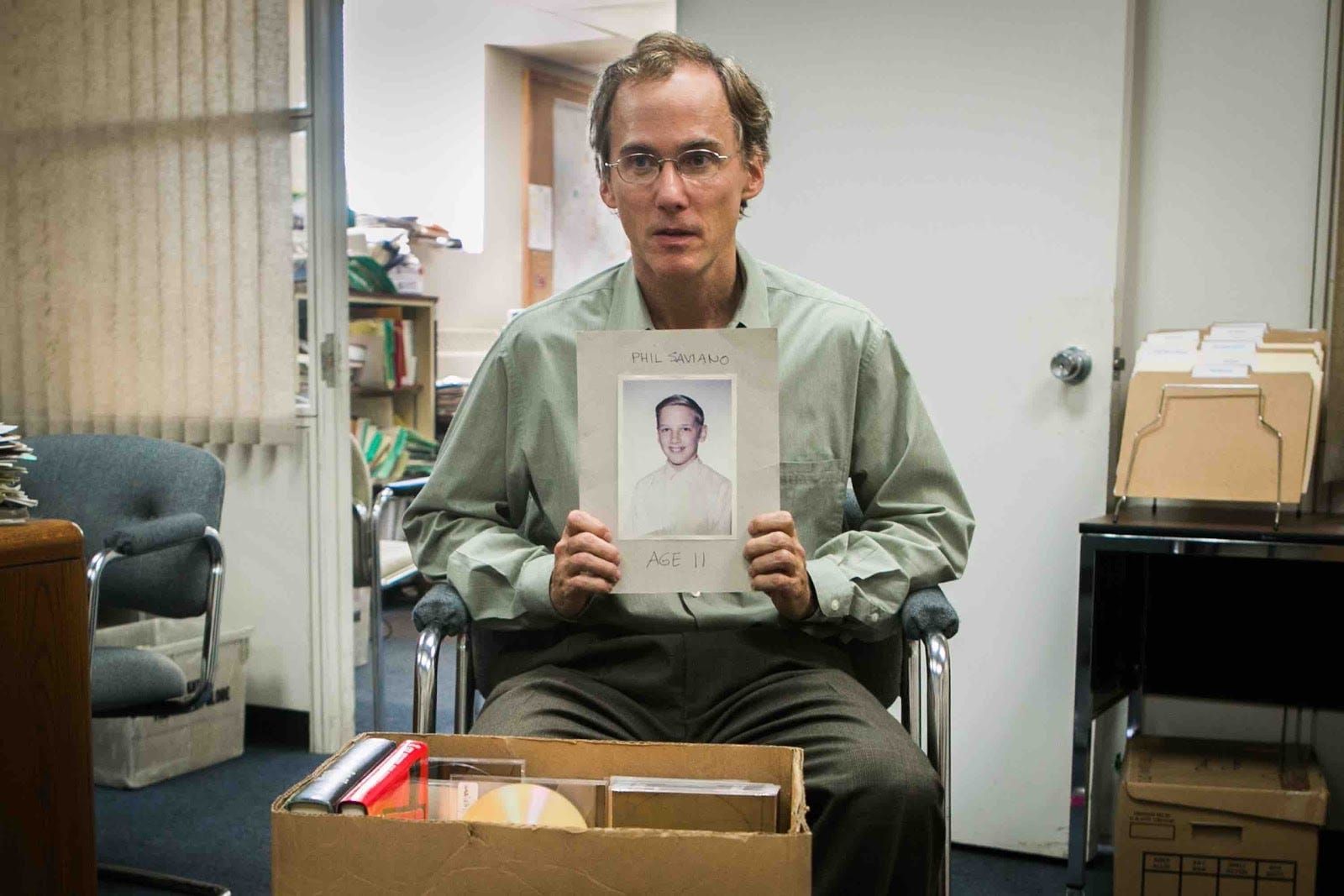
- Phil Saviano: He has funneled his rage at what was done to him and frustration at the silence surrounding widespread sexual abuse by priests into activism, founding SNAP (Survivors Network of those Abused by Priests). Of the three victims, he is the character most up front and vocal about getting something done.
- Joe Crowley: He confesses to Sacha he has struggled with addiction and coming to grips with his own sexuality — he is gay — and still to this day comes unglued in certain circumstances which stir up associations and memories of the abuse he suffered at the hands of a priest.
- Patrick McSorley: Married and a father, the scars on his arms suggest a prior drug problem. After some prodding by the journalists, he agrees they can use his name in going after the priest who abused him.
While Saviano is a recurring character, there to keep pressuring the reporters to push harder and dig deeper, the initial scenes with Joe and Patrick are intercut. My sense of what McCarthy was thinking in taking this approach is to convey a sense of the breadth of victims: different sexual orientations, married and single, both with addictions, one drinking, the other drugs, one physically strong, the other weak.
Saviano has a side of dialogue which really puts the whole thing in perspective?
When a parish priest pays attention to you, it’s a big deal. It’s like God asking you for help. So one day, when he asks for a hand job, you give it to him. This is not just physical abuse but spiritual abuse because it robs you of your faith. You’re ashamed and many end up becoming alcoholics or drug addicts or killing themselves — hence why the organization is for survivors.
In simple, clear-cut language, he lays out a child’s rationale for putting up with the abuse, the egregious breach of trust (“robs you of your faith”), the depth of impact of the abuse (“ashamed… alcoholics… drug addicts or killing themselves”), and the status of each of the remaining victims: They are survivors.
I think the way the movie handles the victims is with respect and dignity.
There are a couple of Trickster characters in the movie: Jim Sullivan (Jamey Sheridan) and Eric Macleish (Billy Crudup), both lawyers, the former having defended accused priests, the latter having negotiated settlements with the Church on behalf of victims’ families. Both have worked up a logical take to defend what they have done professionally and initially resist helping the Spotlight team. Eventually they become reluctant allies.
Then there is Cardinal Law, the story’s Nemesis. Beyond the world view he has which can somehow overlook the depravity of abusive priests, there is one telling moment which says a lot about his character: Giving Marty Baron a gift — ‘The Catechism of the Catholic Church’. Mary is Jewish.
There is a host of other characters, each well-drawn. In my view, the characters are a strength of the story, and the delicate balance of restraint exhibited with the reporters and their inner lives which allows the story to explore in graphic detail the abuse of the victims a notable achievement.
What did you think of the characters as a whole or any specific ones? Please head to comments and share your thoughts.
Comment Archive