Movie Analysis: “The Shawshank Redemption” — Plot
Another in our bi-weekly series in which we analyze movies currently in release. Why? To quote the writing mantra I coined over 5 years ago: Watch movies. Read scripts. Write pages. You will note which one comes first. Here are my reflections from that post about the importance of watching movies:
To be a good screenwriter, you need to have a broad exposure to the world of film. Every movie you see is a potential reference point for your writing, everything from story concepts you generate to characters you develop to scenes you construct. Moreover people who work in the movie business constantly reference existing movies when discussing stories you write; it’s a shorthand way of getting across what they mean or envision.
But most importantly, you need to watch movies in order to ‘get’ how movie stories work. If you immerse yourself in the world of film, it’s like a Gestalt experience where you begin to grasp intuitively scene composition, story structure, character functions, dialogue and subtext, transitions and pacing, and so on.
Let me add this: It’s important to see movies as they get released so that you stay on top of the business. Decisions get made in Hollywood in large part depending upon how movies perform, so watching movies as they come out puts you in the same head space as reps, producers, execs, and buyers.
For this week’s movie, we go back in time to 1994: The Shawshank Redemption, screenplay by Frank Darabont, novella by Stephen King.
Our schedule for discussion this week:
Monday: General Comments
Tuesday: Plot
Wednesday: Characters
Thursday: Themes
Friday: Dialogue
Saturday: Takeaways
For those of you who have not seen the movie, do not click MORE as we will be trafficking in major spoilers. But seriously, if you haven’t seen The Shawshank Redemption, stop whatever you’re doing and watch it! If you have seen The Shawshank Redemption, I invite you to join me in breaking down and analyzing the movie.
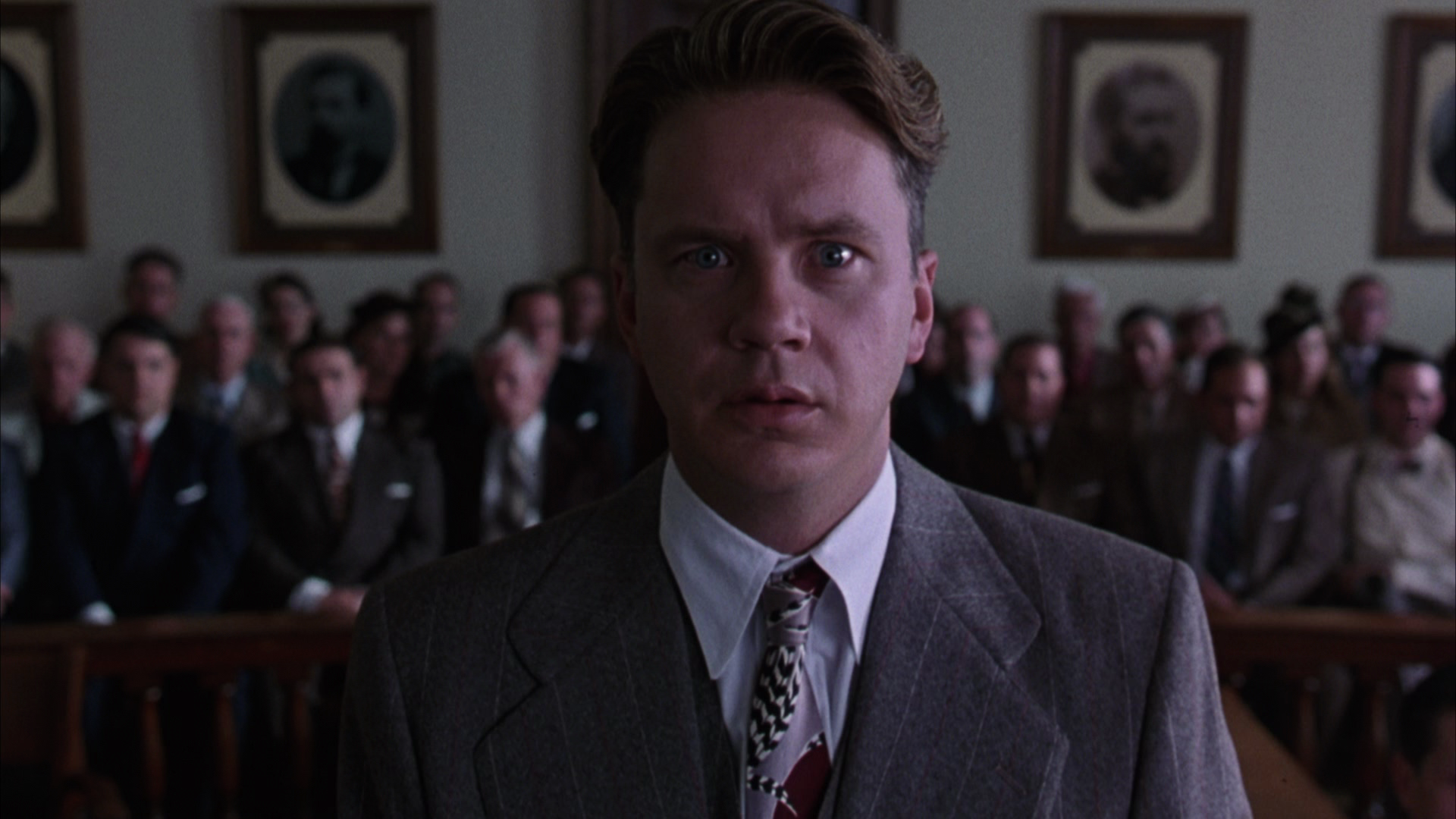
One of the most interesting aspects of the movie’s plot is it is comprised of two storylines: Andy and Red. Andy’s is the central one, but the fact is Andy escapes at the 123 minute mark leaving another 15 minutes to round out Red’s saga. The interweaving of Red’s B plot into and through Andy’s A plot is handled flawlessly.
Of course, it helps that Andy and Red develop a friendship, so many of their movie moments involve one with the other. It’s also a plus that Red is the story’s narrator, so even when the narrative shifts its focus to Andy, Red is often there to comment on the events which transpire.
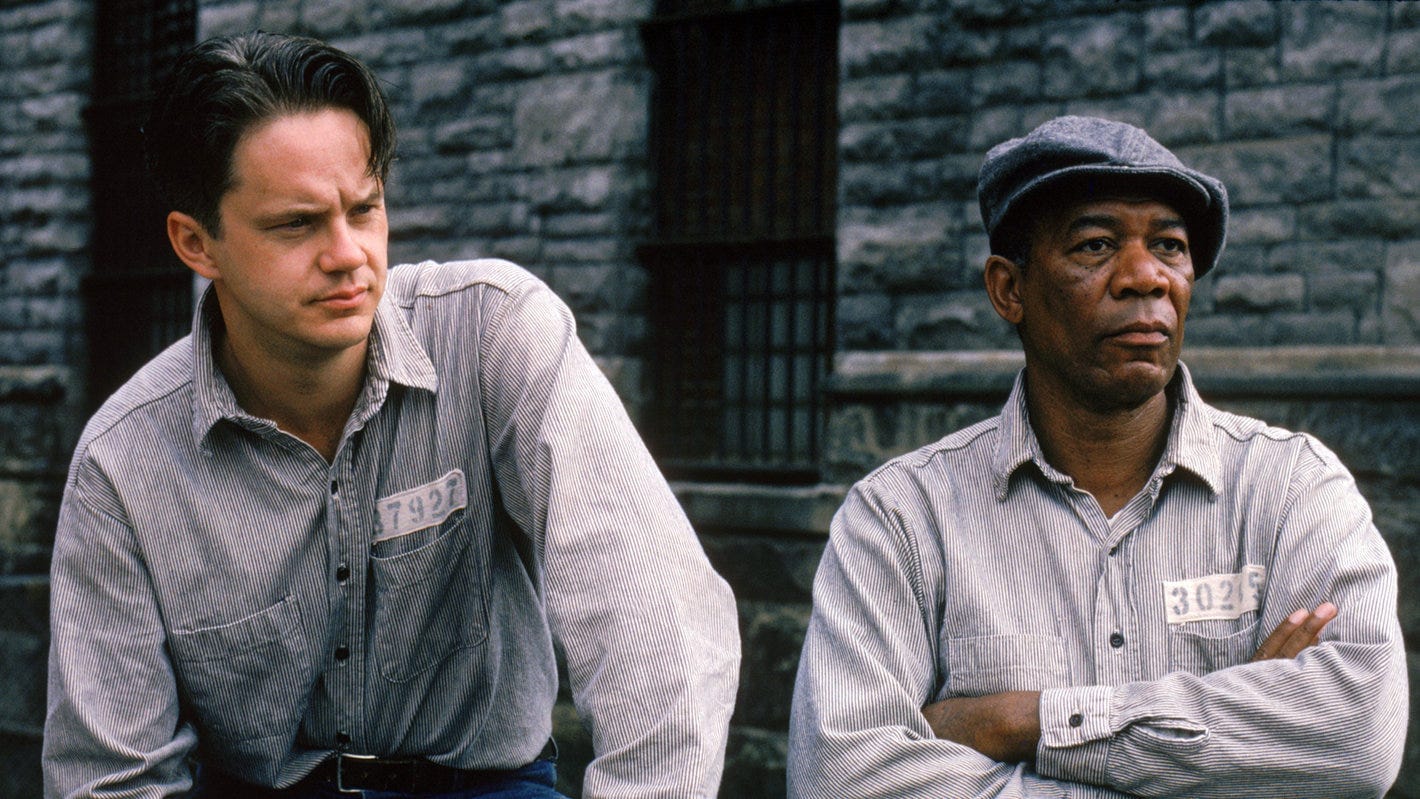
However while Andy’s story of wrongful imprisonment, survival, and eventual escape is provides the backbone of the plot, I would argue that Red’s subplot is where much of the story’s heart resides. Indeed, if we take a meta view of the story and ask this question — Why did the story universe acting as fate intersect Red with the specific character who Andy is — one can see that Andy is precisely the influencing presence Red needs to move from near hopelessness through his battle with institutionalization and eventually to a place where he embraces the call to freedom as extended to him by an old friend.
This is one reason why I suggested in yesterday’s post how this is in some ways a simple story, yet complex as well. Both Andy and Red’s plots are clean, straight ahead narratives moving from imprisonment to freedom, but their respective emotional journeys explore rich psychological terrain speaking to universal human themes — survival, good and evil, individual versus the system, and ultimately the most powerful theme of all in the story: Hope.
Another point: The Brooks Hatlen storyline is one of the finest subplots in movie history, sublime in its execution, perfect in how it slots into Red’s journey. Moreover it emerges from rather humble origins. When we meet Brooks, he seems like a minor secondary character. But then for several minutes, his story takes over the narrative in a completely compelling fashion. Wonderfully inspired and orchestrated.
How about you? What thoughts do you have about the plot in The Shawshank Redemption? I look forward to reading your reactions in comments.
Trivia: Director Frank Darabont watched Goodfellas (1990) every Sunday while shooting this film and drew inspiration from it, on using voice-over narration and showing the passage of time.
Comment Archive