Script Analysis: “The Silence of the Lambs” — Part 3: Characters
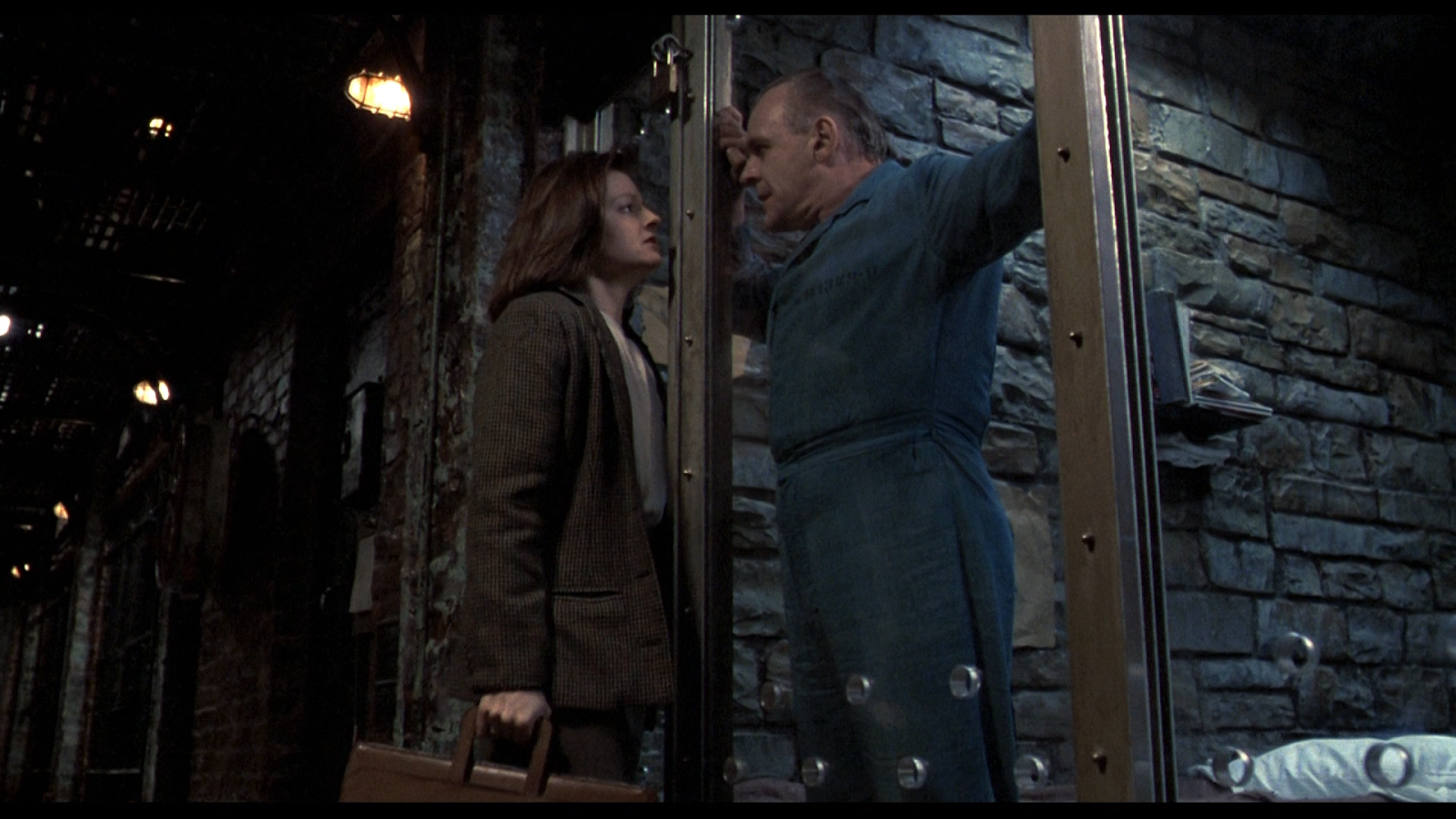
Reading scripts. Absolutely critical to learn the craft of screenwriting. The focus of this weekly series is a deep structural and thematic analysis of each script we read. Our daily schedule:
Monday: Scene-By-Scene Breakdown
Tuesday: Plot
Wednesday: Characters
Thursday: Themes
Friday: Dialogue
Saturday: Takeaways
Today: Characters.
Characters are the players in our stories. They participate in scenes, move the plot forward through action and dialogue, influence each other, evolve and change. Each has their own distinct backstory, personality, world view, and voice. When a writer does their best, digging deep into their characters, tapping into their souls, the players in our stories magically lift up off the printed page and come to life in a reader’s imagination.
This week: The 1991 movie The Silence of the Lambs, one of only three movies to win the top 5 Academy Awards: Best Screenplay (Adapted), Best Director, Best Actor, Best Actress, and Best Picture. You may download a PDF of the script here.
Screenplay by Ted Tally, novel by Thomas Harris.
IMDb plot summary: A young F.B.I. cadet must confide in an incarcerated and manipulative killer to receive his help on catching another serial killer who skins his victims.
Major kudos to Derek Jacobs for doing this week’s scene-by-scene breakdown. To download a PDF of the breakdown, go here.
For Part 1, to read the Scene-By-Scene Breakdown, go here.
For Part 2, to read Plot analysis, go here.
Tomorrow we shift our focus to the script’s themes.
I am looking for volunteers to read a script and provide a scene-by-scene breakdown for it to be used as part of our weekly series. What do you get? Beyond your name being noted here, my thanks, and some creative juju, hopefully you will learn something about story structure and develop another skill set which is super helpful in learning and practicing the craft.
The latest volunteers:
12 Years a Slave — Georgevine Moss
Beasts of No Nation — Jacob Holmes-Brown
Bridge of Spies — Scott Guinn
Carol — Jillienne Bee
Celeste and Jesse Forever — Ryan Canty
Diary of a Teenage Girl — Cynthia
Ex Machina — Nick Norman-Butler
Frozen — Doc Kane
Gone Girl — Ashley Lara
Inside Out — Katha
Legend — Olivia
Leviathan — Piotr Ryczko
Locke — Megaen Kelly
Macbeth — Trung
Man Up — Kristy Brooks
Monsters University — Liz Correal
Mud — Kevin
Nightcrawler — DJ Summit
Pawn Sacrifice — Michael Waters
Steve Jobs — Angie Soliman
Straight Outta Compton — Timm Higgins
The End of the Tour — Steve Fabian
The Iron Lady — Leslie
The Way Way Back — The Deuce
Trainwreck — Joni Brainerd
Wreck It Ralph — Kenny Crowe
Thanks, all!
To see examples of scene-by-scene breakdowns, go here. Part of the goal is to create a library of breakdowns for writers to have at their disposal for research and learning.
You may see the scripts we can use for the series — free and legal — by going here.
To date, we have analyzed 55 movie scripts, a great resource for screenwriters. To see those analyses, go here.
Thanks to any of you who will rise to the occasion and take on a scene-by-scene breakdown.
And for those of you who have volunteered, please send me your scene-by-scene breakdown as soon as possible!
Circling back to where we started, reading scripts is hugely important. Analyzing them even more so. If you want to work in Hollywood as a writer, you need to develop your critical analytical skills. This is one way to do that.
So seize this opportunity and join in the conversation!
I hope to see you in comments about this week’s script: The Silence of the Lambs.
UPDATE: Here is my take on the key characters looking at them through the lens of five primary character archetypes — Protagonist, Nemesis, Attractor, Mentor, Trickster.
[Note: This is a theory I’ve developed over the last 15 years, a pattern of these specific character types present in many, many movies.]
P: Clarice
N: Buffalo Bill
A: Catherine Martin
M: Hannibal Lecter
T: Jack Crawford, Dr. Alex Chilton
Crawford as Trickster: He tricks Clarice with his lie about why he is sending her to see Lecter. He uses Clarice to lure Lecter into becoming a source of information re the BB case. He creates a fake offer for Clarice to present to Lecter in exchange for his cooperation (“Anthrax Island”). And most importantly, Crawford creates test after test for Clarice — meeting Lecter in the first place, having her do the autopsy report on the West Virginia victim, while there pulling the local sheriff aside so as not to involve a woman in their discussions and leaving Clarice surrounded by all those state troopers. And yet, he and Clarice are on the same side.
Chilton as enemy and ally, albeit not much of an ally, but he does provide access to Lecter. And him taping Clarice and Lecter, very tricksteresque. Showing up in Nashville to stop Clarice’s last conversation with Lecter, also feels like a Trickster in action. And the latter in its own way creates a big test for Clarice: Now she no longer has access to Lecter. She will have to solve the BB case on her own.
Lecter as Mentor: His character is ranked as one of the top movie villains of all time on many lists including AFI, but that’s what makes him such a brilliant Mentor figure. He knows things, about Buffalo Bill, so right there as a conduit for vital information, he provides a Mentor function. But it is primarily in relation to Clarice’s psychological journey that he most functions as a Mentor, steering her into her Self, forcing her to confront her shadow.
In their last meeting, he says two critical pieces of wisdom: (1) The solution to the case is in the case files. That proves hugely important when Clarice and Ardelia recall the line, spurring them to dig into the case files one last time, which leads them to the vital realization: BB knew his first victim (“he covets what he sees”). That sends Clarice to Ohio and her eventual intersection with BB. (2) That Clarice believes if she can save Catherine, she can silence the lambs. This is, however, only partially true. There is another dynamic, I believe, Lecter does not tell her, but knows she has to accomplish to achieve Unity: She needs to kill BB and shed his blood. More in another comment to come.
One value of working with archetypes is you can do an exercise where you switch Protagonists. So how about if we look at The Silence of the Lambs’s story universe through Lecter’s eyes as the Protagonist?
P: Lecter
N: Chilton
A: Clarice
M: Buffalo Bill
T: Crawford
Chilton torments Lecter and it is Lecter’s goal to escape that torment. Eventually he has his own Final Struggle with Chilton (we can assume) when he “has an old friend for dinner.”
Clarice as Attractor? He has numerous sides with a sexually provocative tinge to them. He ponders what it would be like to know her outside of prison. In his last phone call, he says he won’t come after her, “the world being more interesting with you.” To seal the deal, we need look no further than the next book “Hannibal” where Lecter and Clarice become lovers.
Buffalo Bill as Mentor? It is the clues BB leaves behind and the facts Lecter discerns about the case that provides Lecter the ‘wisdom’ he needs in order to facilitate his eventual escape.
Trickster: Crawford. For reasons mentioned previously, pretty apparent.
But wait? What if we looked at the story through Buffalo Bill’s perspective as the Protagonist?
P: Buffalo Bill
N: Clarice
A: Female version of Buffalo Bill
M: Moths (‘transformation’)
T: Catherine
Do you remember that creepy scene where BB dances in front of the video camera, eventually sticking his penis between his thighs, then holding out his arms, proudly exhibiting his naked body as a ‘female’? That is what he is emotionally drawn toward, becoming that. And so that vision is his Attractor.
Remember that tiny little scene where he pulls a moth out of its cocoon. What does he say? “So powerful, so beautiful.” As Lecter deduces, the moth signifies transformation. That is the ‘wisdom’ BB needs in order to become a woman, albeit by wearing a skin-suit.
Trickster? Catherine is his ally in that she would become part of that skin-suit. But then she lures Precious down into the pit, threatening the dog with bodily harm, thus becoming an enemy. Very Trickster like.
This exercise of switching Protagonists is one of the most powerful tools a writer has when working with archetypes because it helps the writer dig into each character and experience the story universe through their eyes.