Interview (Part 4): Julia Hart and Jordan Horowitz (“Miss Stevens”)
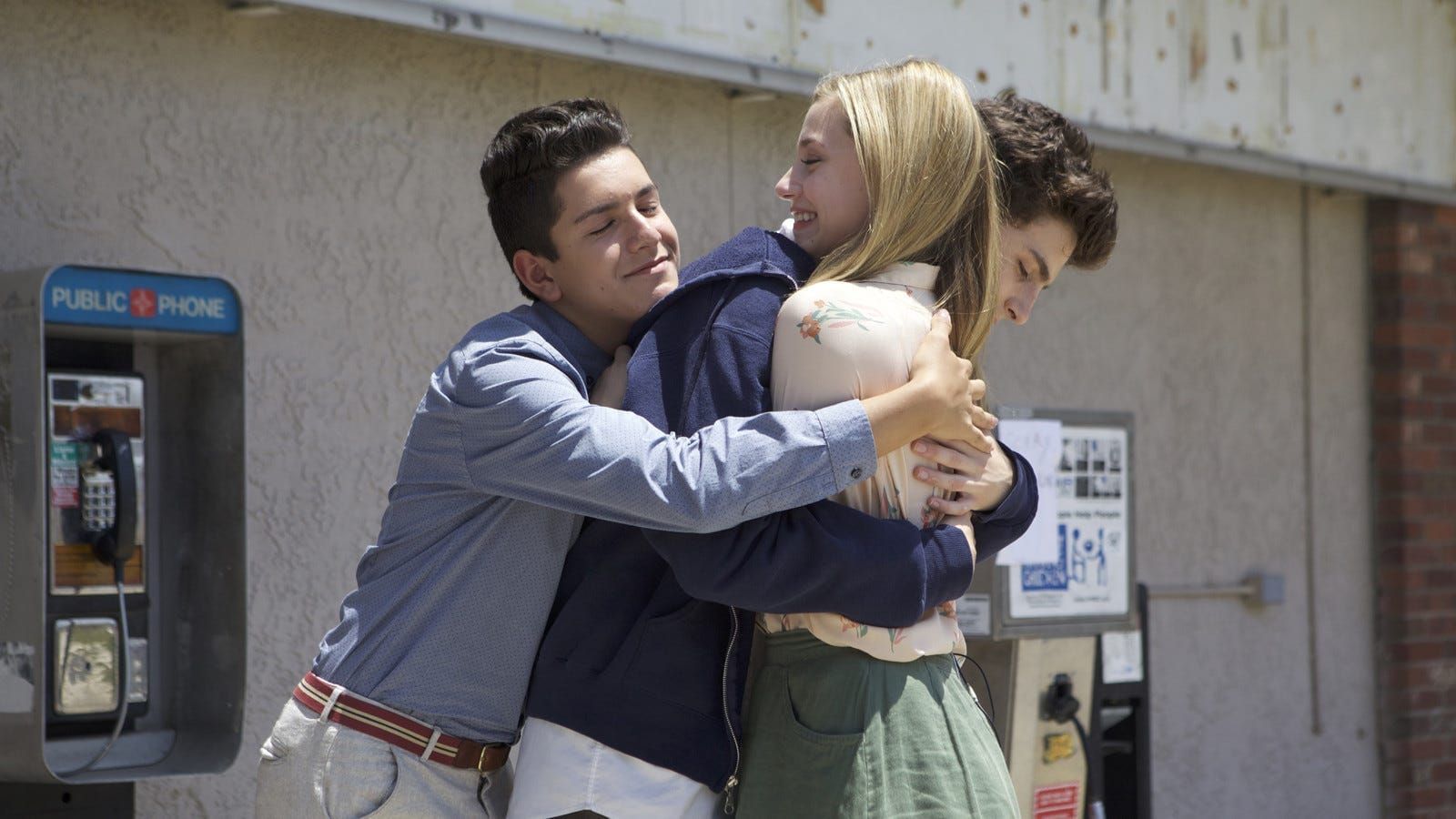
Entertainment Weekly calls it a “breezy indie gem”. Bilge Ebiri of the Village Voice calls it a “tight, unnerving and deceptively complex movie”. David Ehrlich of Indiwire writes, “With her directorial debut, The Keeping Room screenwriter Julia Hart proves that she belongs behind the camera.” And the New York Times has named it a Critics Pick.
It is the movie Miss Stevens and it debuts in select theaters this weekend in LA and NY, then on video on demand (VOD) beginning September 20.
For those of you starved for strong adult movies, I highly recommend Miss Stevens. It is a pitch perfect film… authentic… human… and entertaining.
Today in Part 4, Julia goes into what she learned about writing from her experience directing Miss Stevens:
Scott: I was going to ask you about the theme of acting. The story’s about young actors. Rachel’s mother was an actor, and in many respects Rachel’s acting in her real life, acting happy and together when she’s at school. That was a very conscious metaphor for you, right?
Julia: Yes. We knew we couldn’t make this movie unless we had the very best actors in it, because you can’t make a movie that is about performance that, as you say, relies so much on the performances as a result without incredibly talented actors, and we did. [laughs]
Scott: There’s a lot of really nice cinematic moments. These visual touches, transitions, but, honestly, I’m a huge Billy Wilder fan. He’s my favorite writer/director.
His approach was you write the strongest script you can with honest portrayals of compelling characters, set the camera, and let the actors act. There were a lot of scenes that just felt like that.
Let’s just put the camera here and let the actors do their thing. There was a nice balance between some good visual interesting cinematography, but also just respectful of the actors and just letting them do their thing. Was that a conscious thing on your part?
Julia: Definitely. I’ve been watching stuff recently where the camera is just not telling the same story as the story or the characters. Cinema and shot making are trumping the truth of what the movie wants to be.
That was very conscious for us that we not just show off what we thought cinema could be, and instead we made the camera be truthful and connected to what was going on in the characters’ lives and what was going on in the story.
Sometimes that called for a little bit more, and sometimes that called for a little bit less, but it was just always, again, this idea of authenticity, like what does this woman, what do these words want us to be looking at?
Scott: You’ve heard that saying, that when you make a movie you tell the story three times ‑‑ when you write it, you shoot it, and you edit it. First time directing, Julia, does that resonate with you at all?
Julia: Oh, my god. Yeah. The greatest lesson on this was editorial, because I had been on enough film sets. I was on the set every day of The Keeping Room, which I wrote, and had been on a bunch of Jordan sets, and had been on some of my dad, who’s a screenwriter, as you know, on some of his sets. But this was the first time I was in the editing room. It was just such an extraordinary experience to realize that you can completely change… pretty much anything. It’s a magic room. That was the most fun new part of the process for me, taking our skills as writers into the writing of the edit with our editors.
Scott: Did you shoot everything that was in the script [Miss Stevens]?
Julia: We did. The stuff that we ended up cutting was more about…it was about two things. One was about storytelling and realizing that in the watching of the whole run of the first cut of the movie that we were revealing stuff we didn’t want to reveal early on.
Then the other big thing was the stuff in the script that was more traditional “Comedy,” and, again, in a film where authenticity was our king ultimately what works in the movie is the stuff that’s just natural and funny because real life is funny and not the stuff that was comedy with a capital C. Again, that was just listening to the work and letting the movie tell us what it wanted to be.
It’s so odd that I ever even thought when I was on set that I knew what the whole movie was, because you can’t possibly know when you’re shooting different pieces from different parts of the movie on different days.
At least my experience is I only really knew what the story was once I was watching everything strung together.
Jordan: You have to pretend like you know what it is. You’re shooting to what you think it is on set, and that changes. Again, that’s just like one of those things where you just have to listen to the picture.
When you’re on set and things are out of order, you’re shooting to an idea, to however you’re holding the movie, in your head.
Then you get into the edit room, and whatever you were holding in your head you sort of just have to leave that in production, because now you see a cut of the picture, and you start to hold the movie that way.
Scott: As long as you got coverage then I guess you’re OK
Jordan: Even if you don’t there are ways. You just have to do it.
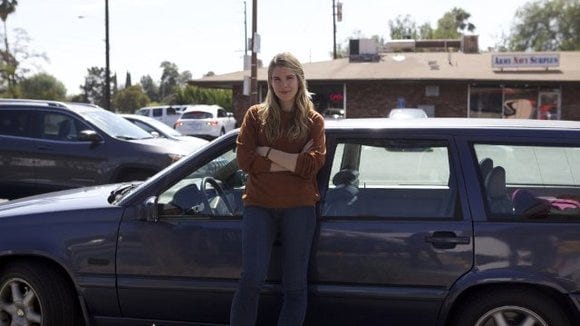
Scott: I love the movie’s ending. The script was interesting because there was a lot more dialog, let’s say, between Rachel and Billy’s parents, but that was all cut.
That got very cinematic at the end. I was all visual storytelling at the very, very end. I just thought that was so touching and lyrical, and it just worked. It was terrific.
Julia: The most surprising part of the editorial process was that ending. Writing is words at the end of the day. One of the greatest lessons I learned on this picture was to start to see some of the visual storytelling that can come in the editing process and that can come through directing and imbue more of our writing at an earlier stage with that type of cinematic language.
Tomorrow in Part 5, we consider how movies like Miss Stevens and La La Land, which Jordan produced, disprove the meme going around that “movies are dead”.
For Part 1 of the interview, go here.
Part 2, here.
Part 3, here.
Here are links to some reviews of Miss Stevens:
Twitter: @juliahartowitz, @jehorowitz.