A Story Idea Each Day for a Month — Day 1
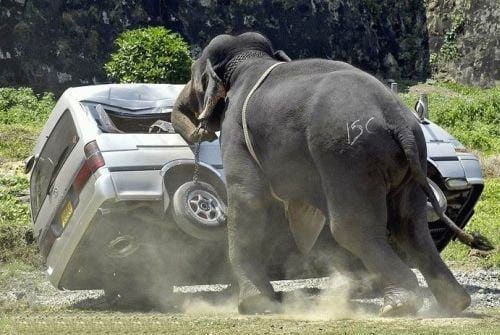
This is the sixth year in a row I’ve run this series in April. Why a story idea each day for the month? Several reasons which I’ll work my through during this series of posts. For today, the most basic one:
If you have aspirations of becoming a professional screenwriter, you should be in the habit of generating story concepts.
Let’s say you write and sell a spec script. Congratulations. You’re the “flavor-of-the-week.” Your agent and manager set up meetings across Hollywood with producers and studio execs. The first words out of their mouths will likely be some variation of “Love your script ” (even if they haven’t really read it). The second thing they say will almost assuredly be, “What else have ya’ got?” If you haven’t been developing other stories, that is likely to be a very short meeting.
There are many ways to generate story ideas. This month, I focus on one: Looking for ideas in news sources. Each of the items I’ll be posting for the next 30 days comes from a news site.
Today’s story idea: The Tragic Price of Ivory.
How extensive is the poaching?
Poachers are now slaughtering up to 35,000 of the estimated 500,000 African elephants every year for their tusks. A single male elephant’s two tusks can weigh more than 250 pounds, with a pound of ivory fetching as much as $1,500 on the black market. The ivory is so valuable because all across Asia — particularly in China — ivory figurines are given as traditional gifts, and ivory chopsticks, hair ornaments, and jewelry are highly prized luxuries. “China regards ivory as a cultural heritage; they are not going to ban it,” said Grace Gabriel of the International Fund for Animal Welfare. Many Chinese consumers don’t realize that elephants must be killed for their ivory; in one survey, more than two thirds of Chinese respondents said they thought tusks grew back like fingernails.
What impact has the slaughter had on the elephants?
Elephants are highly intelligent, social creatures that live in matriarchal groups, and poaching has ravaged much of their social structure. The biggest tusks are found on the largest breeding males and on the oldest females, who lead the elephant troops. Where these animals are targeted and killed, elephant populations are reduced to leaderless groups of traumatized orphans huddling together. In the past year, even they are being wiped out, as some poachers have started dumping cyanide into watering holes, killing every animal that drinks there. Last year, poachers killed an estimated 300 elephants in Zimbabwe’s largest park, Hwange, by lacing watering holes and salt licks with cyanide.
Who are the poachers?
Since the industry is illegal, those who run it largely come from criminal syndicates or terrorist organizations. Al-Shabab, the Somalia-based wing of al Qaida, raises $600,000 a month from poaching to fund its activities. Uganda’s Lord’s Resistance Army, the rebel group notorious for enslaving children, also raises money through poaching. “Poaching has become one of the most profitable criminal activities there is,” says Peter Seligmann, the CEO of Conservation International. Chinese mafia organizations mostly do the purchasing and distribution of ivory after it’s been obtained, selling it mostly in China and Southeast Asia but sometimes to markets in the U.S.
What could you do with this story conceit?
My first instinct: Establish a pair of poachers. Complex, desperate characters. Travel to Africa to score big on the ivory trade. Only this time, they picked the wrong damn elephant to mess with.
Two humans out in the middle of nowhere. Fish out of water. And one majorly pissed off elephant — probably his mate has been killed by these dudes — who is going to stalk, scare and squash these two human hunters.
It’s Jaws meets Predator.
Of course, you could just go naturalist advocate taking on the powers that be. But somehow being out in the wild with a marauding-bent-on-revenge elephant strikes me as a cool low-budget movie.
So there you go: My first story idea for the month. And it’s yours. Free!
Finally each day in April, I invite you to join me in comments to do some brainstorming. Gender bend, genre bend, what if. Take each day’s story idea and see what it can become when we play around with it. These are valuable skills for a writer to develop.
For the entire 2015 Story Idea Each Day for a Month series, go here.
See you in comments. And come back tomorrow for another Story Idea Each Day For A Month.
Comment Archive