A Story Idea Each Day for a Month — Day 18
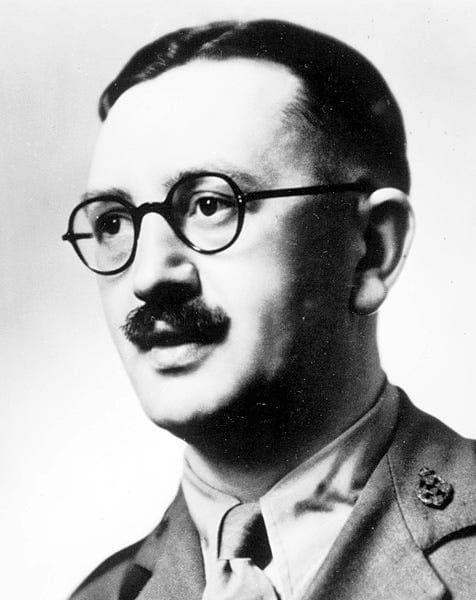
Today I hand over a story to the GITS community that I have actually thought about writing several times. It’s based an obituary I read back in 2000: Ivan Hirst, British Office Who Revived VW, Is Dead at 84:
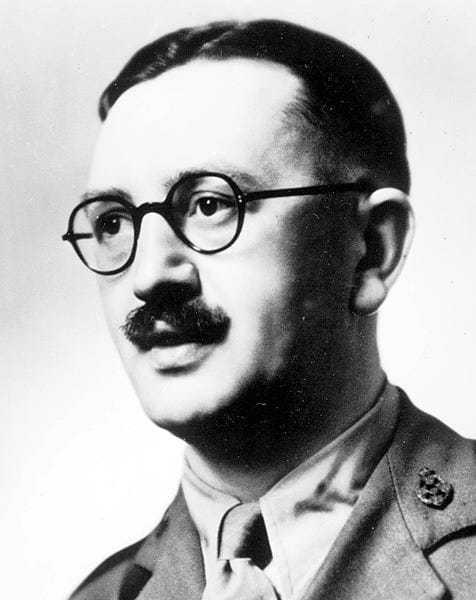
Maj. Ivan Hirst, the British Army officer responsible for getting the Volkswagen factory running again after World War II in what is now Wolfsburg, Germany, died March 10 at his home near Marsden, in Yorkshire, England. He was 84.
Without his efforts, Volkswagen probably could never have shifted from its failed dream of producing a people’s car for the Third Reich into the economic powerhouse that built the Beetle, the symbol of German recovery.
‘’Anyone who drives a VW owes a lot to Major Hirst,’’ said Ryan Lee Price, editor of VW Trends magazine, a publication for Beetle owners.
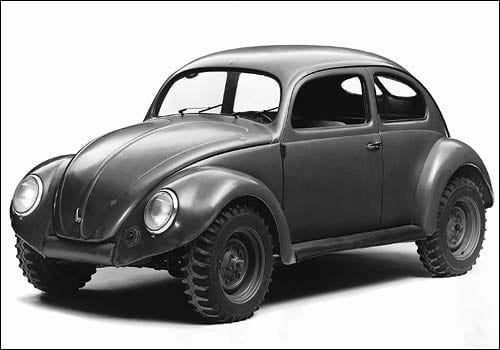
Yes, you read that right. The Volkswagen Beetle, which eventually sold 22 million units worldwide, a car clearly identified with Germany, was actually saved by a Brit. Here’s how:
Part of the Duke of Wellington’s Regiment, he was evacuated at Dunkirk after the fall of France in 1940.
Later transferred to the Royal Electrical and Mechanical Engineers, he returned to Europe as head of a tank repair group in Brussels.
It was from there that he was ordered in August 1945 to the former ‘’Strength Through Joy’’ City, a sprawling forced-labor factory between Berlin and Hanover. The city was soon renamed Wolfsburg.
Captured by the Americans, the mile-long, bombed-out plant Hitler had built was then turned over to the British.
The plant’s last wartime products were parts for V-1 rocket bombs and stoves for soldiers on the Eastern front. The work was done by about 15,000 slave laborers, prisoners of war and others.
Sent to the plant without orders, Major Hirst found the workers still there and on his own initiative decided to use them. In his repair and motor pool service, he found fearful ex-Nazi administrators, refugees from the Soviet sector 15 miles to the east and former slave laborers mingled suspiciously in an economy where the prime currency was American cigarettes.
The slave laborers were soon sent home.
Major Hirst recalled in a 1962 magazine article that he and his commanding officer, Col. Michael McEvoy, who had driven an early version of the Volkswagen in 1938, spray-painted army green one of the few Beetles around and drove it to their local headquarters.
In September 1945 the two officers persuaded the British military to place an order for 20,000 vehicles to serve local troops and officials.
Without that order the machinery in the plant would probably have been disbursed among the occupying powers and the factory shut forever.
Major Hirst scrounged steel and other rare materials to keep the plant going.
By 1946, 8,000 workers were producing 1,000 vehicles a month.
In January 1949, Major Hirst helped recruit Heinrich Nordoff to take over management of the company, and he led VW until 1968.
I think this is a remarkable story. You’ve got the FOOW (Fish-Out-Of-Water) element: A British soldier in post-war Germany. There’s a fascinating historical period that has rarely been explored on film — the experience of German civilians after World War II. And there is this iconic automobile, the VW Beetle (I drove one as a teenager in southern California).
At the heart of the story, the evolving connection between this British soldier and what I imagine being a poor, starving, and broken community of civilians in Wolfsburg, Germany. After the war, the Allies essentially did little to assist Germany in its efforts to rebuild. Indeed, during 1945–1947, it’s estimated that over 1 million Germans died due to starvation, sickness, and bitter cold winters.
Against this backdrop you have Maj. Ivan Hirst who singlehandedly found a way to raised up a community and in so doing, paved a path for Germany to rebuild its economy.
That’s the plotline. But it’s the themeline that interests me most, the emotional journey of Hirst and the core group of German civilians with whom he worked, coming from such polar opposite positions — after all, they had been arch enemies during WWII — to what I can only imagine were deeply forged friendships.
There are plenty of ‘negatives’ per conventional wisdom: Period piece, obscure historical events, limited interest in Hwood to do a movie set in post-war Germany.
What do you think? Is this a story worth telling?
Comment Archive