A Story Idea Each Day for a Month — Day 26
This is the fifth year in a row I’ve run this series in April.
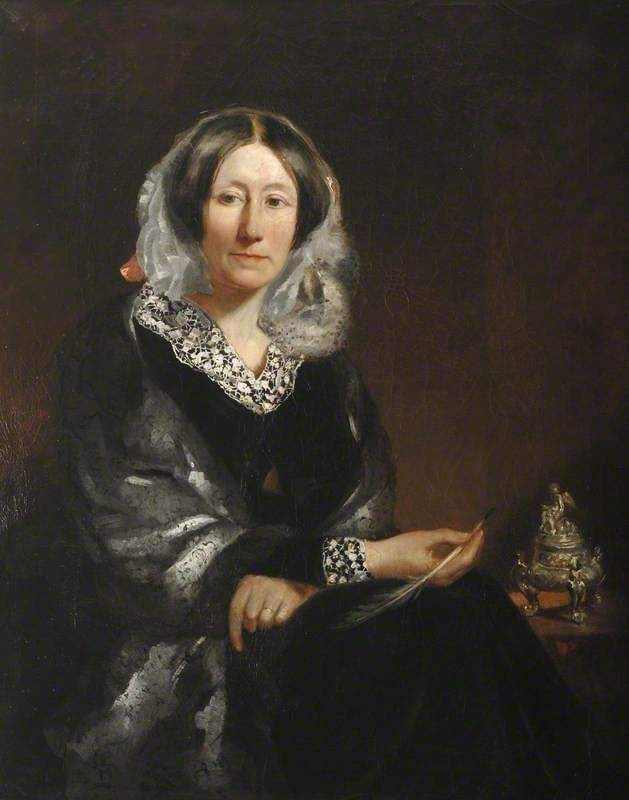
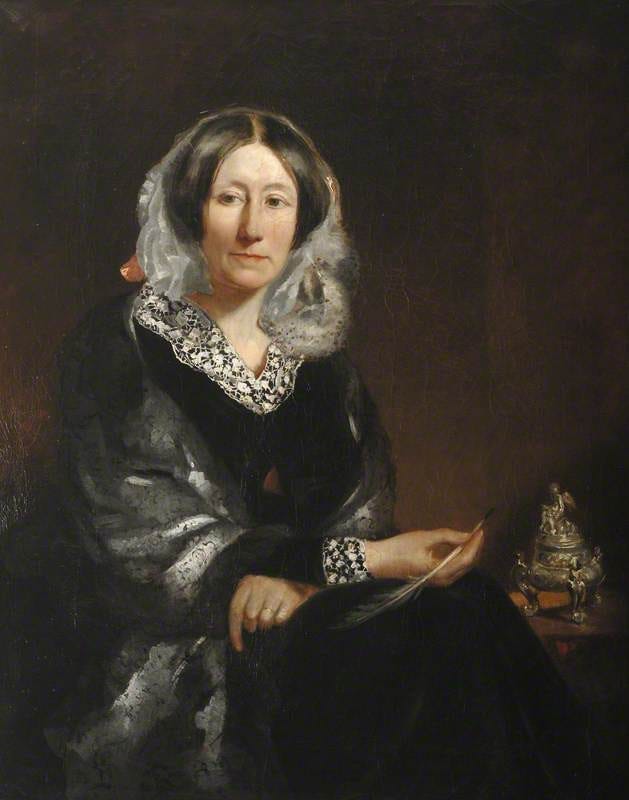
Today’s story: Mary Fairfax Somerville: The Woman Who Created “Science”.
Not only did Scottish mathematician, science writer, and polymath Mary Fairfax Somerville (December 26, 1780 — November 28, 1872) defy the era’s deep-seated bias against women in science, she was the very reason the word “scientist” was coined: When reviewing her seminal second book, On the Connexion of the Physical Sciences, which Somerville wrote at the age of 54, English polymath and Trinity College master William Whewell was so impressed that he thought it rendered the term “men of science” obsolete and warranted a new, more inclusive descriptor to honor Somerville’s contribution to the field.
Reconstructionist Maria Mitchell, herself a pioneer who paved the way for women in science, captured Somerville’s singular genius in a May 1860 article for The Atlantic:
To read mathematical works is an easy task; the formulae can be learned and their meaning apprehended: to read the most profound of them, with such appreciation that one stands side by side with the great minds who originated them, requires a higher order of intellect; and far-reaching indeed is that which, pondering in the study on a few phenomena known by observation, develops the theory of worlds, traces back for ages their history, and sketches the outline of their future destiny.
More from Wikipedia:
She was the daughter of Irish Vice-Admiral Sir William George Fairfax (scion of a distinguished family of Fairfaxes), and was related to several prominent Scottish houses through her mother. She was born at the manse of Jedburgh, in the Borders, the house of her mother’s sister, wife of Dr Thomas Somerville (1741–1830), author of My Own Life and Times. Her childhood home was at Burntisland, Fife. Returning from sea, her father considered the 10-year-old Mary “a savage” and sent her for a year of tuition at Musselburgh, an expensive boarding school. She returned being able to read, and able to write, albeit poorly; she could perform simple arithmetic and knew a little French.
Following this, she was informally taught elementary geography and astronomy, but found her education limited compared to what her brother might receive. To supplement this, therefore, she was taught Latin by her uncle, Dr Thomas Somerville, who described her as an eager student. Once, listening in to her brother receive tutoring in mathematics, she answered when he could not; impressed, his tutor allowed her to continue with lessons unofficially. She also studied art with Alexander Nasmyth in Edinburgh, who taught her about perspective — inspired, she managed to obtain a copy of Euclid’s Elements of Geometry, and began to teach herself from it. Meanwhile, she continued in the traditional roles of the daughter of a well-connected family, attending social events and maintaining a sweet and polite manner — she was nicknamed “the Rose of Jedburgh” among Edinburgh socialites. Around this time, however, following the death of her sister at age ten, her parents forbade Mary from further study, believing it had contributed to her sister’s death. This did not deter her from studying on her own, although she had to continue in secret.
In 1804 she married her distant cousin, the Russian Consul in London, Captain Samuel Greig, son of Admiral Samuel Greig. They had two children, one of whom, Woronzow Greig, became a barrister and scientist. They lived in London, and it was not a happy time for Somerville — although she could study more easily, her husband did not think much of women’s capacity to pursue academic interests. She returned home to Scotland upon his death in 1807.
Her inheritance from Greig gave her the freedom to pursue intellectual interests. In 1812 she married another cousin, Dr William Somerville (1771–1860), inspector of the Army Medical Board, who encouraged and greatly aided her in the study of the physical sciences. They had four children. During her marriage she made the acquaintance of the most eminent scientific men of the time, among whom her talents had attracted attention. Before she had acquired general fame, Laplace told her, “There have been only three women who have understood me. These are yourself, Mrs Somerville, Caroline Herschel and a Mrs Greig of whom I know nothing” (of course, Somerville was first and third of these three).
Imagine you have a keen mind, yet are restrained in your ability to learn. Having to teach yourself in secret. Fighting against prejudice.
There’s something about a woman amidst a sea of male scientists that strikes me as a story with potential. I’d have to do a lot of research to find some additional angles, but a woman who loses two husbands, raises four children, eventually rising to the top of her chosen field of study, and living 91 years spanning from the French Revolution beyond the American Civil War… feels like there is something there.
After all, if A Beautiful Mind could succeed, perhaps a biopic with a strong female lead.
“Who shall declare the time allotted to the human race, when the generations of the most insignificant insect also existed for unnumbered ages? Yet man is also to vanish in the ever-changing course of events. The earth is to be burnt up, and the elements are to melt with fervent heat — to be again reduced to chaos — possibly to be renovated and adorned for other races of beings. These stupendous changes may be but cycles in those great laws of the universe, where all is variable but the laws themselves and He who has ordained them.”
Mary Fairfax Somerville
There you go: My twenty sixth story idea for the month. And it’s yours. Free!
What would you do with it?
Each day this month, I invite you to join me in comments to do some brainstorming. Gender bend, genre bend, what if. Take each day’s story idea and see what it can become when we play around with it. These are all valuable skills for a writer to develop.
See you in comments (hit Reply to join the conversation). And come back tomorrow for another Story Idea Each Day For A Month.
Comment Archive