A Story Idea Each Day for a Month — Day 8
This is the sixth year in a row I’ve run this series in April. Why a story idea each day for the month? Several reasons which I’ll work my through during this series of posts. Here’s another one:
You always need more than one in your gun.
Want that explained? Go here to read a Business of Screenwriting post.
Today’s story idea: All-women team goes on the hunt for poachers in South Africa.
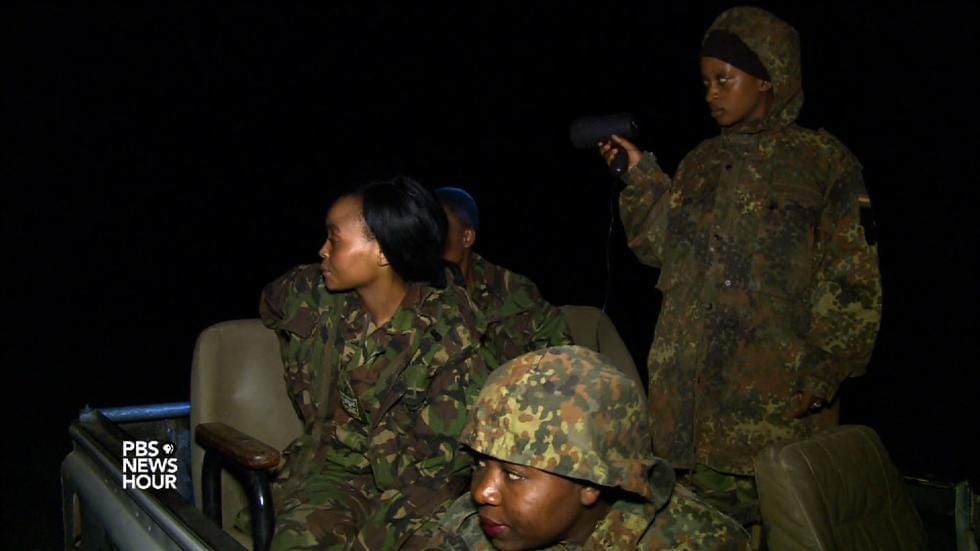
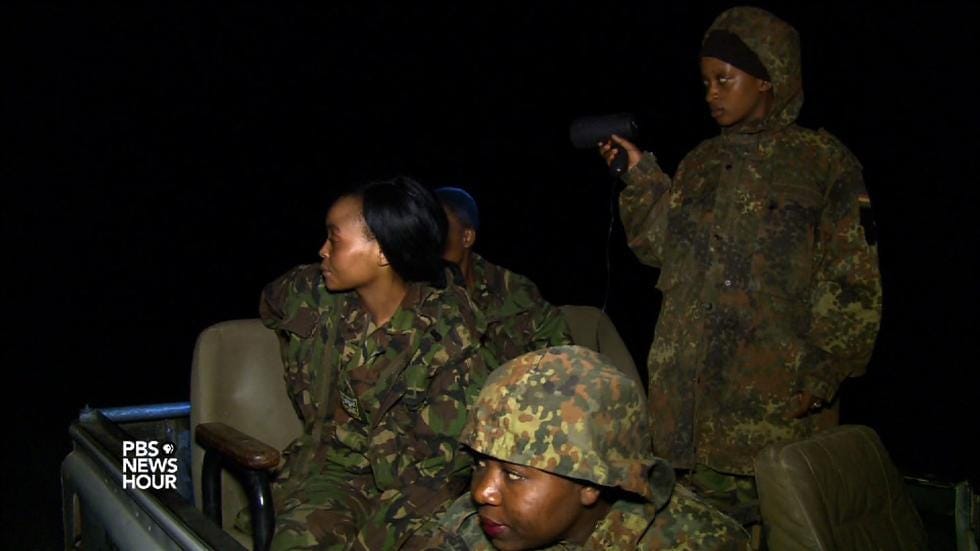
MARTIN SEEMUNGAL: They take their name from the most feared snake in Africa. The Black Mambas are a specially trained all-women anti-poaching unit, protecting rhinos and other endangered species.
FELICIA MOHAKANE, Black Mamba Anti-Poaching Unit: I wanted to protect the rhinos.
MARTIN SEEMUNGAL: Mm-hmm.
FELICIA MOHAKANE: Because I heard a lot about people, those who are killing rhinos. So I just had an interest that I must have and work here and — and protect those rhinos.
MARTIN SEEMUNGAL: Right.
They’re critical eyes and ears on the ground, patrolling the perimeter fences, looking for any signs of poacher incursions. They walk 20 miles, often longer, during the day, and they work at night, a loud, very visible display that they are still watching after dark.
They use a vehicle at night because it is far too dangerous to come out on foot. But there are still threats. The wild animals — that’s an elephant they have to back off. Lions and leopards hunt at night. Poachers are usually heavily armed. All of the women admit it wasn’t easy in the beginning.
Siphiwe Sithole is one of the Black Mamba veterans. She runs the operation center, but spent three years on the beat in the bush.
SIPHIWE SITHOLE, Black Mamba Anti-Poaching Unit: Knowing that there is dangerous animals, you just think, I don’t know when I am going to face a lion. I don’t know when am I going to face a rhino, so, yes, first time when I go, I was afraid.
MARTIN SEEMUNGAL: The Mambas’ salary is covered by the South African National Parks Authority, but it’s not much, about $250 a month, the extreme low end of South Africa’s national pay scale, yet similar to what other park workers get. But they say they’re driven to do this because they say they want to preserve something for their children.
FELICIA MOHAKANE: We want our children to be able to see rhinos live, not from a television or a magazine that there once being a rhino in some years ago. We want them to see them live in the reserve.
GOODNESS MLANGA: It is important for us to save the rhinos, so that the next generation will be able to see that they are rhinos, not just by history that there was rhinos like as it’s a history that there was dinosaurs.
I am drawn to stories which feature a unique occupation and/or subculture. This has both. Plus it’s interesting that the lead characters are women.
If I were to take this on, I might approach it from the perspective of an adolescent girl who is conscripted to join the anti-poacher team. Perhaps she has been something of a troublemaker and in learning about nature, she finds a sense of balance in her life.
Theme: Wild life tames the wild child.
And if you introduce an orphaned baby rhinoceros, like this:
You have the makings of an engaging family drama.
There you go: My eighth story idea for the month. And it’s yours. Free!
Now it’s your turn. What would you do with this story setup?
Each day this month, I invite you to join me in comments to do some brainstorming. Gender bend, genre bend, what if. Take each day’s story idea and see what it can become when we play around with it. These are all valuable skills for a writer to develop.
To see all of the story ideas in this year’s series, go here.