“Boyhood,” Transformation and Moments
I think Boyhood deserves an Academy Award for Best Picture in 2014. Here are some thoughts I posted on the fly last week about the movie in our weekly analysis of the script:
If there is a movie that speaks to what Joseph Campbell calls the central theme of a Hero’s Journey — Transformation — it’s this one. And what’s so intriguing is the breadth of meaning that dynamic takes on in this story.
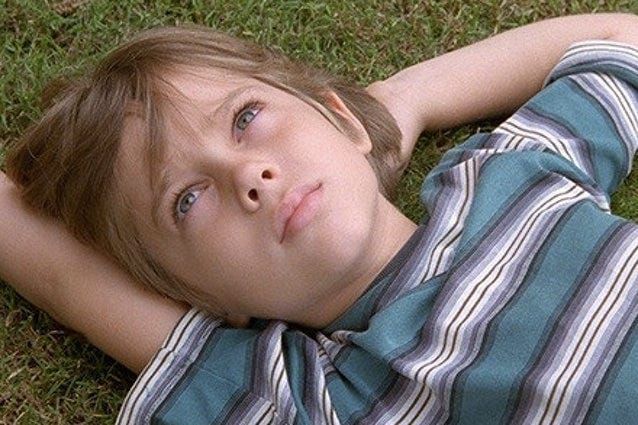
Many people have focused their attention almost solely on the unique narrative device made by writer-director Richard Linklater — shooting the movie over a period of 12 years. And it is, no doubt, a remarkable creative inspiration. Most movies which take place over a lengthy time-span, when we see the actors age, even as much as we enter into the story universe, we know at a pragmatic level, their physical appearance reflects the work of hair and make-up artists. In Boyhood, not so. The actors actually physically TRANSFORM over time, especially those playing the parts of Mason and his sister Samantha, naturally so as they grow from childhood into young adults.
So there is THAT level of transformation. But then, look at what happens to each of the main characters in their own PERSONAL lives:
* Olivia goes from a underemployed single mother, through a series of bad marriages, gets a graduate degree, becomes a teacher, and even something of a mentor (those 2 scenes with the guy who replaces the plumbing line outside the house who she advises to go to college, then meets years later in the restaurant where he thanks her for her wisdom).
* Dad goes from freewheeling vagabond to a minivan driving, moustache-wearing, new father, marrying into a religious family, working as a businessman guy.
* Samantha goes from this little girl into a college student.
* And Mason. The thing that grabs me the most on an emotional level is how at each stage of his growth over 12 years, he could easily have slid into negativism and self-destructive behavior. Child of divorce, abusive stepfather, Olivia’s next husband who doesn’t understand Mason at all, moving around so much, the family often on the edge of financial distress, lack of interest in a typical educational path toward a ‘safe’ career, along with the usual opportunities for teenagers (drugs, casual sex). But due to an involved and caring mother who, even if she made shitty choices in terms of her own love life, loved her children and advocated for them; a father whose lifestyle may have been all over the place, but again, a man who showed love for his children, albeit often in a self-aggrandized way, and whose alternate way of carving out a living presented Mason with an idea that he did NOT have to work as a mindless gnome, at least as a young man.
Then there is the photography. With all the negative energy swirling in, around and through Mason’s life, he discovered what would appear to be his bliss, an avenue for his creative expression. The camera allowed him to show the world how he SAW the world. It validated who he WAS and I imagine gave him, if not hope relative to a career, a sense of excitement in the here and now, something he ENJOYED doing.
And so, Mason’s metamorphosis is fundamentally a positive one. Which is why that final scene with he and his three college friends, sitting out in Nature, a place of raw beauty, in a way it feels like he beat the odds. He has become a Creator… not a Hater.
A final thought re transformation in the story. I noted the breadth of this dynamic in Boyhood. If you compare the movie to Forrest Gump, which I have elsewhere on the blog, whereas Forrest is a change agent and it is the world around him that goes through one sea change (culturally) after another, Transformation with a capital T, in Boyhood the world pretty much stays the same. It’s the PEOPLE who change [of all the characters from FG who might best fit into Boyhood, I would argue it would be Jenny, but I’ll save that thought for another blog post]. And whereas in FG, the occurrences that cause change are these BIG EVENTS — Vietnam War, assassinations, Watergate, peace march on Washington, etc — in Boyhood, change happens through a long thread of moments. Some of them bigger than others [e.g., Olivia assaulted by her drunk husband], but mostly seemingly mundane slices of life.
And that’s the main point I want to make: How do we, as human beings, make sense of our lives? I think on one level, we do it in remembering and stitching together moments. That’s what Boyhood does so beautifully. And that’s why the choice to shoot the movie over 12 years was such a stroke of genius, because we, as viewers know these moments are playing out in the present tense in a unique way. Not makeup artists. Not hair stylists. The aging, the growth, the physical transformation is real. And it underscores and intertwines with the psychological metamorphosis to create a powerful narrative even if the events are merely a myriad of little moments.
We may never see another movie like Boyhood. Who the hell else would tempt fate like that for 12 years?!?! It’s a crazy scheme! Fortunately the movie gods, who routinely crash and burn productions, smiled down on this one, enabling us to add this cinematic gift to the collection of movie greats.
Birdman, which I also loved, does have a gimmick, albeit an amazing one, pulling off a story that looks like it’s a single continuous camera shot, but as far as I can tell, there is no thematic connection for that choice and the story. With Boyhood, I would argue Linklater’s vision to shoot it over a 12 year period is tied to the central theme of the story. Therefore it’s not a gimmick, rather a fascinating narrative approach to drive home the experience of a story unfolding in the present, moment by moment.
2014 was an extraordinary year for movies: From indie films like Birdman, Selma, Whiplash, The Skeleton Twins, The Imitation Game, The Grand Budapest Hotel, Nightcrawler, Belle, and Snowpiercer, to mainstream movies like Edge of Tomorrow, Gone Girl, Interstellar, The LEGO Movie, Big Hero 6, Guardians of the Galaxy, Neighbors, and The Fault in Our Stars. I’m sure I’m forgetting some. But to me, Boyhood stands out as a truly special movie.
Go beyond the so-called “gimmick” and allow yourself to connect with the characters and their respective and collective journeys. The movie is a cinematic marvel.
Comment Archive