Character Archetypes: “Juno”
Over the years, I’ve analyzed dozens of movies through the lens of five primary character archetypes: Protagonist, Nemesis, Attractor, Mentor, Trickster. This is my theory, that most movies have these five narrative dynamics at work in them:
A character or characters with a conscious goal toward which they are moving forward: Protagonist.
A character or characters who provide an oppositional force: Nemesis.
An ally who is most connected to the Protagonist’s emotional development: Attractor.
An ally who is most connected to the Protagonist’s intellectual development: Mentor.
A character who switches from ally to enemy, enemy to ally, and tests the will of the Protagonist: Trickster.
We see this set of narrative dynamics in movie after movie after movie, enough to suggest there is a pattern at work here. So this week, a series on these five character archetypes in movies.
Today: The 2007 movie Juno, written by Diablo Cody who won an Oscar for Best Original Screenplay.
IMDb plot summary: A tale told over four seasons, starting in autumn when Juno, a 16-year-old high-school junior in Minnesota, discovers she’s pregnant via her best friend, Paulie Bleeker. She decides to give birth and to place the child with an adoptive couple. The chosen parents, Vanessa and Mark, upscale yuppies (one of whom is cool and laid back, the other meticulous and uptight), meet Juno, sign papers, and the year unfolds. Will Juno’s plan work, can she improvise, and what about Bleeker?
Protagonist: Juno MacGuff (Ellen Page)
Okay, so who is the Protagonist? That’s pretty easy, right? Name of the movie.
It’s Juno’s story. The story is told through her point of view. All of the characters circle around her and service her journey. She is the character who goes through the most significant transformation. And it’s her dilemma — being pregnant — which serves as the centerpiece and backbone of the story’s structure.
“It started with a chair.” The movie begins with Juno having spontaneous, unprotected sex with Paulie Bleeker. In this very chair:
Why would she do that? We could chalk it up to her being a typical teenager who doesn’t think through the consequences of their actions. But is there such a thing as a ‘typical’ adolescent? And Juno in many ways defies generalization.
She is a teen of her generation, yet pulled toward punk music of the late 70s and early 80s, of horror movies by Dario Argento.
With her distinctive lingo and language style, it’s like she is trying to be an adult, and the way she thinks she can do that is by being cool.
In fact, if you go through the script, the word “cool” is used over 20 times, most of them by Juno:
I was thinking a graphic designer, mid-thirties, and his cool Asian wife who dresses awesome and plays bass. But I’m trying to not be too particular.
The guy is super cool! His name is Mark and he’s into old horror movies and he plays guitar. I actually hung out with him today.
No, for real. I think you are the coolest person I’ve ever met. And you don’t even have to try.
Why does she think she has to be so adult, so cool? The first clue is this seemingly throwaway line about the break-up of her parents marriage when she was a child.
My dad used to be in the Army, but
now he’s just your average HVAC
specialist. He and my mom got
divorced when I was five.
She lives on a Havasu reservation
in Arizona…
… with her new husband and three
replacement kids. Oh, and she
inexplicably mails me a cactus
every Valentine’s Day.
And I’m like, “Thanks a heap,
Coyote Ugly. This cactus-gram
stings even worse than your
abandonment.”
It’s not much, almost a throwaway set of sides, but apart from the exposition of the divorce, the dialogue convey at least two more things:
(1) The break-up happened when Juno was 5, a particularly vulnerable age when a child is deep into learning about trust.
(2) Juno still hurts from her mother’s “abandonment,” the pain still stings.
We see this theme touched on later in the movie, a couple of moments of honesty by Juno.
I just need to know it’s possible that two people can stay happy together forever.
That’s the more positive spin on what Juno needs. Here’s the more fearful version.
I want things to be perfect. I don’t them to be shitty and broken like everyone else’s family.
Or in subtext, she means her family. She means her brokenness.
Put these together and that helps us understand why Juno has to act cooler than cool, hipper than hip. She thinks she has moved into adulthood, at least part of her believes that. As an adult, you can do what you want to do, act the way you want to act, you don’t need to trust anybody else. Juno has in effect bypassed her adolescence and jumped straight into adulthood [again what she believes about herself].
We can even see this in Juno’s voice. Because her wise ass beyond her year’s dialogue fits her psychological state, trying to be an adult, trying to sound like an adult. She uses hip and cool lingo, beliefs, and cultural likes / dislikes to distance herself from being a teenager. It makes sense logically for her character and, thus, I would argue is an authentic expression of her struggle to find out who she is.
If we look at Juno’s metamorphosis from a meta view, the reason this journey has to happen, the reason why she gets pregnant and goes through everything she endures, her narrative imperative, is to break down that adult defensive mode she has created, get in touch with the pain associated with abandonment, and reclaim her adolescence.
And in their own way, each character in the story services that transformation process. Let’s explore these archetypes starting with Mentors.
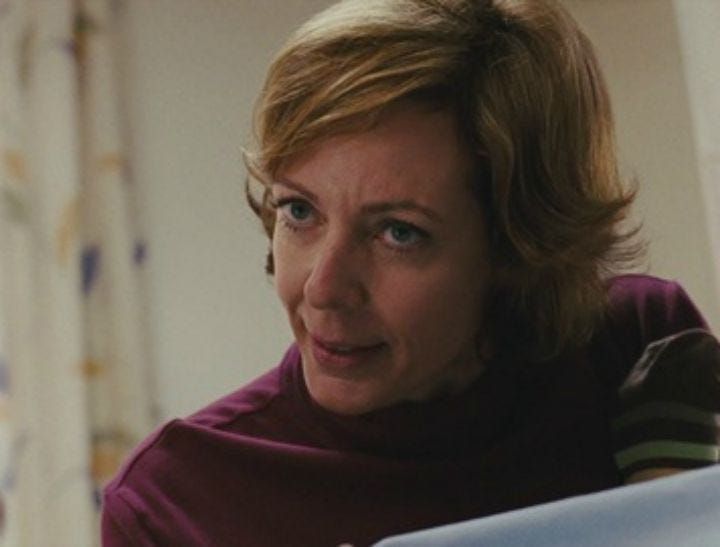
Mentor: Bren MacGuff (Allison Janney)
She guides Juno through the pregnancy process up to and including the delivery scene.
“Well, honey, doctors are sadists
who like to play God and watch lesser people scream…
Shit!
Hey, can we get my kid the damn spinal tap already?”
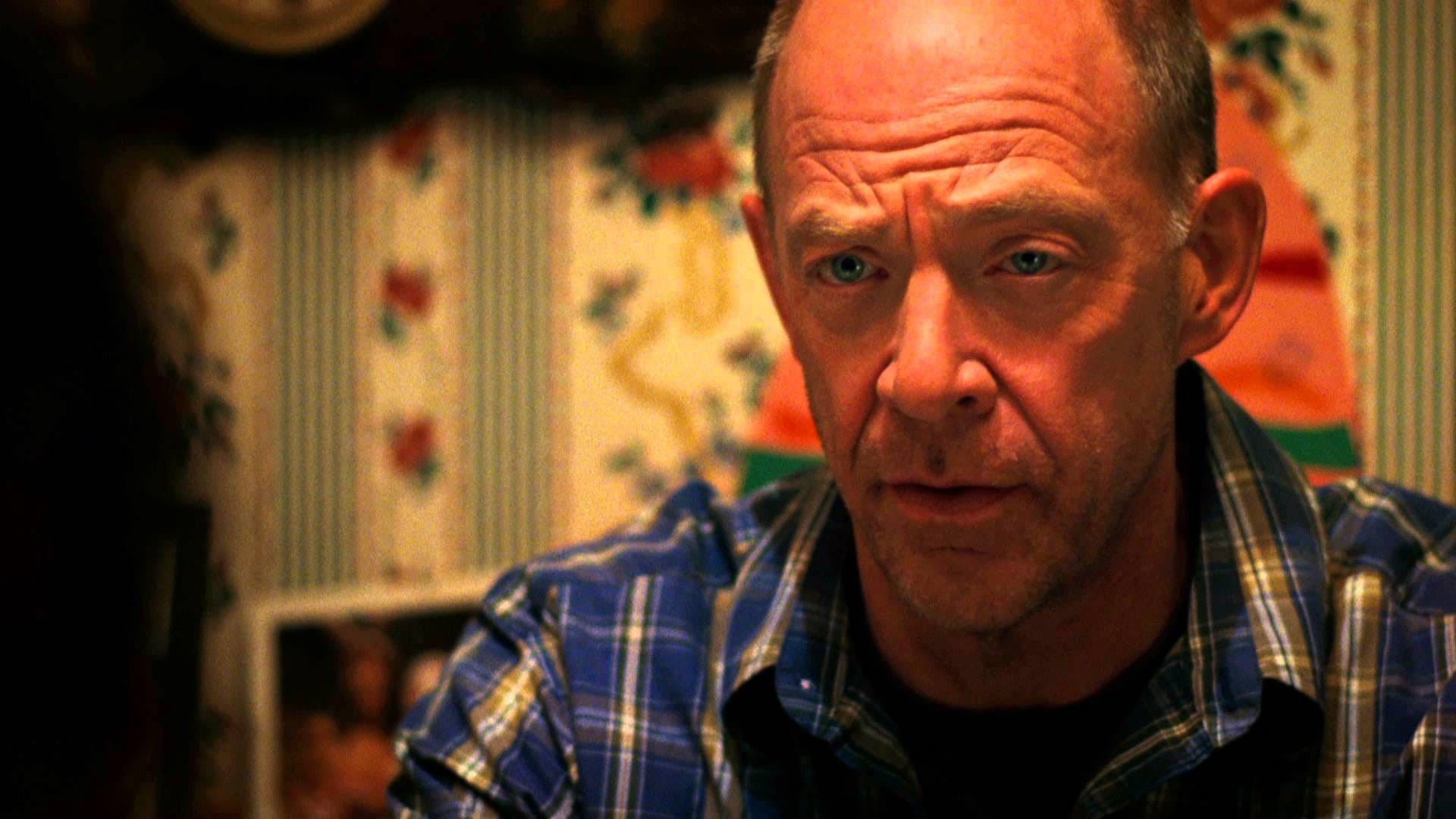
Mentor: Mac MacGuff (J.K. Simmons)
Her father Mac who after the initial shock of discovering his daughter is pregnant stands alongside Juno during the adoption process. And he provides a pivotal piece of wisdom late in the story:
In my opinion, the best thing you can do is to find a person who loves you for exactly what you are. Good mood, bad mood, ugly, pretty, handsome, what have you, the right person will still think that the sun shines out your ass. That’s the kind of person that’s worth sticking with.
This is precisely the message Juno needs to hear at a crucial juncture in the story. Her step-mother and father fulfill the Mentor function in the story.
What about Attractor? My take: We have two, a False Attractor and a True Attractor.
Attractor (False): Mark Loring (Jason Bateman)
The potential adoptive father. He represents a cool guy, writes songs and jingles for a living, plays guitar, shares Juno’s interest in punk music and horror movies. Seemingly the perfect guy and, indeed, Juno finds herself spending more and more time with Mark.
It’s a kind of awkward courtship which comes crashing down when Mark reveals he’s going to leave his wife Vanessa and that he’s not ready to be a father. Here instead of a perfect guy, part of a perfect family, Juno is confronted with the issue of abandonment again. Moreover by someone she considered to be “cool”.
In contrast, there is Paulie.
Attractor (True): Paulie Bleeker (Michael Cera)
At first, he doesn’t seem all that cool. He’s a goofy, ‘typical’ teenager. And he and Juno go through an emotional journey of their own.
At first, when Juno tells him she’s pregnant, both try to act adult about it, particularly Juno who attempts to slough it off. But much later when Juno is quite pregnant, they have this interaction:
Eventually she discovers the truth: That Mark, her False Attractor, is a fraud. And that her genuine feelings, those she’s had all along, but tried to ignore while wearing her adult mask, she actually loves Paulie.
“I think it’s because my heart starts pounding when I see you.”
And here’s a side of dialogue which was shot but edited out because it’s there in subtext, but speaks to the big lesson Juno has learned about imperfect love.
Basically, I’m completely smitten with you, and I don’t care if I’m making an ass out of myself right now, because you’ve seen me make an ass out of myself a million times, and you still want to be my friend.
Echoing the advice given to her by her father.
But how about a Trickster? Here’s who I think provides that narrative function:
Trickster: Vanessa (Jennifer Garner)
At first, Juno thinks Vanessa is an uptight Yuppie, every hair in place, keeps her house immaculately clean. Complete opposite of Juno.
And as Juno’s feelings for Mark, Vanessa’s husband, grow, Vanessa falls into the category of an enemy in the weird courtship which goes on between adoptive father to be and prospective surrogate mother.
But then there’s this moment:
A random meeting at a shopping mall. The look on Vanessa’s face. And the look on Juno’s face. Now she knows how deeply personal this is for Vanessa. And later on, after Juno is crushed by Mark’s decision to get a divorce and abandon Juno’s baby, Juno returns to Vanessa and leaves her a note.
Which leads to this:
Vanessa ends up a mother after all. And she turns out to be an ally to Juno, providing the type of home for the baby Juno had wanted from the very beginning.
Trickster — gone from enemy to ally.
That leaves us with one other archetype: Nemesis. No real bad guys or gals in this story, but there is an oppositional dynamic at work, something which creates a nine month long struggle for Juno. So I would argue that this is the Nemesis.
Nemesis: Juno’s Pregnancy
Remember the definition of a character archetype: A character archetype is an ideal example of a character which has a specific narrative function.
An archetype can be physiological state such as pregnancy.
And her pregnancy causes her one set of challenges after another leading to again — a classic Final Struggle: The delivery.
Part of her metamorphosis, capped off by rejecting the cool, hip adult Mark for the geeky, unhip teenager Paulie. So in the Denouement when instead of driving a car, she rides her bike to Paulie’s house.
And they sing “Anyone Else But You” together, there is this moment in the script:
She and Bleeker exchange glances as they play. They smile ambiguously. Juno leans over and kisses Bleeker on the cheek.
Pull out to reveal the surrounding green suburb buzzing with life and summer activity.
That little kiss on the cheek is a bookend to the script’s second scene:
FLASHBACK — Juno approaches a boy hidden by shadow. He’s sitting in an overstuffed chair. She slowly, clumsily lowers herself onto his lap.
Now Juno can be a teenager. Now she learn to trust through her relationship with Paulie. Indeed her experiences have helped to ground her in her family, the here and now, so she can settle into who she is and not try to run away into adulthood early.
But to get Juno to this point, she needed to intersect with every character in the story: Mentors, Attractors, Trickster, and Nemesis. Each plays a role in her metamorphosis and it’s that interconnection of characters and their respective narrative functions which suggests a kind of possible paradigm.
This is just one of many movies which reflect these five primary character archetypes. That said, I am not suggesting this is the only way to approach writing a screenplay. There is no right way to write. Every writer is different. Every story is different. All I am suggesting is there is something going on here about this specific set of narrative dynamics as exhibited in the form of character types. And they can be a huge help for writers as we engage our characters, their interrelationships informing our story-crafting and plotting process.
What are your thoughts? Head to comments and let me know what you think.
Tomorrow: Another movie analyzed through the lens of character archetypes.
Comment Archive