Christopher Nolan: Films of the Future Will Still Draw People to Theaters
Christopher Nolan wrote a Wall Street Journal column published this week, focusing on the impact of technological changes, specifically the shift from film to digital:
Hungry for savings, studios are ditching film prints (under $600 each), while already bridling at the mere $80 per screen for digital drives. They want satellite distribution up and running within 10 years. Quentin Tarantino’s recent observation that digital projection is the “death of cinema” identifies this fork in the road: For a century, movies have been defined by the physical medium (even Dogme 95 insisted on 35mm film as the presentation format).
Savings will be trivial. The real prize the corporations see is the flexibility of a nonphysical medium.
As streams of data, movies would be thrown in with other endeavors under the reductive term “content,” jargon that pretends to elevate the creative, but actually trivializes differences of form that have been important to creators and audiences alike. “Content” can be ported across phones, watches, gas-station pumps or any other screen, and the idea would be that movie theaters should acknowledge their place as just another of these “platforms,” albeit with bigger screens and cupholders.
Depressing, right? But Nolan sees a larger, brighter picture:
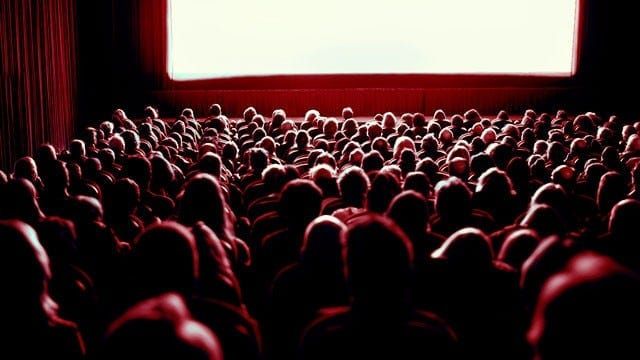
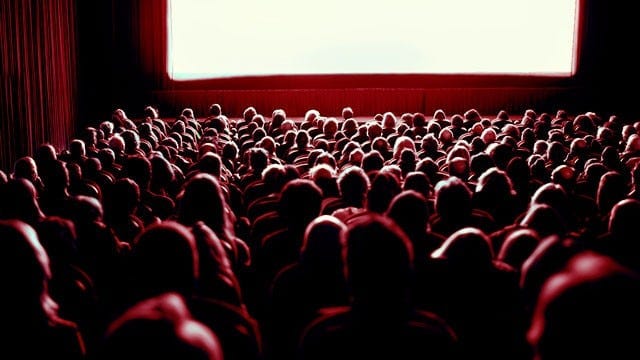
This bleak future is the direction the industry is pointed in, but even if it arrives it will not last. Once movies can no longer be defined by technology, you unmask powerful fundamentals — the timelessness, the otherworldliness, the shared experience of these narratives. We moan about intrusive moviegoers, but most of us feel a pang of disappointment when we find ourselves in an empty theater.
The audience experience is distinct from home entertainment, but not so much that people seek it out for its own sake. The experience must distinguish itself in other ways. And it will. The public will lay down their money to those studios, theaters and filmmakers who value the theatrical experience and create a new distinction from home entertainment that will enthrall — just as movies fought back with widescreen and multitrack sound when television first nipped at its heels.
You should read the whole article because Nolan goes on about the future of cinema depending “not just on grander presentation, but on the emergence of filmmakers inventive enough to command the focused attention of a crowd for hours.” Thus ultimately the presumed rise of the theatrical movie experience will emerge from the synthesis of technology and creativity.
Interestingly, Nolan never once mentions the word “story,” however he does talk about “powerful fundamentals — the timelessness, the otherworldliness, the shared experience of these narratives.”
Which leads to a fundamental question about technological ‘progress’: Will storytelling itself change? Or will the longstanding practices of storytellers, narrative principles and instincts seemingly rooted in the universal human experience, continue pretty much as they have throughout the centuries? Should storytelling change? If so, how?
Right now, one could say with safety that at the studio level, Story is largely in service to Technology, particularly when expensive blockbusters filled with eye-candy and “quasi-experimental” narratives which are more “like writing a Cirque du Soleil show” generate record revenues. But there are filmmakers, Nolan among them, who do bring an affection for and interest in what one may call ‘traditional storytelling’ to big budget projects replete with technological requirements.
This is one reason why I find the Pixar phenomenon so fascinating because the technological advances they themselves have helped to usher in on the 3D animation side of things have almost always been in service to Story, and that has proved to be one major key to their success: Every single one of their movies has debuted at #1 and gone on to make money while most garner tremendous critical praise. Why? In large part, good stories.
As I sit here pondering these thoughts, I know this: Sitting in a dark movie theater accompanied by a group of strangers, the collective experience of a Story unfolding on screen, as I have done literally thousands of times in my life, is akin to a religious experience. Scoff if you will, but some of the most powerful moments in my life have occurred losing myself in a movie, its characters, its story universe. I can only hope Nolan is right and that what we will see in the future is an opportunity for deeper, richer emotional and intellectual immersions in the most unique form of storytelling I know: Cinema.
Final thought: As writers, we can’t control technology. We can’t control studios and their business decisions. But we can control what we write… and equally important, what we choose to write. That’s how we can participate in the emergence of what movies will become.
For the rest of the WSJ article, go here.
What are your thoughts about Nolan’s column? Are you optimistic or pessimistic about the future of movies? How important are movies to you?
Comment Archive