Dispatch from The Quest: Ben Odgren
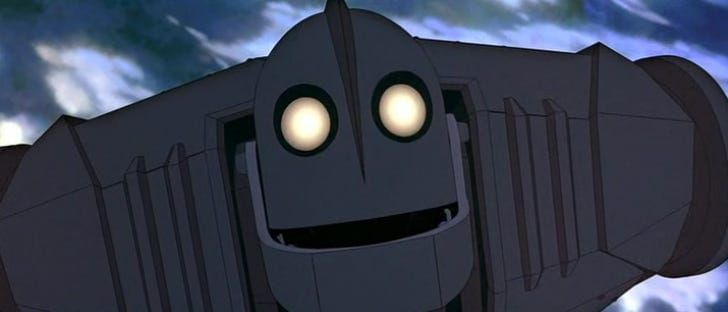
Last week as we did here on GITS, the Quest writers focused on the subject of Scene. Today’s dispatch: Ben Odgren with reflections on scenes as little stories:
So, big spoilers for The Iron Giant to follow. If you’ve always been curious about the movie but haven’t seen it, just go watch that instead.
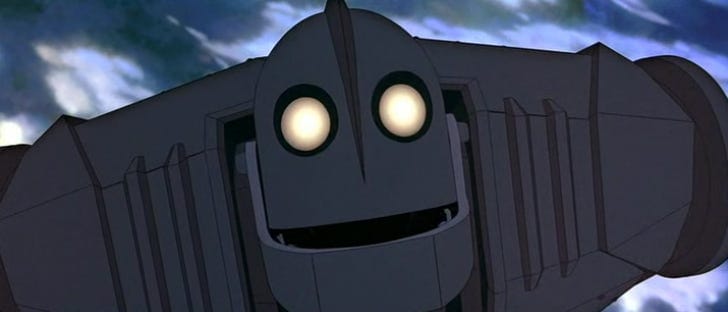
One of my favorite scenes ever comes from the climactic scene of The Iron Giant. A nuclear missile is in low orbit, descending on a small town. The giant decides he’s going to save the town by blasting off into space and colliding with the missile. On his way up, we hear the voice of the boy who befriended him.
“You are who you choose to be.”
The Iron Giant smiles and says “Superman”.
Cue the tears.
If you’ve never seen the movie, though, it might not mean much because you’d be missing the context for why those words matter. You’d be missing the scene where the boy tells the giant that he doesn’t have to be a gun if he doesn’t want to be one. Or the scene right before that where the giant turns into a walking death machine, vaporizes a couple tanks, and nearly destroys a battleship.
You’d be missing a scene prior to that where the giant puts a metal ‘S’ on his chest and pretends to be Superman. Before that, the scene when the giant learns the effect guns have when he sees a hunter shoot and kill a deer. And you’d be missing the scene before all that that when the boy introduces the giant to what Superman is. “You’re a good guy. Like Superman!”
Each of these scenes build from one another, planting the seeds for an emotional payoff at the end.
That’s definitely one of the things I struggle with. Making sure every scene matters and serves the story. I bring up The Iron Giant not just because it’s great, but because it’s animated and it seems like most animated films have great scenes with clear purpose, drive the story and characters forward with a real momentum, and fit perfectly within the film as a whole. When I’m feeling rusty and looking for interesting ways to fit scenes together I like to throw in an animated film to see how they did it. Sometimes I make little story maps while I’m watching to figure out why every scene is essential.
One of the things I’ve learned this week is that when you treat scenes like little stories within a larger story it becomes clear that everything needs to connect somehow. One, that’s easier said than done. Two, how do you do that without making the story feel it was written from a formula by a story robot? And three…I would maybe like a story robot. Not to use. Just to have.
First off, who doesn’t love The Iron Giant [screenplay by Tim McCanlies, screen story by Brad Bird, book by Ted Hughes]. Second Ben makes a valuable point: Think of scenes as “little stories with a larger story,” each a reflection of, tied to and advancing the narrative. Taking this approach is a great way to provide coherence plot, themes, and character development within the overall narrative.
Tomorrow: Another dispatch from The Quest.
About Ben: Maine writer with a love for pulpy genre movies, keeping library books out for a little too long, and strong coffee. Twitter: @benodgren.
Comment Archive