Dispatch from The Quest: Ben Odgren
Last week as we did here on GITS, the Quest writers focused on the subject of Theme. Today’s dispatch: Ben Odgren analyzes a movie that didn’t do well at the box office, but is a favorite of his in large part due to how it handled its themes:
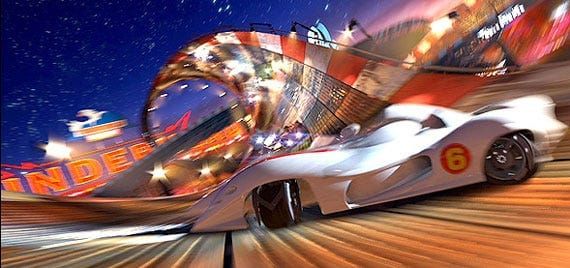
Way back in 2008 the Wachowski’s made a film called Speed Racer. It did poorly at the box office — almost nobody saw it and it was dismissed for a lot of reasons. That it’s a live action version of an old cartoon from the 60’s probably didn’t help. For me, Speed Racer is an incredible piece of entertainment with next-level action from two visionary directors with a thumping emotional heartbeat at its core than most movies dare to muster.
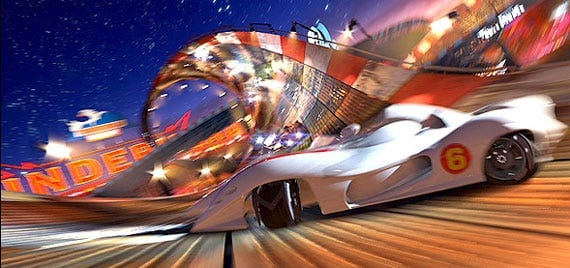
For good or bad, this movie is packed with extremely cartoony things. Fast cars. An 18-Wheeler that shoots missiles out of its grill. Ninjas. Bad guys who wear bowler hats. Cars with giant circular-saws that pop out the sides. A chimpanzee. There is a car that launches a nest of bees from a catapult. Race tracks that look like they were imagined by a 7-year-old. An epic brawl in the style of the 60’s Batman show. A nest of bees. From a catapult.
So, yes, it’s cartoony. But that’s all on the surface. Not what the movie is about.
It’s a movie about brothers. How younger brothers look up to their older brothers. How sometimes the older brother lets them down. It’s about family and what we sacrifice for them. How they bring us together. It’s about the price of greed. How cheating won’t get anybody anywhere. Ultimately, it’s about doing what you love just because you love it.
At the end of the movie the Wachowskis tie all these themes into the final lap of The Big Race. And it’s kind of brilliant. It takes moments throughout the film, stuff we see from Speed’s childhood, moments we thought didn’t even matter, and ties it together in an action montage both thrilling and cathartic.
All of this is to say that theme grounds everything we write, no matter how outrageous, into something human and relatable. Once we’ve said all we can say about how the flux capacitor makes time travel possible, how extracting blood from well-preserved mosquitoes can give us dinosaur DNA, or how the Matrix works, we have to get to what the movie is trying to say about us as human beings.
“We have to get to what the movie is trying to say about us as human beings.” This is a sentiment I have seen in innumerable quotes by writers of all stripes: What does the story say about the human condition? About being an individual in this world? About what it means to be alive? Obviously the extent to which a story delves into thematic content is scalable per the type and genre of the story, but even in big, broad comedies like The Campaign, which I recently saw, or “cartoony” action movies like Speed Racer as Ben notes, there are elements in the narrative that reflect on who we are as individuals, as family, as community. It’s not so much about sending a message, but rather working with themes that convey some sort of emotional meaning to the script reader and moviegoer, connect with us on both a feeling and thinking level. That’s one of the most important values in trafficking in themes. If we do that successfully, we elevate the quality of our stories and the experience of those reading them.
Tomorrow: Another Dispatch from The Quest.
About Ben: Maine writer with a love for pulpy genre movies, keeping library books out for a little too long, and strong coffee. Twitter: @benodgren.
Comment Archive