Dispatch from The Quest: Rob Pilkington
Last week as we did here on GITS, the Quest writers focused on the first week of Prep. Today’s dispatch: Rob Pilkington confronts a harsh truth. He hates “prewriting”:
Welp, that was fun.
Eight weeks of Core is done. Finito. I dove into the Quest materials, met and interacted with my Quest brethren, and refreshed and reacclimatized myself with a fistful of screenwriting theory essentials. Laughs were had. Stories were told. Scenes were read. Unbreakable bonds of collaboration were woven into the fabric of our very Skype avatars!
But all that freewheelin’, drink-hoisting, Devil-may-care fun is over now. Because now it’s time for prep. And that sucks. With a capital S.
I hate prewriting. It’s awful and I’m terrible at it. Don’t get me wrong: I do a fair amount of it even when I’m not “questing,” but, as i’ve heard a lot of fellow writers admit, probably not nearly as much as I should. The anticipation of starting a new project can give you an itchy trigger finger. Will all these imagined scenes come together into one coherent story? Will the twists, scares, or dramatic beats work? Will it turn out as good as you think it can be? …And what if it doesn’t? Prewriting is like swinging a white-knuckled haymaker at an incoming fastball and, mid-swing, getting asked what kind of wood the bat’s made out of.
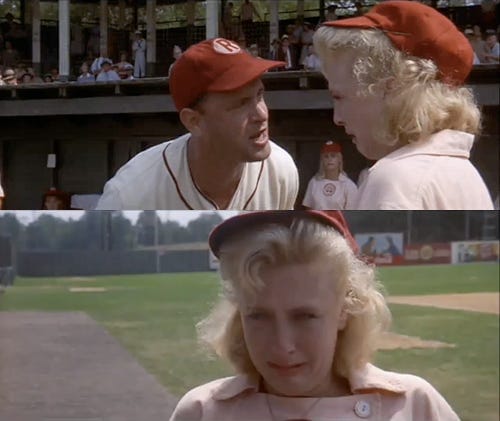
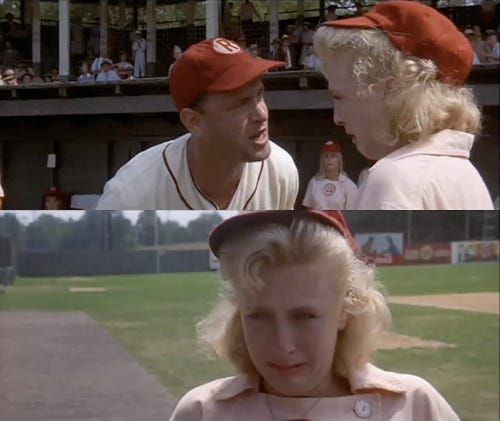
There’s no crying in baseball similes!
After conversing with Scott, I think I stumbled upon the reason why I’m uncomfortable with a large amount prewriting — especially this week’s protagonist treatment. As screenwriters we’re inspired and encouraged to be understated and subtle. To keep things off the nose. To minimize blatant explanations to the point of extermination.
And prewriting is bizarro world version of ALL OF THESE THINGS. I don’t want to just flat out admit what a character’s arc is. Or plainly detail their backstory with little to no prompting. It seriously doesn’t get more obviously ham-fisted and on the nose than this. It is the opposite of screenwriting. And it makes me “turn-your-head-and-cough” uncomfortable.
But sure, I get it — this kind of extensive prep has its value. The black and white bullet-pointing can really get at the heart of the things we want to communicate and just having them written down and said out loud can be a tremendous tool — even if you also feel like one doing it. This last week, I’ve had to hammer out some vagueness I didn’t anticipate because, when jotted down, didn’t completely jibe the rest of what I was saying. It might feel like a half nelson, but prewriting really does force you to take a hard look at all the cogs of your story — and make sure they’re all turning in the right direction.
Dude, your cogs are showing.
So, bring it! Every character dossier and interview! Every brainstorming exercise and roundtable discussion! Every outline and beat sheet! I’m not afraid of you, notecards! I’m ready!
It’s just still going to suck.
There are folks who don’t mind prep-writing, even some who actually like it. I know. I’ve met a few. But for most of us, they are a strange, alien race of writer who must also enjoy tooth extractions, doing their taxes, and watching another New York Mets season go down the drain.
There’s no way around it: Prep-writing is hard.
There’s also no way around this: Prep-writing is necessary.
When Rob and I had our most recent call, I made this point: Whether a writer types FADE IN and finds their story or does it in prep before page-writing, the fact is they find the story. So why not do it in prep?
Yes, it’s hard. Yes, it can be grunt work. But you’re going to have to do it anyway. Isn’t it better to break your story in prep before you commit to script because:
* You can approach page-writing with more confidence since you have already found your story.
* You exponentially increase the odds in your favor that you won’t get lost and will actually finish your script.
* You can focus your attention in page-writing on things like dialogue, atmosphere, nuance, the fun aesthetic component of writing.
And finally, it’s what most professional screenwriters and TV writers do! In a world of high pressure stakes and huge competition, where writers are routinely expected to turn around OWA takes in a few weeks and assignments in a few months, a Hollywood writer has to have their shit together. So however you do that, you should have in place an actual writing process. One whereby you have a specific set of practices to wrangle a story in prep can be enormously helpful, even necessary to survive as a writer in Hollywood.
But more than likely, the experience of it will still suck.
Tomorrow: Another Dispatch from The Quest.
About Rob: Boston writer headed for LA. Lover of Kubrick, Nolan, McDonagh, and the Coens. Okay, good talk. Back to writing. Twitter: @HeroesAreBoring. Note: Rob has moved to LA and found an apartment with a view of the Hollywood sign out of three windows. Talk about visual inspiration!