Dispatch from The Quest: Rob Pilkington
Last week as we did here on GITS, the Quest writers focused on the subject of Theme. Today’s dispatch: Rob Pilkington confesses some trepidation:
I’m a little uncomfortable talking about theme.
It certainly seems like something to me that should only be parsed academically, while holed away in some dim, book-lined Victorian parlor, with snifters swirling and ascots snuggly tied. To do so otherwise feels dangerously close to douchebag territory, like the sentence “well what I’m trying to say with it is…” is going to spontaneously pop my collar.
That’s because the recognition that good writing should have a unified argument behind it can almost sound like a self-important agenda. “I’m a WRITER, dude. Alright? I have things to say. You know, about stuff.” And this is screenwriting, so I’m definitely going to say those things with explosions.
Heartstrings: tugged.
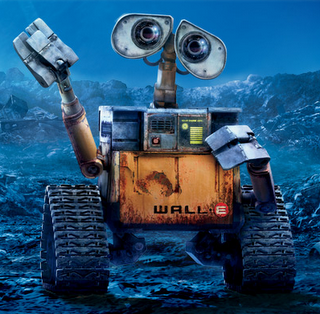
But it’s a delicate essential, something best served invisibly. Even when we talked this week about themes that get plainly stated in dialogue, that needs to be organically earned in the actual conversation. You can’t just blurt out “love conquers all,” or “power corrupts,” or “robots who turn into cars can be our friends.”
People hate being preached at, or feel like a movie is trying to sell them a used car. So when movies go sappy, or specific or timely, people get uncomfortable. The Lorax was about saving trees or something and suddenly a whole nation of pundits was worried 4 year olds are going to start lying down in front of bulldozers (hint to animators: next time use cute robots).
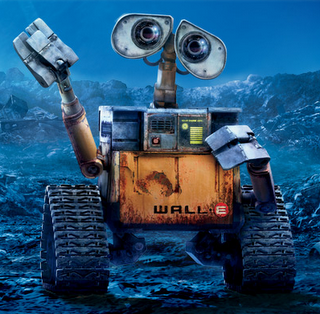
“Hi! I can crush anything you need down to the size of a soapbox!”
But I’m not down on themes — I love them. The lingering feelings and ideas I experienced at the hands of awesome movies is why I even got into film and screenwriting in the first place. Kubrick. Scott. Hitchcock. The Coens. These were the guys that kicked me in the ass… and had swung for the theme fences almost to the point of allegory. And the best part was that, beyond any artistic intentions, I was taking what I concluded away from these films. Because that’s the beautiful part of themes: they’re the personal part of experiencing a story.
My favorite example of this is from Boyle and Alex Garland’s Sunshine. In the introduction to the published screenplay, Garland rather frankly reveals that his creative collaborations with Boyle (The Beach and 28 Days Later, previously) have ended because Garland intended Sunshine to be about atheism… but Boyle read it (and made it) as a story about mankind’s tenuous relationship with God. But truth be told, the movie works, vividly, as a case for both. And that’s why theme is awesome.
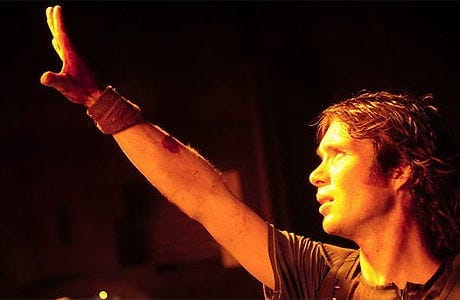
Minus the part where God can give you pretty sweet tan.
So yeah: Do I not like talking about theme… or even admitting I think about it as much as I do? Yes. Do I know it’s a vital part of the Quest and a necessary part of meaningful storytelling? Yes. Fine. Alright, whatever.
But for the record, I’m just trying to write some super boss explosions, okay?
I call them “theme-heavy” movies. And I don’t like them either. When I get hammered over the head with a message, I get a headache. Samuel Goldwyn may have said it best: “If you want to send a message, use Western Union.” By the way, he said that about screenwriters. I made the point in our Quest conversations that I don’t see theme as a message. Rather I understand it to be about meaning and specifically emotional meaning. So when the bombs go boom, it actually has some emotional impact.
Tomorrow: Another Dispatch from The Quest.
About Rob: Boston writer headed for LA. Lover of Kubrick, Nolan, McDonagh, and the Coens. Okay, good talk. Back to writing. Twitter: @HeroesAreBoring. Note: Rob has moved to LA.