Dispatch From The Quest: Troy Klith
Over the course of the 24 weeks I am working with the writers in The Quest, each will write a weekly dispatch to share with the GITS community. There are several reasons for doing this, the main one educational: Hopefully you will learn something of value for your own understanding of the craft from the experiences of the Questers. I should also add they are a great group of people, so I expect you will enjoy getting to know them.
Today: Troy Klith who builds on the concept of screenplay as structure we touched on yesterday:
I’m a slave to analogies. If a slightly complex or abstract idea comes into my head, my mind aches to simplify it with a bad analogy. My poor wife can attest to this. We own a business together, and most mornings I’ll hit her with something like “Honey, are you sure we’re not carving our turkey with a chainsaw?” She usually peers over her coffee with that “um, what the fuck are you talking about” look, and I later tell her I think we’re investing too much in blah-blah-blah.
Anyway, when thinking about The Quest and the screenwriting process, naturally my mind goes to the “writing a screenplay is like building a house” analogy. This house/screenplay thing is not new of course, but it rings true. If every house must have a floor/walls/roof, every screenplay needs a beginning/middle/end (first lesson of The Quest). Alas, this deceptively simple task is easier said than done.
Looking back at my early writing attempts, I’d usually put in some cursory planning into my house’s foundation, then I was off sweating over things like the color of the tiles in the second guest bathroom. After a few collapsed houses, I did eventually get around to creating a screenplay that had a solid structure. And oh, what a moment to realize that you’ve actually built a house, and it stands! Of course, shortly afterwards a reader points out that I might want to consider adding stairs connecting the first floor to the second.
Extending the analogy a little (sorry), a good logline is like finding a great place to build a house. Just as everybody agrees that an unobstructed ocean view is pretty nice, everybody knows a good story idea when they hear it. The skill comes in building a house that takes full advantage of the great location. It’s all about the execution as they say.
You may be wondering where I’m going with this (don’t worry, I’m used to it). Here’s the thing: the problem I’ve had with my writing is that as soon as I find a great logline for a screenplay, I’m ready to lay some goddamned lumber. (For example, my logline chosen for The Quest was nothing more than a one sentence concept. Two days after finding out it was selected as a finalist, I had a full six-page outline.) I suppose the reason for this is my entrepreneurial background. With a new business idea, it’s usually better to just get going rather than sit around and noodle over the details (I’ll spare you the reasons I believe this is true).
When it comes to writing, however, the problem with the “just do it” approach is that, while it can lead to a quick construction of my house near the beach (or swamp), the first visitor politely points out that, well, for starters, there are no windows to take advantage of the beautiful views and I might have a termite problem. (I know this is getting a little out of hand. If I’ve lost you: location = logline, house = script, visitor = reader, and the termites obviously represent my subconscious little insecurities secretly working to sabotage the whole thing).
Not only does the rush to write a draft lead to oversights, it also calls to question the story decisions I’ve made. Was I able to hammer out the story so quickly because of the character/plot choices were the obvious ones or, worse, were my choices unintentionally derivative of another story?
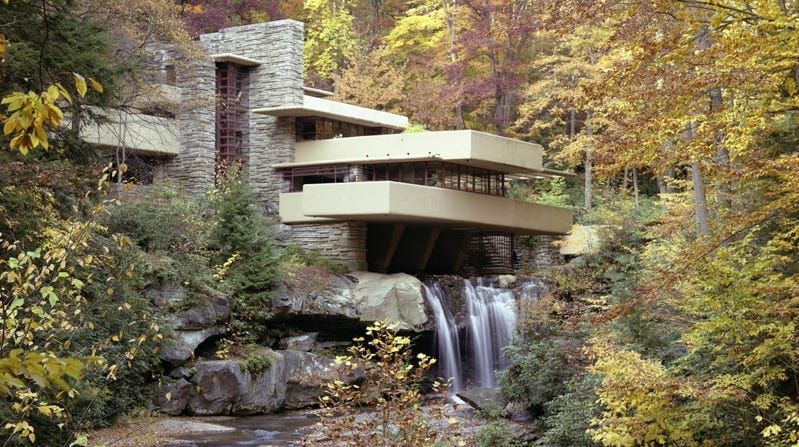
So what the hell does this have to do with the Quest? Well, from what I gather so far, Scott’s method is more of a Frank Lloyd Wright approach to screenwriting. Integrate the house with the location by doing the necessary prep work so that the writer fully understands the lay of the land. This gives the writer a better shot at taking advantage of the natural strengths of his/her location and maximizing its potential.
There are many parts of The Quest that I’m looking forward to, but a big challenge for me will be to patiently go through the process step-by-step, and force myself to completely understand the story I’m trying to write, then explore all of the narrative possibilities before I rush in and build that windowless house (and if I’ve already done that it’s time bust out the sledgehammer).
I suspect I’ll never fully break my dive-right-in approach to things, but I’m hopeful that The Quest will ingrain in me an intuitive process, one that will better guide my writing decisions before I hammer that first nail. (And I’m sure my wife’s hopeful that it will somehow break my habit of bad analogies.)
First off, Troy, if you have an interest in Frank Lloyd Wright, I hope you are successful in Hollywood for this off-beat reason: So you may intersect with producer Joel Silver who is a major fan of the famed architect, having bought and restored some of his houses, and even had this honorarium via the South Carolina legislature. You two would have a lot to discuss.
Please tell your wife, I like this Frank Lloyd Wright analogy because it is precisely right: Prep work is about understanding the lay of the land. That means the story universe. The characters as individuals as well as their interrelationships. The central conflict. The External and Internal Worlds. All that good stuff. And the outline you end up with is a blueprint for building your story. So hopefully your final draft comes out looking like this:
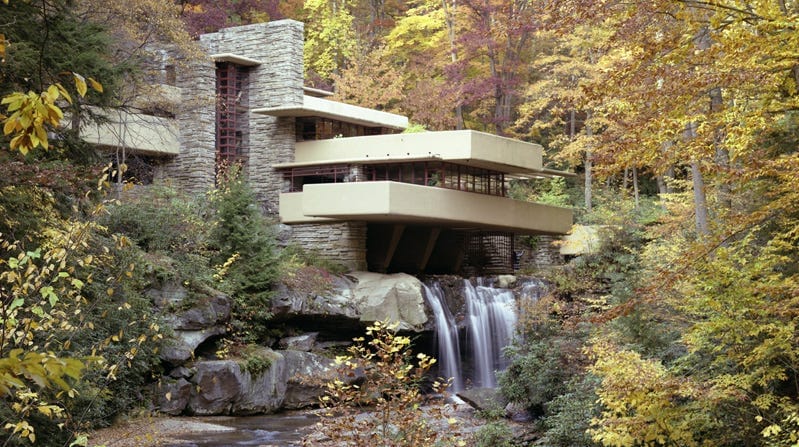
Fallingwater, designed by Frank Lloyd Wright
You jump in too soon without fully engaging your story and learning the lay of the land, you may end up with something like this:

Thanks, Troy. More analogies like that. Less with the whole turkey chainsaw thing. Spare your wife from that.
If you have any observations or questions for Troy, please head to Comments and share them.
Tomorrow: Another Dispatch From The Quest.
About Troy: Born Midwesterner with heart in San Francisco, but nothing beats NYC. Entrepreneur. Writer. Lover of the underdog. Grateful father of 3. @troyklith
Comment Archive