Exploring Theme in “The King’s Speech”
In the Core VII: Theme online class I’m currently teaching, we’ve had some great discussions and analysis. One of the most vibrant involved…

In the Core VII: Theme online class I’m currently teaching, we’ve had some great discussions and analysis. One of the most vibrant involved The King’s Speech:
Let’s explore theme in The King’s Speech by comparing two scenes.
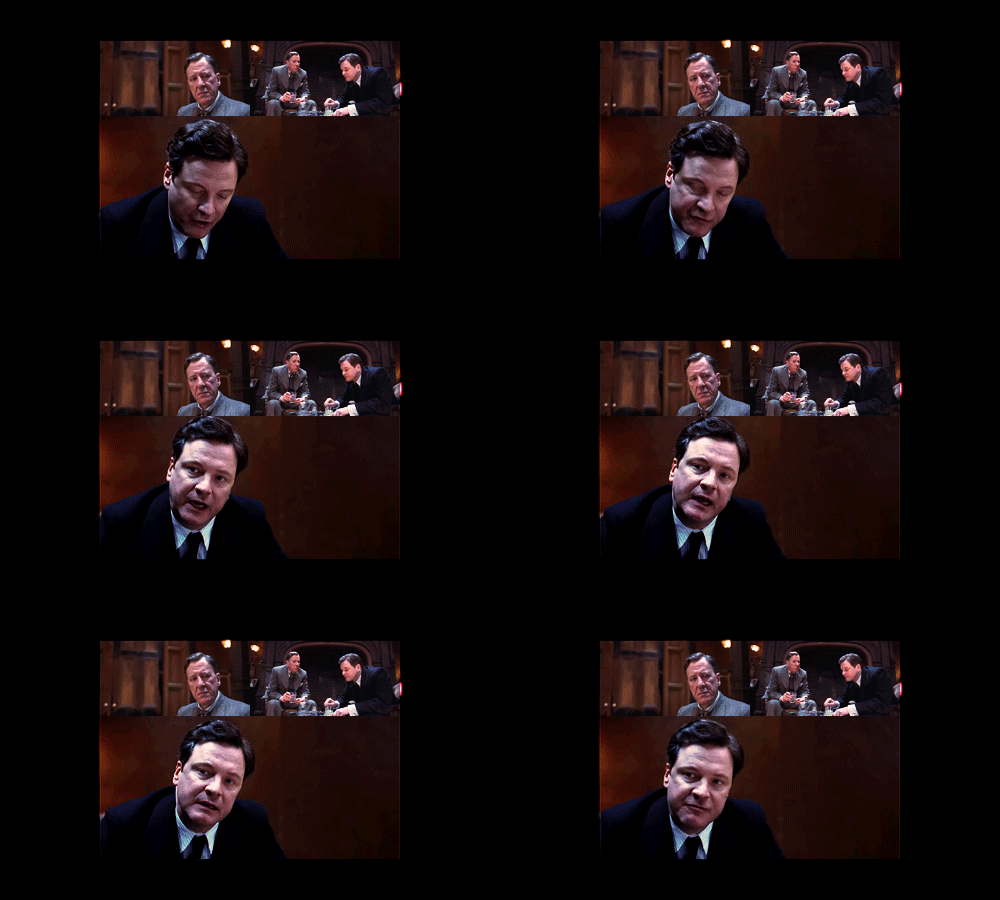
“I’m Not a King” [click on the link]
“I Have a Voice” [click on the link]
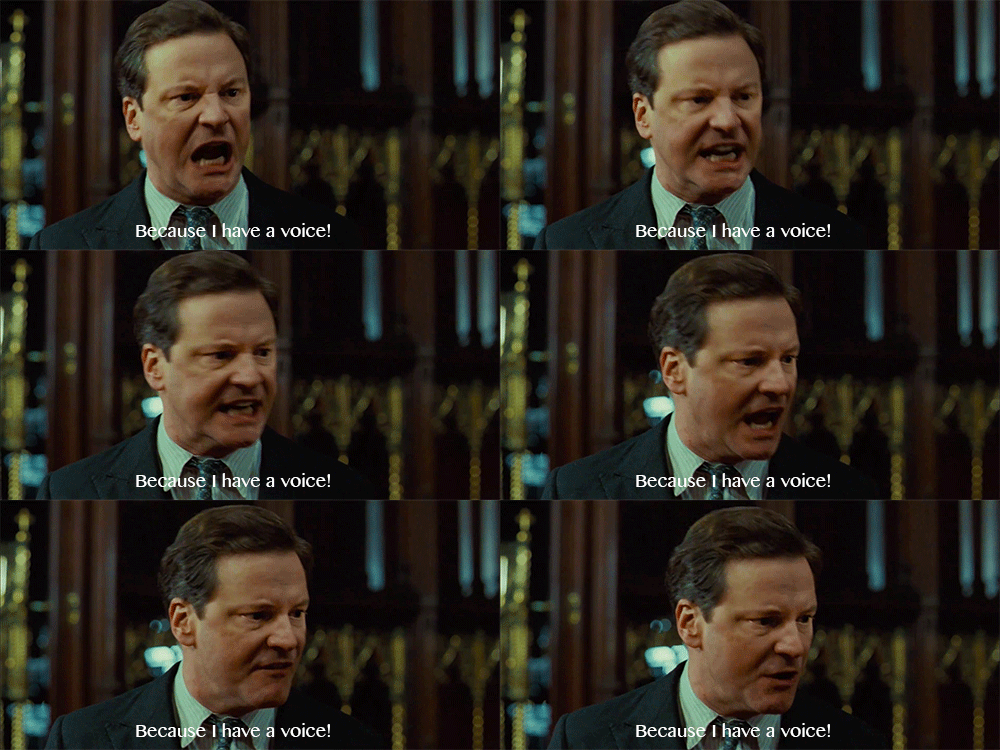
These two scenes serve as crucial bookmarks in Bertie’s psychological journey and play directly to the central theme of the story.
We talked at length about the theme of Bertie, the reluctant king whose circumstance is made worse by the fact he has a stutter, finding his voice.
By finding his voice, Bertie does so quite literally — in making the Big Speech at the end — but also symbolically and psychologically. It brings to mind the Carl Jung quote about the process of individuation which, generally speaking, is an active approach to engaging our Self (the totality of our psychological being) in an effort to move toward what he call ‘wholeness’ (in my writing, I call it Unity). His catch phrase: “Become who you are.” From a writing standpoint, this speaks to that part of a character’s psychological nature we can call by any number of names: True Nature, Authentic Self, Core Essence. It’s already there. The character just hasn’t claimed it yet and used it to redefine their Self.
In The King’s Speech, this is what Lionel understands about his work. He didn’t need a Ph.D., rather he learned it through his experiences in WWI and working with actual human beings, boots on the ground so to speak. The words are there, the ability to speak is there, the essence of the individual is there. They just have to break through whatever sort of psychological and habitual blockage keeping them tongue-tied.
Remember this scene from The Silence of the Lambs? Compare that to this scene in The King’s Speech. Same exact function for both Protagonists: A ‘confession’ of sorts about some deeply traumatic events in their past, both of which are tied to the blockage both characters have.

Clarice is a capable law enforcement agent. Bertie is a capable King. Both need to move from their Disunity toward Unity… become who they are. And this is the essence of what we know in movie storytelling as transformation… metamorphosis. Most often a Positive change.
So those two scenes cited above in The King’s Speech demonstrate how Lionel came to understand Bertie. That third scene — Bertie’s ‘confession’ — is a bridge for Lionel in understanding Bertie psychologically, then knowing how to push Bertie’s buttons. Sitting in the throne is his way of demystifying MONARCHY for Bertie, bring down that Monstrous Concept to a human level: It’s just a chair. You can sit in it.
Which is to say one way to look at screenwriting is to think of everything that happens in the plot somehow services the psychological journey of the characters… and ultimately their transformation.
Working with themes is one of the most powerful writing tools we have. In discovering a story’s Central Theme, we give the narrative a clear focus, a touchstone we have at hand when crafting every single scene. In surfacing Sub-Themes, we can expand a story’s breadth of meaning, particularly in how different characters impact the narrative and the Protagonist’s journey in their own distinctive ways.
For more of my analysis of The King’s Speech, check out these blog posts:
Screenwriting Lessons: “The King’s Speech” — Sympathetic Protagonist
Screenwriting Lessons: “The King’s Speech” —Metamorphosis
Screenwriting Lessons: “The King’s Speech” — Talismans
Screenwriting Lessons: “The King’s Speech” — Shadow
What are your thoughts on The King’s Speech? The subject of ‘theme’ in writing? I invite you to share your comments. And if you like this post, please recommend to the Medium community. Thanks!