Film 50 2016: Chicago’s Screen Gems
I’ve only been in Chicago for just over 2 months, but I’ve met a number of local filmmakers, interfaced with the people behind the Chicago International Film Festival, and enjoyed the vibrant culture in the city (easy to do since I live a few blocks from The Second City and the Steppenwolf Theater).
For those who may be unaware of what’s going on with filmmaking in the city, check out this list just released yesterday by New City Film — Film 50 2016: Chicago’s Screen Gems. Here a few names you may recognize:
Dick Wolf (“Chicago Fire,“ “Chicago P.D.,” “Chicago Med” and “Chicago Justice”), Joe Swanberg (Drinking Buddies, Digging for Fire), Steve Conrad (The Pursuit of Happyness, The Secret Life Of Walter Mitty), Lana and Lilly Wachowski (The Matrix, Cloud Atlas, Jupiter Ascending).
But there are so many other outstanding cinematic storytellers here you may not have heard of including Steve James (Hoop Dreams, Stevie), Jennifer Reeder (Blood Below the Skin, A Million Miles Away), and Bob Hercules (Maya Angelou: And Still I Rise).
I am especially pleased to see these two filmmakers make the list:
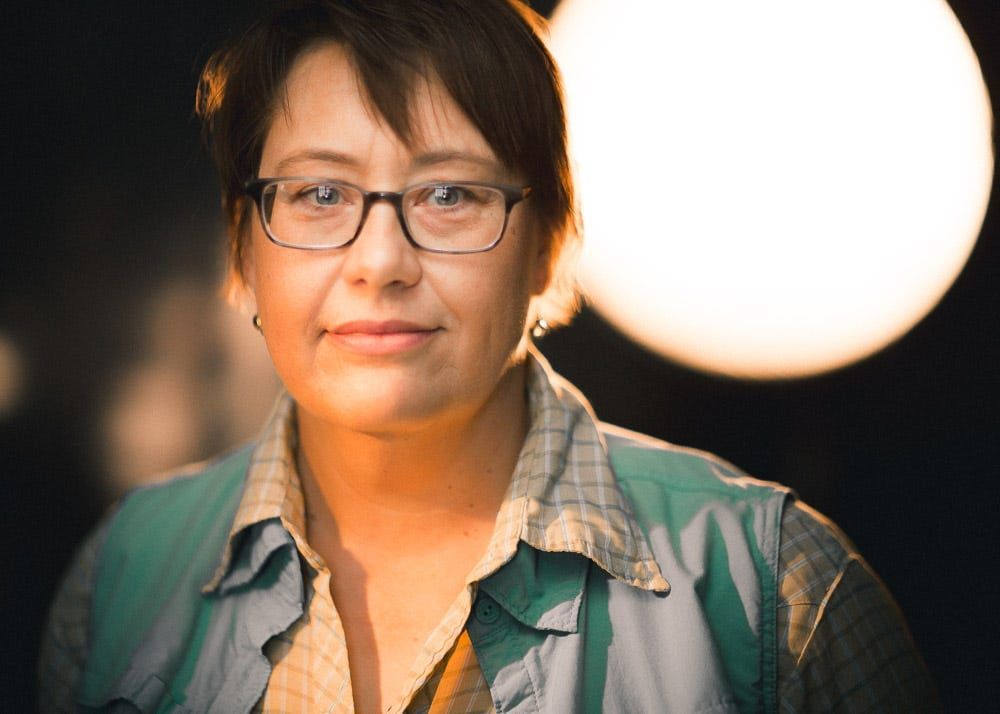
DANA KUPPER
Veteran cinematographer Dana Kupper, whose credits include Steve James’ “Stevie” and diverse Kartemquin projects including Bill Siegel’s “The Trials of Muhammad Ali,” Maria Finitzo’s “In the Game” and James’ “Life Itself,” has expanded her reach to international projects in Japan, Singapore and London. She traveled to Saudi Arabia as an Arts Envoy for the U.S. State Department where she met fellow filmmakers in the Kingdom. “There are some really exciting things going on over there, even though they don’t have movie theaters. Content on YouTube is extremely popular, and they are producing work at a very high level. They don’t give tourist visas, so it was a part of the world that I never thought I would be able to experience, and as a woman, it was especially enlightening.” She and her husband Dennis Frank have also produced videos for Chicago Public School’s Office of Social and Emotional Learning, with the belief that they can bring positive change to public education. (Subjects include “Understanding Students with Trauma” and “Suspension Reduction and Restorative Justice.”) DePaul University hired Kupper as a full-time faculty member, where she hopes to help expand their curriculum for Documentary Filmmaking BFA and MFA programs. “There is so much dynamic energy around documentary filmmaking now, the categories are blurring, and the boundaries are being pushed. Talking with my students does my heart good, they are so jazzed about their docs, and being out in the world, telling stories, working toward understanding. The passion is alive!” And especially in Chicago, she says. “I don’t think it is a coincidence that Chicago has such a thriving documentary community. The things that get docs made are part of who we are as Chicagoans, things like the courage to challenge authority, the way we band together with like-minded creators, a sincere curiosity about the human condition, and a willingness to work hard and not quit. Documentary filmmaking is accessible because you can make a film with only a few people, but you need your community, your peeps, for the hard struggle of making a film. There can be very dark moments when making a doc, from moral quandaries to crippling artistic doubt. But feeling that you can reach out to people who understand, truly understand, can be a lifesaver.”
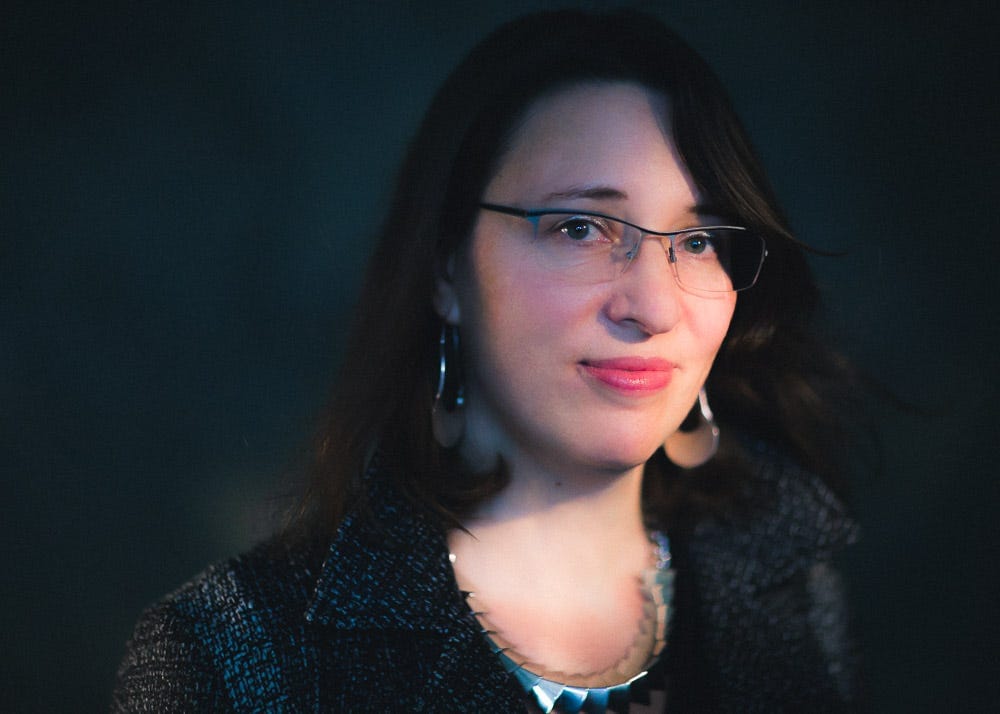
SHAYNA CONNELLY
Filmmaker Shayna Connelly’s work has always danced along the borders of documentary and experimental, and the past several years have brought the DePaul University professor’s work into focus, after bookings and awards at multiple fests. “This is the busiest I’ve been in terms of filmmaking,” Connelly says. “I have three films in festivals and just finished a non-narrative short about a personal haunting. Grief is non-linear. It rears up in weird places and plays with our perceptions. We see our dead in the living and ‘Yours Is Not the Taj Mahal’ is a one-sided conversation with one of these living ghosts. This month I will also finish a documentary character portrait on a ghost hunter — ’Every Ghost Has An Orchestra’ (title courtesy of one of my husband, Chris Connelly’s songs) — who uses his EVP recordings to create experimental music. The link between ghosts and art, and what endures when we are gone, fascinates me. In December I shoot my largest-scale narrative production, ‘Quiver.’ ‘Quiver’ is about the parallels between grief and desire, specifically the idea that both states render a person ‘incomplete’ without their beloved. They are united by feelings of torment and absence.” She describes her lovely, sometimes elusive work as “being haunted by history, regret, loss and — most recently — desire. I also seem to be inching toward genre filmmaking, but at the rate I’m going I won’t make a full-fledged horror film for twenty years! Like horror cinema my films explore ‘liminality’ — straddling two sides of a boundary line. In ‘Gardening at Night,’ the main character has to navigate the process of her friend actively dying. During that time the dying person is simultaneously absent and present, alive and dead. The boundaries between documentary, fiction and experimental film are similarly nebulous and I work across all three. I don’t seem to be able to do anything by the book.” As a teacher, she says, “Focusing on process is essential. I teach process to a demographic who are discovering who they are and what they want out of life. Being surrounded by college students ‘in-process-of-becoming’ reminds me that everything is a grand experiment and part of something larger. Sometimes the experiment is successful, sometimes it isn’t, but you have to keep making work to figure it all out. It’s terrifying and inspiring. The film program at DePaul is singular and unlike anywhere I’ve ever been before. It’s a community that pulls together and supports one another’s work. I’ve produced films for two of my colleagues and they for me. We have a history of faculty-student collaborations that is unique. It allows faculty to make films, use practical filmmaking as a teaching tool and allows upper level students to mentor beginning students. A lot of former students have become friends and collaborators. Two former students from Columbia who are firmly established in their careers are helping me in pre-production on ‘Quiver.’”
Dana and Shayna are my colleagues at the DePaul University School of Cinematic Arts, and it’s exciting that our academic and student community is contributing to the exciting creative scene in Chicago.
For the rest of the article, go here.