Forbes: “This Year’s Superstar Flops”
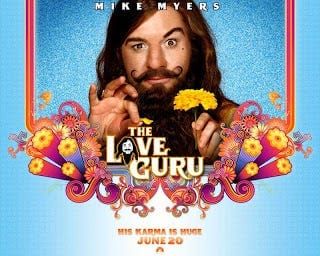
Josh James, who follows GITS, emailed an article to me yesterday from Forbes titled “This Year’s Superstar Flops”. Here’s the lede:
A-list stars can guarantee a Tinseltown project plenty of attention. Money? That’s another story.
Top-shelf funnyman Will Ferrell kicked off the year with box-office bomb “Semi-Pro” ($33.5 million US box office). Mere weeks later, Hollywood heavyweight George Clooney followed suit with a flop of his own, “Leatherheads” ($41 million global box office). And then the summer arrived and with it came A-lister Nicolas Cage’s big-screen disappointment, “Bangkok Dangerous” ($39 million globally).
The weak performances of these and other star-vehicles may be bombshells for some studio executives, but they come as no surprise to a growing cadre of academics studying the economics of film making and, more specifically, the bankability of stars. Their conclusion: Big stars don’t guarantee big success, and their big salaries are seldom justified.
A-list actors’ financial deals per each movie project they do is tied almost entirely to the sense of how much revenue their name will help to generate. But as this list above proves, it’s an inexact science. Perusing an actor’s list of credits proves that.
* Adam Sandler had a huge hit with The Wedding Singer (1998) which grossed over $120M worldwide, but then there’s Punch-Drunk Love (2002) which ended up making $27M.
* Tom Hanks starred in Big (1988), a movie that helped to establish him as a box office draw, the movie grossing $150M worldwide, but then a few years later The Bonfire of the Vanities (1990), based on a best-selling Tom Wolfe novel, ended up making only $15M.
* Pretty Woman (1990) transformed Julia Roberts into a box office sensation, grossing $463M worldwide and yet a few years later Roberts co-starred with Nick Nolte in I Love Trouble (1994), a movie which brought in barely $30M.
I suppose as writers, we’d like to think that a movie’s success, both artistically and financially, is based primarily upon the story. And clearly, a great story can contribute to a movie’s connection with the movie-going audience. However, Hwood beancounters have a harder time understanding what makes a great story and a much easier time tracking a piece of talent’s box office history to predict if a potential project will be a financial success.
What’s your take? What are the most important elements to a movie’s success? Talent? Concept? Story? Marketing? Magic?
And what other movies in recent memories have underperformed based upon the ‘names’ involved?
UPDATE: By the way, The Love Guru (pictured above) ended up with $41M in worldwide box office gross receipts. With a production budget of $62M, not a healthy ROI. Information courtesy Box Office Mojo.