Go Into The Story interview: Greg Wayne
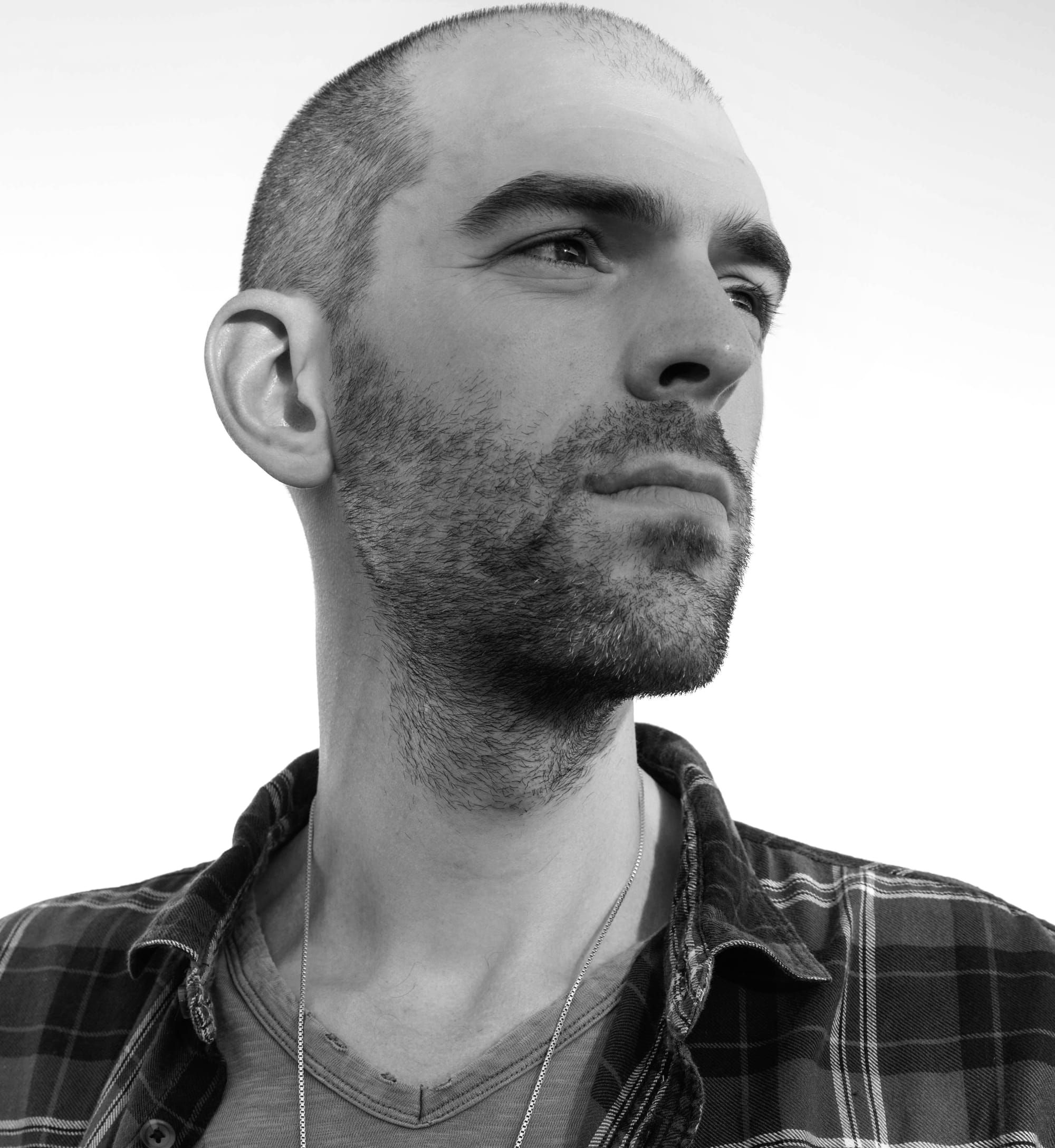
My conversation with the 2025 Black List writer about his script Lords of the Dance.
Greg Wayne has written screenplays which have landed on the annual Black List two times. He is also a alumni of my 24-week online screenwriting program called The Quest. It was great reconnect with Greg for an in-depth conversation about his creative background and his most recent Black List script: Lords of the Dance.
Scott Myers: Congratulations for being named to the 2025 blacklist. This is your second time on the list, right?
Greg Wayne: It is, yes. And thank you very much.
Scott: Great to have you here. Some background. You're from Toronto, Canada, is that right?
Greg: That's right. Born and raised.
Scott: And you went to Ryerson, a well-known film school up there.
Greg: Wow, I’m surprised you know that. Normally when I say Ryerson down south, I get blank stares – but yes, I did go to Ryerson. I was in a program called Radio and Television Arts, which is sort of film adjacent, but you get to plot your own course in terms of what kind of media you specialize in.
Scott: What drew you to going to school there and pursuing your interest in film TV?
Greg: It’s a really good media program, so that was definitely the appeal. When I started there, I wanted to be a sports broadcaster, but I didn’t end up pursuing it. I did become a voice actor though, doing commercials and stuff – at one point I was the voice of Captain Morgan rum. Anyway, as I went through the program, I found myself taking more and more writing courses, and screenwriting was something I’d had in the back of my mind for a while.
The first time I ever saw a screenplay was at this collectibles show when I was in the seventh grade looking for Star Wars memorabilia. And it was an eye-opening experience to read that first script – which was Scream 2, by the way. But I went through a few different ideas of things I wanted to do in entertainment. I thought I might want to be a standup comic, so I tried that for a while and bombed many times. I took sketch writing courses at Second City and all that, and just somewhere down the line I narrowed in on screenwriting.
Scott: You mentioned sketch writing. Didn't you do some TV writing?
Greg: I did, yes. Fresh out of undergrad, I answered a Craigslist ad, which is usually never a good idea. But this one was for this small TV station called Bite TV. It no longer exists and I think it was broadcast all across Canada, and they were looking for writers for a late night talk show. It was called The Week Show with Matt Chin, who was this very talented young host, and it was just me and another writer and Matt and his announcer. We came up with all the ideas for a few episodes, and we had an extremely low budget – and this was Canadian dollars, so the exchange rate was killing us. But it was a lot of fun and a great first sort of foray into writing something that actually got made.
Scott: You went to Europe for a while, right?
Greg: Yep. That was after I took The Quest with you. I went on a three month backpacking train trip through Europe. I ended up writing a screenplay about it – based on a true story but highly exaggerated. But that trip was an eye-opening experience, because I didn't leave the continent until I was 29 years old. So, I was at a point where I wanted to get a lot of sightseeing out of my system.
Scott: The Quest, that’s the 24-week program I offer. You worked on a feature film screenplay called Suicide 21.
Greg: That's right.
Scott: And that got set up.
Wayne: There was a production company I met at the Austin Film Festival. I sent them the script, they liked it, they optioned it. Eventually things didn't work out, but it was a great experience working with those guys.
Scott: You also attended AFI.
Greg: Yeah. I was a screenwriting fellow.
Scott: And, and that's a two year program there.
Greg: Yep. Two years.
Scott: You made the annual Black List the first time in 2020. Was that during your time at AFI?
Greg: No, I graduated in 2017, so it was a little while after – but I was still in the nascent stage of my screenwriting career, I suppose.
Scott: That script was St. Simmons. I remember reading that. It was about Richard Simmons. “He sits on a holy crusade in daytime television to touch and save the soul of every obese person in America before his demons consume him. The true gospel of Richard Simmons.” How did you land on that idea?
Greg: I've always been really fascinated by Richard Simmons. I think everyone of a certain age saw his infomercials growing up. When I would pretend to be sick so I could stay home from school, I would watch The Price is Right and then a Richard Simmons infomercial would come on. And even though he’s trying to sell you something, his infomercials were way more entertaining than your average daytime TV show. His charisma, his charm, the force of his personality was really incredible. Then as I got a bit older, I started listening to the Howard Stern Show and they would always play old clips of Richard on the show. My favorite was when he called in and begged Howard to go see The Prince of Tides with him. He was hilarious, but you could see there was a lot beneath the surface there, beyond the happy go lucky personality he normally presented.
Plus, the guy was an American treasure, and I don’t think he gets the credit he deserves for not only being a massive achiever in the fitness industry but also spending so much of his life helping people who were struggling with their weight.
So, it just came into my mind that I’d like to write his biopic. And I figured it would be a situation where once I became an established screenwriter there would be someone making the Richard Simmons movie and I would hopefully be able to get the gig. But my manager was just like, “Nah, you should go ahead and write the spec.” So I did.
Scott: The annual Black List almost always has biopics of contemporary figures. There was one on Michael Jackson told through the perspective of his pet chimpanzee. One on Madonna. A script on Ronald Reagan. Were you aware of that trend when you latched onto the idea of doing a script on Richard Simmons?
Greg: I think being an emerging screenwriter you want to be a bit strategic as it relates to the Black List and look at the types of scripts that have made the list in the past. And biopics are consistently on there – there was Yoko Ono last year and all the ones you mentioned. So, if you can find a real life story that hasn’t been told yet, and you relate to it and think you can bring something to it, it might be a good idea to spec it out.
Scott: It makes a lot of sense because Hollywood is obsessed with preexisting material and IP.
Greg: Yeah.
Scott: And you pursued a similar approach with your 2025 Black List script Lords of the Dance. It's based on the true story of Riverdance. Let me read that logline.
“When a thirty-five year-old Chicago ditch digger gets the opportunity of a lifetime to represent his ancestral homeland, which is Ireland, at the world's biggest music competition, he unleashes a blockbuster dance phenomenon that will make Ireland a global superpower and finally set his people free.
So, this is a few years later, were you feeling like, I enjoyed writing this thing on Richard Simmons. Maybe I'll take a similar approach with Michael Flatley.
Greg: Well, when I wrote the Richard Simmons thing and it got some buzz and I enjoyed writing it, I sort of found my lane and wrote a few biopic scripts since then.
I wrote a pilot about Aleister Crowley, the infamous occultist, another one about Daniel Johnston, who’s an icon in the indie music scene, and a feature about Sacheen Littlefeather, the woman who declined Marlon Brando’s Oscar for him.
Then Riverdance and Michael Flatley came to my attention. And I was already familiar because I went to this weird arts school as a kid where they taught us folk dances from around the world – and Riverdance is, of course, an Irish folk dance.
Scott: Describe Riverdance for us, it’s a unique form of dancing.
Greg: Riverdance is like an elevated, theatrical incarnation of Irish stepdance, or simply Irish dance, which has been around for hundreds of years. It’s a form of tap, and it was traditionally very strict and stiff in the way you performed it. Basically, you had to keep your back completely stiff and your arms tight to your sides or you would lose points. So, the dance is really all about the feet and the precision of the steps. But in 1994, Michael Flatley, who was the original star and choreographer of Riverdance, came along and revolutionized things by using his upper body. He would strike these heroic poses and flail his arms and bring a certain amount of flash to the dance. And this was considered very scandalous by Irish dance traditionalists – but it was Flatley’s vision that turned such a conservative dance into the huge 90s phenomenon that was Riverdance.
Scott: And it helped that Michael Flatley was an amazing dancer.
Greg: He could hit seven heel clicks in midair. So, he would jump in the air and do seven heel clicks before he landed. And he held a Guinness World Record for the highest number of taps per second. I think it was 28 taps per second, which is almost impossible to conceive of. He was a phenomenon. Also, a very skilled flautist – he released a few flute albums. He was a Golden Gloves boxer. Just a very talented supernova of a guy.
Scott: So, you’ve got this charismatic figure Michael Flatley. You’ve got Riverdance. As you were doing research, how did you land on the story you wanted to tell?
Greg: I started out thinking about Riverdance in general and researching the people involved, trying to find the best angle into the story. It became very clear very quickly that Michael Flatley was, for me, by far the most interesting person involved – especially given all the scandal and controversy surrounding his departure from the show. And his interviews were incredible. He’s got this way of talking that’s both charming and cocky – but it’s earned because he’s literally the best dancer in the world. So, it was obvious that the best way that I personally could tell the story of Riverdance was through a Michael Flatley biopic.
Scott: As a writer, you’ve got to look for conflict. You mentioned the power play over who will control Riverdance, he loses control, so that’s some good external conflict.
Greg: That's right. Lord of the Dance was the show he started after he left or was fired from Riverdance.
Scott: Did that suggest story structure right there? First part, Riverdance. Second part, Lord of the Dance?
Greg: Exactly. His firing is a clear midpoint, so the structure came together easily. It was a relief to find something that seemed so cut and dried structurally and was within a fairly brief timeframe. Because the tendency for biopics, at least for me, is to go cradle to grave, which sometimes works but more often doesn’t.
So, I was happy to find such a compressed timeline, which is really just: he's approached to start Riverdance, he decides to join, it's a success, there’s infighting, he’s fired, he decides to start his own show, it looks like it’s going to fail, and finally he manages to pull it off. Like you said, it’s a structure that almost writes itself.
Scott: That's great because real life does not lay out like that often for a writer.
Greg: Very true.
Scott: Let's talk about this Michael’s character, your story’s Protagonist. I love the way you introduce him. Page One, he's this little kid dancing, so you see this innate expressive talent. Then you cut to Chicago, he's thirty-five years old, living out of his car digging ditches. What was the appeal to start the script that way?
Greg: I should say first that Irish dance is a young person's game. It’s not uncommon to see a seventeen or eighteen year old world champion. So, when you're thirty-five and you're still beating the dead horse of trying to make a career as an Irish dancer, you're immediately an underdog. In addition to the fact that when the story begins, Irish dance was practically a dead art, and there was very little money to be made.
So, I chose to start the story with Michael as a child having his grandmother instill this idea in him of who he’s destined to be. She sees him dancing so beautifully and she calls him the king of Ireland – and that sticks in his mind forever. And when he’s 35 years old and digging ditches to get by, he’s still thinking, “Why the hell am I not the king of Ireland?” It's sort of this difficult realization that many of us come to when the years are passing and we're starting to realize that when our parents told us all the great things we could achieve in life, they were basically lying. And that can be really hard to come to terms with – but in Michael's case, he’s refused to come to terms with it. So, when he’s approached to do this dance number at the Eurovision Song Contest, he thinks it’s the fulfillment of his grandmother’s prophecy, and that Eurovision number would evolve into Riverdance the show.
Scott: That literally did happen to him.
Greg: Yep. Riverdance was originally meant to be nothing more than the interval number at Eurovision Song Contest in 1994. But it got such a spectacular response that the producer, Moya Doherty, was like, “We need to make this a full show.”
Scott: He’s a complex character. You mentioned where his grandmother tells him someday he’ll be a king. He carries that sense of destiny with him, his identification with a place in Irish history.
Greg: Well, Michael Flatley was raised in Chicago, but he was very proud of his Irish heritage. Both his parents were Irish and his grandmother, Hannah, who we see at the beginning was a very good dancer. And at the time the story starts in 1994, it was right before something called the Celtic Tiger, which was a giant economic boom in Ireland. So, at the beginning of the story it’s a difficult time for Ireland, and Flatley took it upon himself to try to basically liberate Ireland as the country’s self-appointed king.
Scott: There's a whole other aspect in the story, the degradation of his body.
Greg: Very much so. In Irish dance, if you’re 35 years old you may as well be a hundred. But he was just so good and so dedicated that he just willed himself to greatness.
Scott: Let’s talk about one other aspect of her personality. He's an angry guy. Acting out, throwing things. Where do you think that anger came?
Greg: Maybe I should make a point of differentiating between the real Michael Flatley and Michael Flatley the character in the screenplay. There’s probably some overlap in the Venn diagram, but for our purposes, I’m just talking about the character. He’s been denied his dreams for so long. He knows he’s the best Irish dancer in the world, and when you’re the best in the world at something no one cares about what are you going to be other than pissed off? So, when he finally gets this opportunity to live his dream at this advanced age, he’s not going to let anyone mess it up for him. He’s paranoid, he’s protective, and he wants to be the best and see this through so he can be who his grandma always told him he was.
Scott: Let's talk about some of the other characters. The person who meets him and says, “Let's go do this thing in Eurovision,” is a woman named Moya, a producer. Based on an actual person?
Greg: Yep, Moya Doherty was one of the producers of Riverdance. Her husband, John McColgan, was the other producer, but for the script it made more sense to just have one producer. She worked at RTÉ, which is Ireland's national television network, and they assigned her the job of producing the original Riverdance number for Eurovision because the show was in Dublin that year. So, she went around recruiting dancers, and with the Irish diaspora being what it is, some of the best Irish dancers are actually in America, and that’s where she found her two leads.
Scott: You mentioned Michael lived in Chicago. Huge Irish community there. For generations. In fact, every St. Patrick's, they, turn the Chicago River green.
Greg: Yeah. They don't mess around.
Scott: You’ve got this character based on an actual person, Moya. Let’s take a moment and discuss the challenges of doing an historical adaptation. Finding that balance point between writing something that is grounded in historical truth but also crafting a story that can work as a movie. What were some of the challenges you faced in that regard?
Greg: It’s always an interesting challenge to figure out how much real stuff you should put in and when you should take creative license. I think I’ve come to a point where having as much true stuff as possible is generally the best approach. That might not always be the best way to go about it – there are lots of stories where a ton of creative license is the way to go. I think Marty Supreme, for example, is probably 90% fictional, and it totally works. But I’ve just found that when you’re speccing out these true stories and going to meetings about them, you’re bound to get asked, “This here on page 78, did this really happen?” And if the answer is no, you can feel the balloon of enthusiasm deflate a bit. Know what I mean?
So, from that perspective, it’s a decent idea to stick close to the real deal. I do also have a desire to do honor to the story by being as truthful as I can. But, then again, emotional truth is probably more important than factual truth, and you’re always going to need to take some degree of license. Like if there are two characters that could be merged into one, you should probably do it. And there are always going to be places where you’re going to want to raise the stakes, or add conflict, or just make it more like a movie.
Scott: Okay, back to some other characters. There’s his wife…
Greg: Beata.
Scott: For much of the story, we only know through telephone conversations with Michael. She's in Southern California?
Greg: She is. She's working in LA while he's off in Chicago.
Scott: And the couple has this plan to go to Barbuda.
Greg: Yep, Barbuda. Have you ever heard of it?
Scott: No. I thought it was like Bermuda…
Greg: I’d never heard of it either. Flatley mentioned in his memoir that he took some trip to Barbuda and I just thought it sounded so funny. Like so much funnier than Barbados or Bermuda. I’m sure it’s a nice place, but I’ve just never heard of anyone who’s dream destination was Barbuda. No offense to your Barbudan readers.
Scott: So, once we learn about Beata, we know Michael is married and trying to respect his marriage vow, even though she’s in California and he’s in Chicago. There are two other women that are more present in his life. One is the one you mentioned earlier, Jean.
Greg: Yeah. Jean Butler.
Scott: She is brought on as his co-lead and she's got an interesting attitude about Michael. First off, she's not terribly motivated to do this whole Riverdance thing. She wants to be a serious actor, do something with substance.
Greg: Jean was a really fun character. You have these two lead dancers in Riverdance, Michael and Jean, and it’s hard to overstate how important these two were to Riverdance fans. Especially in Ireland, they were all over the tabloids, there was so much interest. Are they sleeping together? Are they feuding?
Jean was very young when she was recruited to join Riverdance – 22 years old – and she was studying theatre at Hofstra. She’d grown up doing Irish dance and really wanted to leave it behind her, but she’s an absolutely incredible dancer. In the script, she’s actually better than Michael – which is extremely threatening to him. And when the whole idea of a show and a tour comes up, she barely even wants to do it. As they put the show together, she seems to be getting preferential treatment from Moya and she’s more beloved by the fans – and it drives Michael crazy. So, you have Jean, this antagonist, who is a massively talented dancer, she’s beautiful, she’s getting all the attention, and she doesn’t even care. Aside from the dancing talent, she’s the polar opposite of Michael, and her presence in the show is his worst nightmare.
Scott: That's so great when you can have a character that acts like the physicalization of what the Protagonist fears.
Greg: Yeah.
Scott: She’s beautiful and super talented, but she doesn't really care about this thing that he's so desperate to succeed at. That’s a strong dynamic in the script. Meanwhile, you've got a younger woman, Kelly.
Greg: Kelley was based on a real person. She’s a backup dancer in Riverdance. And the backup dancers are all young, a few of them respect Michael, but they mostly share Jean’s view that he’s a weird old guy who takes this stuff too seriously. But Kelley completely loves and admires him. She appreciates his passion for the dance, his knowledge of its history – and she’s very attracted to him. And if there’s one thing Michael loves, it’s someone telling him how great he is. So, sparks fly and she becomes Michael’s most trusted ally as the story goes on.
Scott: You mentioned Michael’s paranoia. Talk about that, how this condition increases in intensity as the story progresses.
Greg: The thing is, Michael creates a self-fulfilling prophecy. Moya brings in Jean’s friend Colin to be Michael’s understudy, and Michael immediately freaks out. He thinks, “This guy’s 15 years younger than me and they’re bringing him in to take my spot.” So, Michael wants to secure his position and demands more creative control, demands a better contract, demands the name of the show be changed from Riverdance to Michael Flatley’s Riverdance. And he just drives Moya so far up a wall that she has no choice but to fire him. So, Michael, in his paranoia and fear, manifests the exact thing he didn’t want to happen – he’s fired and Colin takes his spot.
Scott: Then he basically says, I will return to Dublin. I will start my own show, and I will defeat all those who sought to oppress me. Because I'm not just the King of Ireland, I’m the lord of the dance.
Greg: When I was writing that, I was like, “Would he actually say this shit?” And then I thought to myself, “This characterization of Michael is so wrapped up in his ego and his talent and his personal mythology that I think he would totally say something that grandiose. He would declare himself the lord of the dance.” That’s why he was such a fun character to write, you know? Because you can really go off the wall with him.
Scott: So, but when I'm reading this, as a screenwriter, I know where this is going to go, building toward this big “Lord of the Dance” performance. But you introduce one reversal after another. There's his physical degradation where he blows out parts of his body. He resorts to using drugs to dull the pain. Ticket sales flag. Then his wife shows up and he’s got to deal with that drama. It's one thing after another, raising the stakes. That must have been actually kind of fun for you to write.
Greg: Yeah. When he decides to start his own show to take on Riverdance he goes a little crazy. He’s basically having a midlife crisis while trying to bootstrap a show to compete with the biggest stage show in the world.
He’s cheating on his wife, he’s trying to look younger, he blows out his knee so he has to take drugs to keep going – which is something he said he’d never do. Riverdance and fate are trying to derail him, and his life is completely falling apart. I made up this thing where Moya goes on a talk show and insinuates that Michael may have stolen some of his trademark choreography. We’re supposed to punish our protagonists, so it was fun to keep throwing things at him.
Scott: Yeah. Add another thing. He puts all his money on the line, too.
Greg: That's right. He’s about to go broke.
Scott: All building toward the final performance at the end of Act Three. And there’s that last bit of description:
At the front of the stage with the spotlight blinding him,
Michael stands alone -- totally and completely alone -- as
the king of Ireland.
And it reminded me of the last image in the movie The Social Network. The lawsuit’s settled. Mark Zuckerberg has full ownership of Facebook. He’s the youngest billionaire in the world. He’s sitting alone and what does he do? He sends a friend request to Erica Albright, the girl who broke up with him in the very first scene. He keeps hitting refresh. The last lines of Sorkin’s script:
MARK waits...
And waits...
And we
SNAP TO BLACK
Doesn’t that have a similar vibe to your script? Two guys driven to succeed and at the end of the day, they are “totally and completely alone”. Does that resonate?
Greg: Absolutely. I hadn't thought of The Social Network when I was writing it, but that absolutely rings true. You know, when your character sets out to achieve a goal, they might not always use the healthiest means to achieve that goal. So, whether it’s Mark Zuckerberg alone in an office clicking refresh on his ex-girlfriend’s Facebook page or Michael Flatley alone on the stage having blown up his entire personal life, maybe that’s the price of greatness. Many of us may aspire to greatness, but maybe we’re not willing to stoop to the same lows or make the same personal sacrifices that certain characters do.
Scott: Your script is a terrific reading experience. Writing a biopic, so challenging. You pulled it off.
Greg: Thanks.
Scott: Affirmation you did write a great script… making the 2025 Black List. What was that experience like, learning you made the list?
Greg: It was great. I was glued to my phone during what seemed like a very long announcement video – all these different celebrities announcing the Black List scripts. And I saw Colin Farrell come on the screen and I was like, “Here we go. Ireland’s finest actor announcing the script about Irish dance.” And then he said the name of a different script, and I thought, “Okay, maybe this year’s not my year.” But then Jon M. Chu came on and announced Lords of the Dance and burst into a Riverdance at the end.
Scott: He included a little Irish music, too
Greg: Yeah. He had a full production team there or something.
Scott: Yeah. And said he wants to see the movie.
Greg: Yes. That was great.
Scott: Well, speaking of which, where are we with this project?
Greg: There’s been some interest, but it’s still early days and I can’t say too much. Although when you write these specs you sort of need to do it for the love of the game. You need to care about the story and want to have fun with it. Screenwriting is supposed to be fun at the end of the day. If you’re not having fun doing screenwriting there are a whole lot of other unfun things you could be doing instead. So, you just have to try your best, and if something happens, it happens. But if it doesn’t, you still have a script that you’re proud of or at least had a good time writing.
Scott: Given the script you wrote about Richard Simmons that made the Black List. And now this biopic. That’s kind of a potential brand, if that’s something you want to pursue.
Greg: I may be looking for something different for my next spec, but I’ll always have an eye out for biopic subjects – although I might be running out of quirky real life characters to write about. I’ve never written a contained horror script, so I might try that. A contained horror movie about looksmaxxing maybe. Who knows.
Scott: Okay, some craft questions for you. How do you come up with story ideas?
Greg: For original stories I generally try to think of just the worst things that have ever happened to me and see if I can turn them into a screenplay. Because we’re trying to write emotional stories, right? Stories that you as the writer can connect with. And what better way to connect with a story than to pull one straight from your own life. Even if you just use the seed of a personal experience, or just the emotional truth of something you’ve been through, you’ll probably be in better shape than just pulling something out of thin air. And what a great thing, to take some terrible event in your life and turn it into something that’s hopefully beautiful or meaningful.
But for biopics, I don’t know – I just kind of keep my ear to the ground until I come upon a person that strikes a chord with me.
Scott: You mentioned something I think is important. I always ask writers when they consider taking on a writing project: What is your personal connection to the material? What about it resonates with you? Because that’s where a writer’s passion comes from.
Greg: It sure helps. That personal connection can help you through the process or help you find story answers when you get lost. And you’ll probably end up with a better and more authentic script. I hate to resort to cliches, but what they say is true: the more personal your screenplay is, the more universal it’ll be. You’ve got to allow yourself to be vulnerable on the page because your paramount value as a writer is you, your insight, your point of view.
Scott: So, if you’re writing an original story, what is your process like when you break story, your prep process?
Greg: I start small then go big. Start with trying to get the premise down in a clear sentence or two – and if it turns out to be a compelling logline, even better. Then I’ll go to a three page outline that covers the key story beats. I had a professor at AFI named Karen Janszen and she taught us a structure called the nine big beats. Basically, the main story beats that need to happen over the course of the screenplay – normal world, inciting incident, the decision that propels you into act two, and so on. Any kind of model like that is really helpful.
Then when I’ve got my three pages working, I’ll go twenty pages – or more if I’m feeling greedy. I like to outline as thoroughly as possible, because when I open up Final Draft and start writing pages I want to do as little thinking as possible and just have fun and be free. There was this football player Warren Sapp who used to say, “They pay me for Monday to Saturday. Sunday is my pleasure.” Meaning they pay him for the hard work in practice – the game is where you can just cut loose and go crazy. That’s how I feel about the outline process. That’s where you put the real work in. Then the script is a breeze.
Scott: It sounds like your approach is similar to the one we used when you took The Quest program.
Greg: Yeah, the Quest teaches a great system. You probably don’t want me to shill for The Quest on this interview, but it was really helpful. Working with you in the Quest was my first real foray into feature writing, and it gives you those fundamentals that really help with your confidence as a writer. It laid down the groundwork for me to succeed in grad school and out in the real world.
Scott: =And that script Suicide 21 ended up getting optioned. One of the reasons, that script had some compelling characters which leads me to my next question: How do you develop your characters? Do you have any specific exercises to help you find them, hear them?
Greg: A couple things, mainly. In the broad sense, I’ll start an Apple Notes document on my phone and just write down everything about the characters that occurs to me randomly throughout the day – and anything related to the project in general. Then I’ll take some time to put those thoughts in a more organized Word document.
But something that can really help, especially if you’re a bit stuck, is to write by hand. Just open a notebook and say, “I’m going to write for five minutes about this character.” It can be pretty surprising how much you can come up with just writing stream-of-consciousness. And then you can highlight the stuff you want to keep and transfer that to the Word doc as well. It’s important to keep things organized so you’re not constantly referencing multiple documents as you go through the process of writing the thing.
Scott: It sounds like what some people call “subconscious writing,” where you're getting into the mindset of the character and just letting it flow.
Greg: Absolutely. And it’s important not to put too much pressure on yourself when you sit down to do this. Don’t be thinking, “I’m going to come up with five great ideas here.” The better mentality is to assume you’re going to write pure garbage and then be pleasantly surprised when it’s way better than you thought it would be. It’s amazing what can happen when you put pen to paper.
Scott: How about when you're writing a scene. Do you have any specific goals in mind?
Greg: Just whatever the character’s goals is, I guess. Every scene is sort of its own mini movie where the character often has something they want to achieve within the scene. Someone said to me once that every scene is about what the character wants and what they’re trying to hide. And I think that pretty much rings true. Your character has this macro goal that they’re working toward for the bulk of the script, and then these micro goals within the individual scenes. So, I guess I just think about what those micro goals are and how they’re trying to attain them.
Scott: Do you give any attention to the actual scene description or stage direction? Perhaps shaping it to match the story’s genre?
Greg: Sure. Like if you’re writing a period piece you wouldn’t want to use a word in the description that wasn’t used at the time.
I think there’s been a trend over the last ten-plus years toward what you might call a reader-first approach to screenwriting. Scene descriptions are a big chunk of the script, so it’s probably a good idea to let your voice shine – without being too intrusive or self-conscious, of course. You can get a little editorial or novelistic, but you still need to be concise and all that. So, sure, let your personality out and tailor the descriptions to the genre and it’ll probably make for a more immersive read. If your reader not only likes the concept and the story, but enjoys the experience of reading the script, you’ll be in good shape.
Scott: Okay. One last question. What's one piece of advice you offer to aspiring screenwriters on how to learn the craft?
Greg: I don't know if I have advice as much as just a suggestion of something to try. Try writing as fast as you can. Especially when you're just starting out, you want to get through those early reps and those early growing pains as fast as possible.
I remember the first time I tried to write anything that was longer than a sketch, it was a spec episode of Modern Family. I think it took me like three years. Just toiling over scene descriptions, dialogue, micro-analyzing – it’s all such a waste of time. I’d throw that all out the window. Just write fast.
Not that I’m saying your fingers should be flying over the keyboard like that episode of Seinfeld where Kramer gets cast as Murphy Brown’s secretary. I just mean moving forward at a steady pace and not getting too hung up on a certain word, or trying to find a synonym for “walk,” or anything like that. Try to think of it as falling forward.
Rip through that outline, get feedback on it, revise it until you’re ready to go to pages, rip through the draft, feedback, and on and on. I hate to get all mystical, but the idea is to get to a point where it’s more like you’re channeling the story than writing it.
Anyway, just trying to write fast and not worrying about the little things was key for me, so it might be worth trying. And remember, you can always go back and change your “walks” to “strides” or “ambles” or “treads” or whatever on a polish pass.
For my interviews with dozens of other Black List writers, go here.