Go Into The Story interview: Neil Drumming
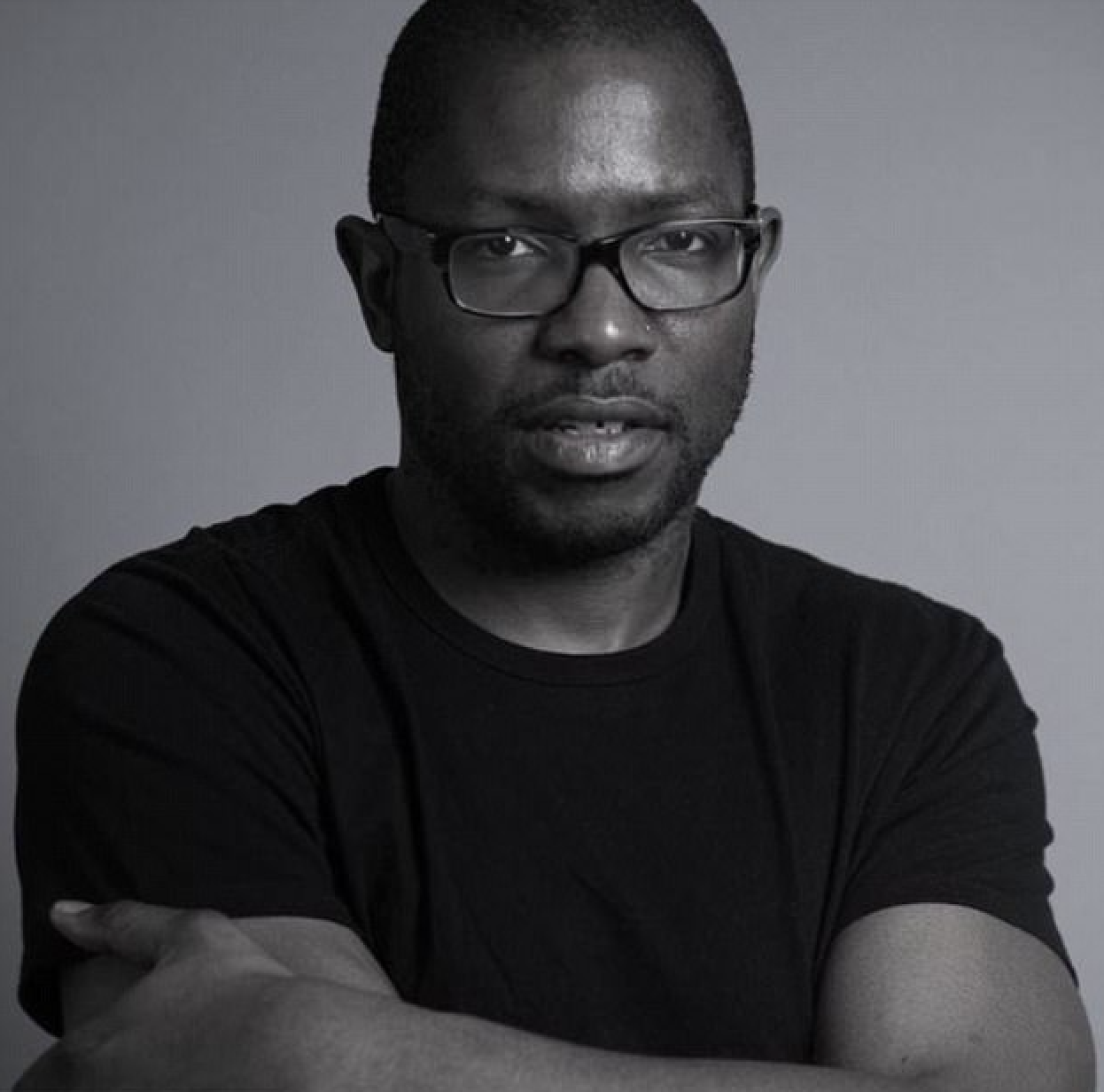
My conversation with the writer-director of the feature film Big Words.
Neil Drumming is a filmmaker, screenwriter, and journalist. He is a former staff writer and editor at Entertainment Weekly, and his work has appeared in Wired, The Washington Post, Vibe, Rolling Stone, Essence, and Vanity Fair. He wrote and directed his first film Big Words, which the New York Times describes as “weaving race, class, sexual orientation and politics — as well as the evolution of rap music — into a wistful tapestry of male disaffection.”
In 2013, I had the opportunity to interview Neil in what turned out to be an insightful conversation about filmmaking and the craft of screenwriting.
Scott Myers: You’re described as a filmmaker, journalist, a pop culture critic. You were a staff writer and editor at “Entertainment Weekly.” Your work has appeared in “Wired,” the “Washington Post,” “Rolling Stone.” How did you get into journalism?
Neil Drumming: I was living in DC. I’d got out of college. I actually went to film school. When I got out of film school…I went to USC in southern California. I didn’t actually have a way into film, I was sort of intimidated by film, so I came back to the East Coast. But my parents had moved to Florida, so I spent a little time in Florida, which I hated. Then, my sister lived in DC and she told me…I’ll never forget it. She’s like, “There are a lot of opportunities for young black men in DC,” so I moved to DC. She was right about that, but those were mostly FBI/Government jobs. The only thing I could find that suited me at all was a job at a newspaper.
I worked at the DC City Paper under David Carr. I started doing event listings, like parties and stuff and what shows were happening. Those things come with blurbs and stuff, so I started writing little blurbs on shows, and then that went to reviews. I did a fairly good job at that, and then got recruited back to New York to work at some magazines.
Scott: Where did your interest in writing develop?
Neil: When I was in film school, I was a screenwriting major. I wasn’t into production or directing. It was purely writing. I’ve always wanted to be writer since I was in the first grade. It was always the one thing I wanted.
Scott: Were you always a movie fan?
Neil: You know what? I don’t think I was a huge movie fan as a kid. I liked the stuff I really liked, but when I think about what I was obsessed with, I didn’t go to the movies a lot. My dad was very much against cable and MTV and anything like that, so I watched a lot of stuff on TV, and it all blended together. I was big into cartoons. Anytime The Wiz would come on or Willie Wonka. It’s a bunch of things together. I wouldn’t say I was a die‑hard movie fan.
Scott: How did you hit on the idea, “Hey, I want to go to USC film school and major in screenwriting”?
Neil: I was really into storytelling. In high school you start dating and start going to more movies. Movies just seemed like the most exciting way to tell stories. USC film school at the time had a really amazing brochure. It was these two very conservative‑looking gentlemen in tuxedos. One of them was an orchestra leader or something, and the other one was a professor. You opened the brochure, and on the inside it was the same two austere‑looking men, but they’re wearing Trojan football jerseys. It just seemed like a fun place. Also, I was really having a lot of trouble with my dad and I wanted to go as far away from New York as possible. USC was 3,000 miles away.
Scott: Apart from the education, one of the things I’ve heard from people who attend SC film school is that a major benefit is your classmates, how they become the basis of your network group. Has that been the case for you?
Neil: The almost exact opposite happened to me. I’m very much in touch with a lot of people that I went to school with, but I did not connect well with the film school. I don’t know what it was about my personality. Maybe it was just a difference in background. I fell in more with the radio crowd and the hip‑hop heads, so I didn’t make those valuable connections. I made one connection that turned out to be extremely valuable, but other than that I never really made friends in the cinema school. When we were doing our projects, you would recruit other people from your class to help you, and then you would help them in turn. That never happened to me.
I usually recruited my actual friends, who were all high and completely unreliable because they smoked weed all day, so I never really got the full benefit of the community. But I did get to know Ben Queen, who went on to create Drive and wrote Cars 2. We never actually became really good friends, but later in life, I came back in contact with him. Ben put me in touch with this guy, Matt Smith, who eventually became my producer on Big Words. That’s the one good connection I made.
Scott: Let’s talk about that hip hop thing. Did you get into it in high school, or was that something that emerged when you were at SC?
Neil: My brother is a little older than me, and he and my sisters would bring home super rapping, like the first vinyl that was ever printed up. I was always around it. My brother was really into it. I didn’t connect to hip hop on a really personal level. A lot of it frightened me, especially like Public Enemy. But when I heard De La Soul, it really changed the way I thought of the music, and the way it created a lane for me personally. It felt like who I was or who I wanted to be or who I aspired to be at the time.
That would be in high school. That was really my personal connection to it, then I started making it. My brother made beats, and so I started making beats. Then I rhymed, so I could try to rap over his beats. Then by college, I just figured I was a rapper, you know? My college roommates were rappers.
Scott: You got into screenwriting when you were at SC. How about directing? I know you said you weren’t into production that much in college, but you did a great job directing Big Words. How did you learn those chops?
Neil: I never wanted to direct. I was in the film writing program because I didn’t want to direct. The entirety of my life, I’ve spent not wanting to a direct a movie. What happened was when I wrote the first draft of Big Words, it was optioned at one point. While I liked the people who optioned it, it didn’t go the direction I wanted it to, and the option lapsed. Later, a director was attached, and that relationship didn’t work out. One of the things that director said to me was, “You want too much control over this project. It’s too personal for you. You should probably direct it yourself,” which was not something I wanted to hear.
But eventually, that comment spawned me thinking about it, and Matt Smith, who had really just been a friend who had read all my scripts and was an aspiring producer, he got behind that notion and pushed me in that direction. I directed a couple of shorts beforehand to try to get comfortable with the notion of directing, and then I got into Big Words.
Scott: Was there a specific moment where you said, “I’m doing this journalism thing, but I really want to make movies,” or was it something that just evolved over time?
Neil: When I was at Entertainment Weekly, I did a lot of music coverage to start with, because that’s really where my background was. Then I got into the movie department, and I remember my particular beat was Fox. I was going on a lot of Fox visits and met a lot of people. Brett Ratner, Will Smith, Richard Donner. I did a lot of interviews. I remember feeling like, “Man, this is not necessarily something I want to talk about, but something I want to do.” While I was at EW, I wrote maybe two or three screenplays to get back into it because I really hadn’t written a screenplay since college.
I had to figure out if I felt I could do it again, so I started and I had a little flirtation with a William Morris agent, who hip pocketed me and got me really excited, only to make me a lot less excited. But by that point, I had caught the bug anyway, so I had a big sit down with my wife. She was like you should probably just quit.
I did, then I started writing. I wrote for several years. I stopped working at EW in 2008, did a little of journalism to bring in money, but mostly what I was trying to do was write screenplays. I had a development thing with a big Hollywood exec, and that didn’t happen, and wrote a couple more things.
Then I was working with a pretty big Hollywood producer on a romantic comedy I had written. I thought it was a very commercial script when I first finished it. Then the rewrites just continued to get more and more commercial, it just felt like what I was doing to try to make something that was contrary to the way I write. Almost as a reaction to that, I wanted to write something really personal. That was the first draft of Big Words.
Scott: Let’s talk about Big Words. Here is a description of the plot: “Members of a once promising hip hop group, now in their late 30s, struggle with regret, disappointment, and change on election night 2008.” In articles, I’ve seen you mention a few movies as inspiration including High Fidelity, The Big Chill, and Diner. Could you talk about why those three films?
Neil: Yeah, and also Sideways, maybe even more so than Diner because there was this long, storied tradition of self absorbed white men. [laughs] It’s become a catch phrase about Big Words, but I just felt like I related to those stories, even if I didn’t relate to the specifics of them. Like, I’m not a wine aficionado, but I still love Sideways. I’m not a baby boomer or whatever generation The Big Chill speaks to. Maybe High Fidelity is a little closer to me because of the music, but obviously those characters are older than I am. Still I related to those movies, their subjects, and thematically. As I was crossing into my mid-30s, those stories became especially relevant and poignant to me.
When I was thinking about writing something personal, I had to deal with some of those themes. But the backdrop that came naturally was obviously hip hop, and the fortunate thing, the upshot of that, is that no one had done it yet.
I felt an urge to tell that kind of story about growing up, about growing older, about being a man. The setting that was obvious and most natural to me, a love/hate relationship with hip hop.
Scott: Let’s talk about the three male leads. There’s John / Big Words. He’s played by Dorian Missick. And James / Jayvee Da Mac, played by Gbenga Akinnagbe. And DJ Malik, played Darien Sills‑Evans. Great cast. Each is distinct, and yet they share a common dynamic, a sense of nostalgia, even regret about the past. Could you talk about the differences between John, James, and Malik in terms of their respective connections to the past, the time they shared a hip hop group?
Neil: Malik is more obvious in the sense that for him, it never should have gone away. He wants it to be the way it was when they were younger. He had hoped that that would become famous, that that would give them purpose, and that that’s who they would be. They would be this great rap group. Sometimes when I describe Big Words, I say it’s like if Tribe Called Quest had never become famous. He wants to be Tribe Called Quest, and he always thought that they had the talent and the ability to do so. He’s having trouble reconciling it with the fact that A, that has not happened, and B, it will never happen. In fact, I’m not even sure he admits to B.
He’s the more straightforward of them in the sense of nostalgia. I think James realizes that he loved that time. I think he is very enamored of the past, and I think he’s very nostalgic as well. But he has moved on. He has the concerns of his real life. James has obviously come out of the closet, so the concerns of his real life have eclipsed that nostalgia.
When I say concerns, the fact that he’s a homosexual pales in comparison to the fact that he’s a man in a long term relationship that is questioning that relationship and having other desires. I think that’s a universal idea, regardless of his sexuality. That’s James.
Then John has basically just walled off any attachment that he had to the past. He has basically decided I’m not going to be nostalgic, I am not going to think about it, and I’m just going to close myself off. The reason I think he’s like that is because he probably suffered the most disappointment.
I know people like this who are very close to me. When I wrote John, it was with this notion that if you had a calling, the thing that you would have been greatest at, that might have been the thing that would have made you, and for whatever reason, you had to abandon it or you stopped or it abandoned you, that’s always been the motivation behind the John character.
Scott: Some of my favorite moments in the movie are where we go inside John’s head, and you hear him doing some spontaneous rapping, our observations of what he’s seeing or how he’s feeling. It also shows the music is still with him, even though he’s trying to wall himself off, right?
Neil: Absolutely. It’s just a way…because I think in raps, I write. I never stopped writing. I never stopped writing raps. I think in those terms, I wanted to take it even farther with a person whose basically inner monolog rhymes, you know?
Scott: You wrote all the lyrics?
Neil: Yeah.
Scott: Was that fun?
Neil: Yeah. Writing lyrics is always fun. Writing rap lyrics is cathartic for me. It’s not like I have ever had to gauge how good I am at it, but I’ve always felt very comfortable with doing it.
Scott: Was it a different experience, say writing rap lyrics for a song versus writing rap lyrics that you knew were going to be part of a movie’s dialogue?
Neil: No, because John raps the way I always wanted to rap. Also, I wrote them to music, we just didn’t play music to them. Then when I gave them to the actor I told him to try to be a little more loose with it, more extemporaneous. I always feel like rappers should strive to utilize their vocabularies, and to explore more topics and to be a little bit more unabashedly intelligent because I think it’s an intelligent art form. Hence the Big Words. John comes from the era when the music wasn’t just to tell people how much money you have, but also to impress people with your intelligence. This was a very brief moment in hip hop. That’s the generation I see them coming from.
Scott: Let’s work through these three characters a little more. Malik is probably the funniest of them. He’s the most verbal of the characters, carries the biggest chip on his shoulders. Yet as funny as he is, he has one of the movie’s most honest, dramatic moments where he and John meet up and Malik says, “I’m having a hard time and I can’t figure out how you and James can so easily forget how we used to be.” I thought that expressed profoundly this idea of regret, about feeling like you really lost an opportunity to do something in the past. Did you think that that is a universal theme people can really relate to and was that one of the drivers behind that part of his character?
Neil: It feels pretty universal to me. I just know too many people like that. I think it comes very naturally with a group like that because sometimes a group is definitely more than the sum of its parts and then when the parts separate it can never retain that vibrancy of the whole. I’ve had plenty of friends and collaborators like that. Together we were great, and their feeling is if we were great, why didn’t we just stay together? It would have been better. I have definitely felt that way. I tried to write from a lot of my own experiences and the experiences of people around me, and I hoped and prayed that those things would be universal. It just felt very natural to me.
Scott: With regard to James, you mention he’s come out of the closet, he’s living an openly gay lifestyle, and that gives you an opportunity in the movie to explore homosexuality within the hip hop culture specifically and in the black culture more generally. What drew you to that story line for James?
Neil: It’s a question that always comes up in Q&A’s. Once I’ve been asked to really think about it more, it has to do with a statistical thing which is, I love hip hop and I’ve been listening to it for most of my life, and it really seemed odd to me once I had gotten into my late 30s, that of all of these people, who I sort of know intimately in the sense of through their lyrics, and also having actually been a journalist and met and interviewed most of them, that no one has ever revealed a different sexuality. No one has ever come out. I know gay black men, and I know gay black men who listen to hip hop, but it seemed odd to me that there were no gay black men in hip hop. It just seemed absurd. I thought this can’t be the truth, so let’s explore someone who is actively involved and engaged in the culture who suddenly discovered their true sexuality later in life. It just seemed like a thing that has to have happened, even if people aren’t talking about it.
Scott: Then there’s John. It feels like there’s more screen time devoted to him and he feels like the emotional center of the movie. He’s got more distance to travel because he’s so walled off to the past and resistant to it. You put him into contact with this really great character, Annie. She supports herself by being a stripper but you go totally against stereotype, what you typically see those characters in movies, in that she may be the one who has her act together the most. What was your inspiration for her character and how did you go about developing her?
Neil: There are people who she’s based on. I’m a darker person, occasionally I succumb to melancholy. There’s nothing like a really nice, sweet woman around to make me feel better. That’s the beginning of that. Ultimately, I knew who John was going to be and I wanted a contrast for his darkness and I wanted someone whose situation might even be more dire in terms of whether they were actually going to become successful. But she never doubts she will get to where she’s going. I felt like I needed someone for him to actively push against, to try to shut down her dreams, but she would never succumb to that. She just seemed like the natural partner to him. I talked to a lot of strippers, I talked to a lot of friends. I’ve had a lot of nights just walking around the street with people, which is one of my favorite pastimes. A lot of that stuff came pretty naturally.
Scott: They have a complex relationship, she and John, in which they explore a lot of emotional and psychological territory in a short time span. There’s a really heated exchange between them a little past the midway point of the movie where Annie says, “You’ve got to care about stuff John, or you can’t hold on to it.” That really sets him off where he goes onto this tirade where he says, “You think it’s that easy, huh? All you’ve got to do is care about something? You can care about something as much as you want to, OK, do everything that it takes to get it, but eventually it will let you down or, even worse, let yourself down. Just as much as you wanted it, just as much as you cared about it, that’s how much you wish the thought never entered your head.”
It’s a real crystallization of these two personality types. Is it fair to say that Annie represents the voice of hope in contrast to John’s voice of cynicism?
Neil: Yeah, I think that’s definitely the case. I wanted you to be able to look at her and think maybe her hope is unfounded but that doesn’t mean that it’s not valuable, that it’s not strong, that it might be the only thing that takes her where she wants to be. The odds are against her. A lot of people will ask me why she’s a stripper. Because I want the audience to come into the movie, see her, hear what she does, and immediately have preconceived notions that we will then demolish. I want people to stop thinking of her that way. I want, by the end of the movie, people to think of her the way she thinks of herself.
Scott: Yes, she has that moment at the very end, where he shows up at John’s place again, she has these back‑to‑back lines, basically. “Of course, what would you even do with good news?” or, “People like you don’t get champagne,” or, “You were obsessed with things not working out.” She really pushes back on him. It felt like of all the people in the world John needed to intersect with at this particular point in time, Annie’s it. And it’s really refreshing having a female role where, in a sense, her faith or hope is stronger than where the guy is at.
Neil: Yeah, yeah. I definitely intended it. He’s deep in a hole when we meet him and it’s only a day so people don’t change that much in twenty four hours. He needed a pretty strong challenge to even get him slightly out of that hole. I hoped that, even the way you said he’s still got to find a fucking job at the end of the movie, my intention was to say, “OK, this guy did not just change. This woman did not change this man’s life completely but a little bit.” To me, that’s why I like movies that take place in a small span of time. I don’t really necessarily believe in huge changes, but I like a little bit of glimmer. It’s like a glimmer of hope. It’s a cliché, but it feels kind of real to me.
Scott: I’d like to talk about that because the ending is really quite nuanced. I think I’d describe it as, because of the nature of the day’s events when Obama was elected President, everything’s changed, but none of your story’s major characters change. I was wondering how you landed on that ending as opposed to the proverbial happy ending where some people might think, “Oh, the three of them are going to get back together, or they’re going to start doing music?” What are the sensibilities where you said, “No, I’m just going to show a day in the life, a glimmer of hope,” like you said?
Neil: Yeah. There’s a real world impetus to that ending. I used to be in a rap group in college and we’re never going to perform together again. One of the guys from that group did a song for the movie and he was like, “Why don’t you get on the song with me, we can do the song together?” I’m like that’s not going to happen because we’re in different places in our lives and it’s just not realistic. Here’s the real world example for me which is that that doesn’t happen. The other thing is I just never felt like anything that you see from them will ever live up to what it was. I don’t need the audience to believe that they were great, I just need the audience to believe that they wanted it at that time, that it was important to them then. That’s all that really matters. I don’t want you to see them and be like man, you’re right, they were incredible together.
I don’t think that’s necessary. I want you to believe that Jack was pretty good, which I think we get across, but I don’t need you to see that they would have been spectacular at this. That’s actually not even the case with all three of them. I don’t know necessarily James was really cut out to be a rapper. James was cut out to be a publicist, which is what he is.
Scott: This idea of a compressed time frame, one day in the life, how did you make that choice?
Neil: It was always going to be one day. The Obama thing actually came a bit later but the one day thing was always the case because I love those movies. Compressed time. Like I said, I like little changes. I like little journeys. It just seemed like a natural thing. The Obama thing, I can’t remember exactly how that came up. But it became crystal clear why it should be that case. Not completely without hope but certainly looking inward and internally when everyone else around them is looking outward. It just felt like a great device for drawing a contrast between them and the rest of the world and showing where they were.
Scott: You really drive that home because none of them end up voting in the election.
Neil: Yeah. [laughter] I get a lot of flack for that, but whatever.
Scott: That reflects the fact, like you said, they’re on more of an inward journey that day rather than everybody else looking outward, right?
Neil: Yeah, yeah. There’s a line at the beginning of the movie when John is getting fired, the guy firing him says about the election it’s going to be an important day. I want it to be an important day, but it’s not an important day for the reasons you assume at the beginning.
Scott: Big Words was an official selection of SLAMdance and received some strong reviews including the New York Times. That must be gratifying.
Neil: Yeah, definitely.
Scott: The movie’s being distributed by Array which is the distribution label of the African‑American Film Festival Releasing Movement. What’s the plan on getting the movie out there?
Neil: We’re towards the tail end of New York run. We did pretty well. LA, I think, did better. AFFRM in LA came up with this idea that they would do it almost like a hip‑hop tour. They’re taking the film from city to city.
We’re doing it throughout July and August, where we’re just taking the movie around the country and the world. AFFRM is really good at marshaling volunteer talent. Mavericks they’re called, and they work tirelessly to help promote the film via being on the street and social media. They’ve been really good about getting the word out. We’re forever indebted to them.
Scott: What other projects do you have in mind? Do you plan to continue with the independent movie thing or are you interested in moving to more mainstream studio type films?
Neil: Matt Keene Smith is my producer on Big Words and we have another project, a script I finished about a month ago. We just had a phone meeting with our casting director from Big Words, Lois Drabkin, to talk about early ideas for cast. We actually went out to someone for the lead. I can say that it’s a science fiction romance, much in the vein of Eternal Sunshine. It’s set in Queens. I love New York. Obviously because I was born in Queens, I want to fully explore the magic and diversity there. It’s an adventure.
Scott: How about some craft questions here?
Neil: Sure.
Scott: How do you come up with story ideas?
Neil: A lot of it is based on people. Someone like John in Big Words is very similar to a person like my brother or my roommate from college. I am interested in that person, and the essence of that person or some idea about that person. Then I structure a circumstance that I want to see them in. A lot of times it’s that. Then there’s the other things. Like the whole homosexuality and hip‑hop idea. Usually, it starts with a character and where I want to see them at. What environment would bring most out of that character’s experience and would illustrate the most universal themes.
Scott: I read a quote from you where you said, “For me, I usually start with characters, someone who really just stands out in my mind, and then build the story around them.” How do you go about developing your characters? Are there some tools or tips that you find yourself regularly using when you’re digging into characters?
Neil: I have a tendency to write characters that are flawed in a way that I know or I feel familiar with. I like characters who have a journey to make even if it’s not a vast journey. Usually that encompasses them having something dark about them, some problem. Then the movie, the story is getting them to wherever that journey ends. I don’t like to use the word revelation because that implies something big and, for me, it’s usually never anything big. It’s just something little. They learn something about themselves or they open up a little bit.
I like closed off people. I don’t know why, I just do. I like people who live in deception who are not entirely true to themselves. I think most people are not very true to themselves, they don’t know exactly who they are. That struggle is one of the motivations for me as a writer. Just getting that person through that journey is usually the way I structure the story.
Scott: How much time do you spend doing prep writing, brainstorming, character development, plotting, research, outlining?
Neil: A lot. Way too much. I pick a place, usually a bar, sometimes it’s a coffee shop. I hang out there a lot, and then I write the draft there. I usually write a draft in a place that feels familiar. In that place, I try to absorb from people, personalities, conversations. It also just becomes a comfortable place to write. The barista or the bartender gets to know you. There are parts of Annie [in Big Words] that relate very specifically to a bartender who worked at a bar in Brooklyn and it just grafted onto the character.
Scott: Will you literally choose one location for one story, or are you bouncing around between different bars or coffee shops?
Neil: I try to be in one place for, at least, one draft for the most part. I don’t want to be trying to think about where I should be. I just want a place where I can get out of the house, go there with the laptop. People know I’m there, leave me alone and I write. I don’t write well in a vacuum. I don’t write particularly well in my house. Although I will say the script I just wrote, I wrote at home because I was very much into listening to soundtracks. I needed that environment. I needed to turn up the soundtracks, really loud That’s the first time I ever picked my house as the place for keeping a focus on it, and I don’t know if I’ll ever do that again.
It’s like I try to get into a place where it feels familiar. I don’t really know why it works that way. It might be because I feel like writing is particularly insular and it makes me lonely, so if I can take that process outside of my home, it helps a little bit. I don’t know if I can actually say I enjoy the process that much. I enjoy the results, but writing is painful. At least being surrounded by people who are enjoying themselves sometimes helps.
Scott: What about dialogue? How do you go about finding your character’s voices?
Neil: Big Words is like dying to jump out of me because I know people who talk like that. Sometimes, I talk like that. I’d never seen anybody do it the way I wanted to do it on screen. There’s a very East Coast way of talking. Like if you’re a youngish black man, a hip hop fan, it was a style, a sound that nobody had done yet. I knew it was real and I wanted to do it. A lot of it is John. James is slightly different, but John and Malik, they definitely talk that way. I’ve always wanted to try and put that on the screen in a way that felt real to me. Because Dorian [Missick] just ate it up because he’s from that…He knows that sound. He talks that way anyway so when he read the script, he was like, “I can do this.” He’s incredibly talented.
Scott: How about this idea of theme? How important is it to you? Is it something you start with or something that evolves as you’re writing a story?
Neil: Like I said, it definitely starts with character and then theme becomes a very big part of it. Like Big Words is definitely that loss, regret thing, which it really comes with the character. It’s hard to separate them, but if not immediately, very soon after. With what I’m writing, right now, themes are like faith. Faith is a big part of it. Honestly, in that one, the character and the theme work simultaneous. I grew up very religious, and I’m almost 40. I turn 40 next year and for a long time people had pressured me to write about my relationship to religion, which is very boring, and my relationship to faith. I had not been able to find a way to do it so I’d always wanted to do it. I felt like it would be somehow a release in terms of writing about it.
I had a character and an idea about technology that I wanted to write about. Then I realized, “OK, this is the perfect way to address this theme of faith,” and so they merged.
Scott: How about this idea of theme? Is it something you start with or something that evolves as you’re writing a story?
Neil: Theme definitely starts with character, then becomes a very big part of it. Like Big Words is definitely that loss, regret thing, which really comes with the character. It’s hard to separate them, but if not immediately, very soon after. With what I’m writing, right now, themes are like faith. Faith is a big part of it. Honestly, in that one, the character and the theme work simultaneous. I grew up very religious, and I’m almost 40. I turn 40 next year and for a long time people had pressured me to write about my relationship to religion, which is very boring, and my relationship to faith. I had not been able to find a way to do it so I’d always wanted to do it. I felt like it would be somehow a release in terms of writing about it.
I had a character and an idea about technology that I wanted to write about. Then I realized, “OK, this is the perfect way to address this theme of faith,” and so they merged.
Scott: What about when you’re writing a scene? What are your goals?
Neil: When I had mentioned before I was working with a bigger Hollywood producer, one of the things she said that drove me crazy was, “Your writing is too chatty.” Which hurts me to my core because I’m a [Richard] Linkletter fan. I love talking. I like writing scenes where people talk. Basically, what I try to do is write an exchange between two people and then dial it back as much as possible. You know what I mean? Usually, if it was up to me in my perfect fantasy world, everything would be a long conversation. But I try to accomplish what I would accomplish in that long conversation as quickly as possible, now.
This draft of Big Words is a lot more succinct than earlier drafts. That’s the way it is with everything. Now, I’m getting to the point where I write scenes without dialogue, but it’s still an exchange, I hope.
Scott: That’s interesting. The title Big Words and your affection for conversation, right?
Neil: Yeah.
Scott: How about this? What’s your single best excuse not to write?
Neil: Oh, man. Research. I’m researching. I’m at a bar. I’m taking notes. That’s my best excuse. I use it fairly often.
Scott: That’s a dangerous thing to get into, right? Someone asks you where your script is and you say, “Oh. I’m doing research.”
Neil: Yeah, exactly, exactly.
Scott: You say you don’t really enjoy the process of writing necessarily, but is there anything about it that you could say actually love?
Neil: Like I said, when I said the results, I don’t mean the finished movie. If I wrote a scene that made me laugh. If I write a scene, and I go back, and read it and I think that’s funny. Like there’s a line in Big Words where Annie says to John, “Your story is everything I know about you.” I love that line because I feel like it was a hard line to write. All the scenes with John and Annie at the end were difficult scenes for me to write because what little closure there is in the movie, comes in those scenes. Wrapping up ideas and things was tough. The notion that this guy has been living his life around this one single story, this one incident that happened to him, is really powerful to me. I actually managed to basically say that in the line that works, and doesn’t seem too on the nose, I hope. It’s just one of those things, I look back and it makes me laugh. That’s the part that makes me happy, that I wrote it. That’s the part of the writing process that I like is that getting something right.
Scott: When you have those moments where it’s almost like it magically appears, those lines or those moments.
Neil: Yeah, yeah. Because it’s like, man, you know you did the work to do it, but you still can’t figure out how you got there.
Scott: Where do you see yourself in five to 10 years?
Neil: I would like to make this next movie and then have somebody pay me something, somewhere to make another film. I would love to continue to make movies, maybe, not of this size. Big Words was pretty shoestring, but I would like to be able to live off of it. It’s really, I have pretty mild expectations. I would like to be a working film maker. Like I actually like genre films. Big Words is not that. I’ve written a zombie movie, but it has my twist on it. Again, it takes place in Queens. It’s about, not particularly, necessarily, zombies, not particularly vampires, but the undead who live in the projects. That’s the kind of thing like…People read the script and they say, “Is this a black hood movie or is this a supernatural movie?”
I’m like, “Well. It’s a couple of things.” Which is OK with me, but for some reason that’s not necessarily the way Hollywood wants to categorize things. I would like to be able to survive doing the kind of melding that makes me satisfied.
Scott: Finally what advice could you offer to aspiring screenwriters or film makers about learning the craft and breaking into Hollywood?
Neil: The best advice I could give is just write a lot. Really, it is just that. Don’t be afraid. Luckily, because I was a magazine writer, I got edited a lot and you have to be able to rewrite. But everybody says that writing is rewriting. That is the most true statement I’ve ever heard. If you can’t fix it, meaning you can’t go back over it, and redo it or tweak it, then it’ll never get to the point it’s supposed to get.
As a magazine writer, when I started, I was pretty good. I was fairly talented and I can turn a phrase. I thought I was great. When I was in my 20s, I thought I was a really good journalist. I would write stuff at the last minute, and I would get drunk and spit it out on the page. I’d get some accolades. Then I started really paying attention to editors and letting them go back over my work, and stopped drinking as much, and take it very seriously, and then get really good. That’s what I believe, you got to learn to rewrite and take people’s advice.
For more Go Into The Story interviews with screenwriters, filmmakers, and Hollywood insiders, go here.