Great Character: Arthur Edens (“Michael Clayton”)
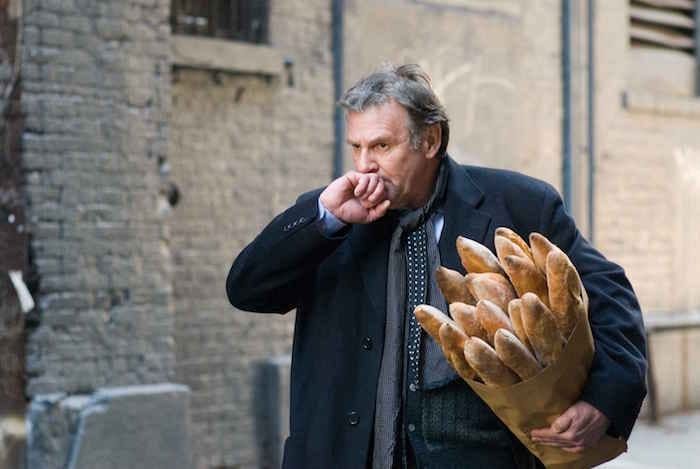
The Trickster is often the most interesting character in a movie. That stands to reason. They switch ‘masks’ with ease, changing allegiances with the snap of a finger, ally… enemy… enemy… ally… testing the mettle of the Protagonist and generally forcing the P to peer deep into their soul to discover what is at the foundation of their core essence.
Such is the case of Arthur Edens, played brilliantly by Tom Wilkinson in the movie Michael Clayton, written by Tony Gilroy.
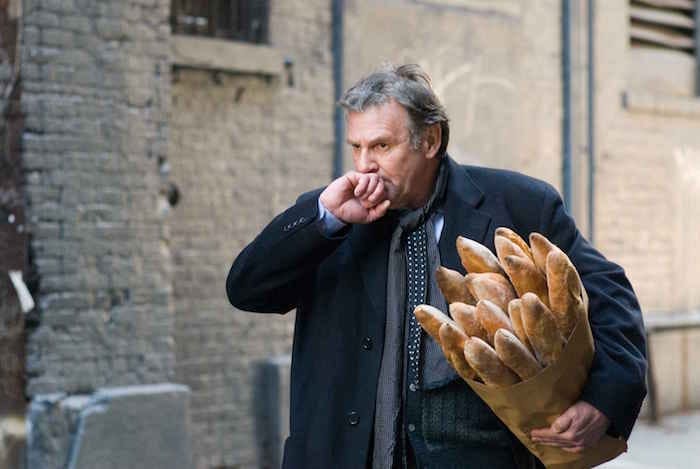
With Arthur, we are dealing with an individual who has lost touch with reality… or seen a powerful truth. We learn this about Arthur in the very first side of dialogue in the movie, one of the most memorable monologues in recent cinema history:
Michael. Dear Michael. Of course it’s you, who else could they send, who else could be trusted? I… I know it’s a long way and you’re ready to go to work… all I’m saying is wait, just wait, just-just-just… please hear me out because this is not an episode, relapse, fuck-up, it’s… I’m begging you Michael. I’m begging you. Try and make believe this is not just madness because this is not just madness. Two weeks ago I came out of the building, okay, I’m running across Sixth Avenue, there’s a car waiting, I got exactly 38 minutes to get to the airport and I’m dictating. There’s this, this panicked associate sprinting along beside me, scribbling in a notepad, and suddenly she starts screaming, and I realize we’re standing in the middle of the street, the light’s changed, there’s this wall of traffic, serious traffic speeding towards us, and I… I-I freeze, I can’t move, and I’m suddenly consumed with the overwhelming sensation that I’m covered with some sort of film. It’s in my hair, my face… it’s like a glaze… like a… a coating, and… at first I thought, oh my god, I know what this is, this is some sort of amniotic — embryonic — fluid. I’m drenched in afterbirth, I’ve-I’ve breached the chrysalis, I’ve been reborn. But then the traffic, the stampede, the cars, the trucks, the horns, the screaming and I’m thinking no-no-no-no, reset, this is not rebirth, this is some kind of giddy illusion of renewal that happens in the final moment before death. And then I realize no-no-no, this is completely wrong because I look back at the building and I had the most stunning moment of clarity. I… I… I… I realized Michael, that I had emerged not from the doors of Kenner, Bach, and Ledeen, not through the portals of our vast and powerful law firm, but from the asshole of an organism whose sole function is to excrete the… the-the-the poison, the ammo, the defoliant necessary for other, larger, more powerful organisms to destroy the miracle of humanity. And that I had been coated in this patina of shit for the best part of my life. The stench of it and the stain of it would in all likelihood take the rest of my life to undo. And you know what I did? I took a deep cleansing breath and I set that notion aside. I tabled it. I said to myself as clear as this may be, as potent a feeling as this is, as true a thing as I believe that I have witnessed today, it must wait. It must stand the test of time. And Michael, the time is now.
Later on there is this exchange between Arthur and Michael:
Michael Clayton: You are the senior litigating partner of one of the largest, most respected law firms in the world. You are a legend.
Arthur Edens: I’m an accomplice!
Michael Clayton: You’re a manic-depressive!
Arthur Edens: I am Shiva, the god of death.
“I am Shiva, the god of death.” A line repeated by Michael when he turns the tables on the story’s Nemesis Karen Crowder [Tilda Swinton]:
Karen Crowder: You don’t want the money?
Michael Clayton: Keep the money. You’ll need it.
Don Jefferies: Is this fellow bothering you?
Michael Clayton: Am I bothering you?
Don Jefferies: Karen, I’ve got a board waiting in there. What the hell’s going on? Who are you?
Michael Clayton: I’m Shiva, the God of death.
God of death. Death of what?
When Arthur utters it, the line is a prophecy of his own assassination.
When Michael uses it, it is not only a callback to Arthur, a tacit acknowledgement that the delusional rantings of the Trickster were, indeed, factually and morally right, but also an assertion of belief: That Michael has put to death the misdeeds of Crowder’s corporation… and in so doing put to death, at least in part, Michael’s own participation in his path toward ruination.
Arthur does go off the deep end. But that is what Michael needs. To force him to realize how he is going off the deep end, too.
Which means that Arthur’s insanity provides a conduit for Michael to find sanity.
And that is the work of a paradigmatic Trickster character.
Arthur Edens: A Great Character.
Comment Archive