Great Character: Driver (“Drive”)
This month, the focus is on anti-heroes. A guest post by Jason Cuthbert:
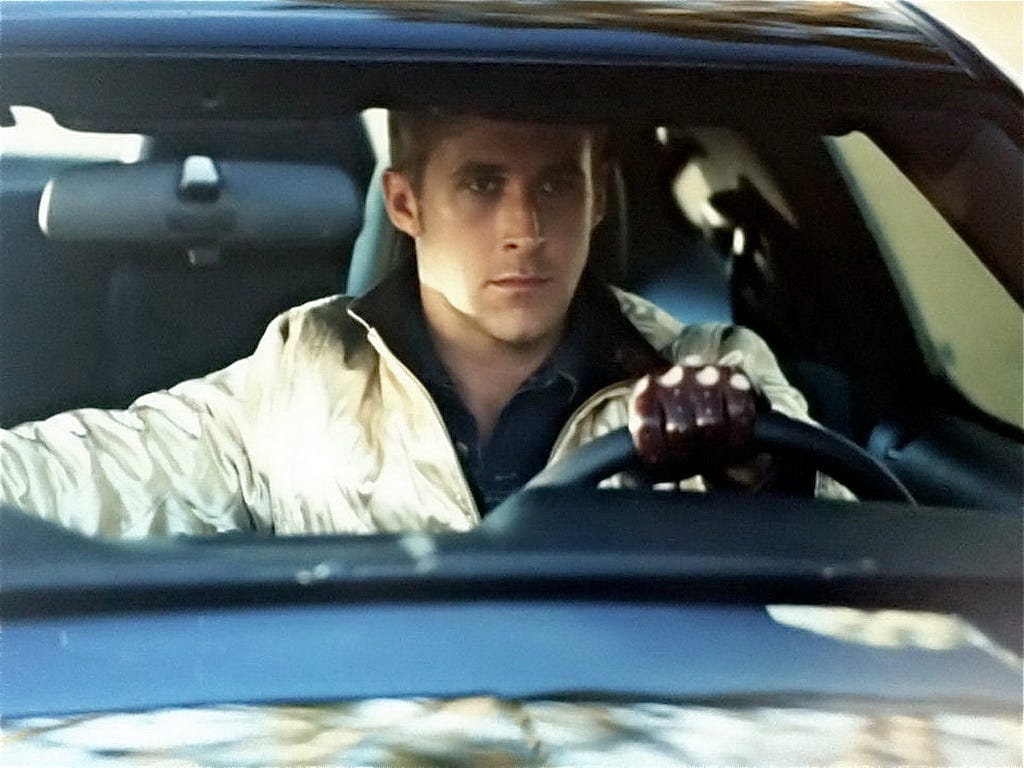
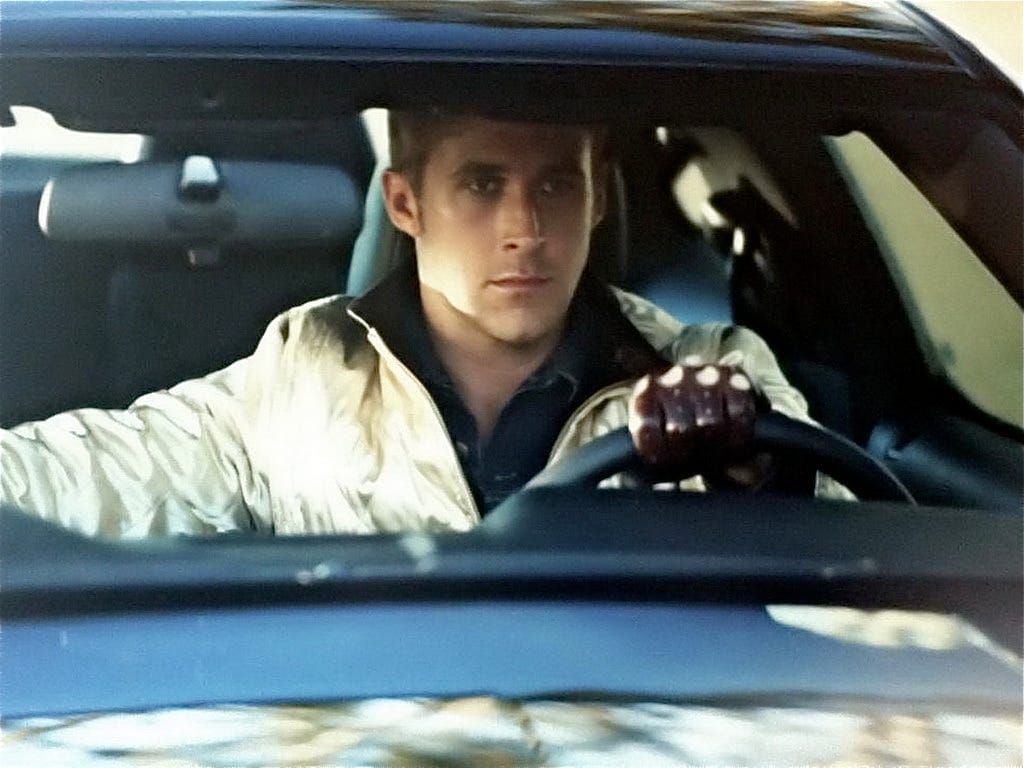
The year of 2011 became the single most productive calendar hanging on the wall of Canadian actor Ryan Gosling’s impressive feature film career. He had his biggest box office hit to date, playing Steve Carrell’s dating mentor in Crazy, Stupid, Love. This achievement was followed by receiving direction from George Clooney in The Ides of March, while joining him in a notable ensemble cast that also included Philip Seymour Hoffman, Paul Giamatti, Marisa Tormei, Jeffery Wright and Evan Rachel Wood. But it was Gosling’s sharp turn in Drive, as the quiet but deadly auto exhibitionist known only as the “Driver”, that sped away with full throttle acclaim.
Drive plot summary from IMDB:
A mysterious Hollywood stuntman, mechanic and getaway driver lands himself in trouble when he helps out his neighbor.
Screenwriter Hossein Amini (Killshot, Snow White and the Huntsman) provided the riveting screen adaptation of the 2005 novel Drive by crime author James Sallis, who also released the aptly titled 2012 sequel Driven. The virtually-silent Driver emerges out of a similar seedy glow of dirty neon that shares intense tonal symmetry with other legendary Los Angeles flicks like Heat, Collateral, and Mulholland Dr. Comparable to Robert De Niro’s disconnected drifter in Taxi Driver, who appeared like a lost cowboy lurking through New York City, the Driver is also an anti-hero protagonist that appears to have just suddenly popped up with nothing more than the ability to drive and a disturbing past.
In the automotive world — whether legal or illegal — the Driver is an accomplished triple threat: movie stunt driver, auto mechanic and heist getaway driver. The latter occupation appears to be the gig that has done the deepest permanent sculpting of his personality, because not only is this the way that we are introduced to him, but his frozen cold caution keeps us questioning his motives:
DRIVER: [on phone] There’s a hundred thousand streets in this city. You don’t need to know the route. You give me a time and a place; I give you a five-minute window. Anything happens in that five minutes and I’m yours. No matter what. Anything happens a minute either side of that and you’re on your own. Do you understand? [pause] Good. And you won’t be able to reach me on this phone again.
This machine made of flesh is as rigid as the automobiles he drives. His robust passion to serve is not your typical “fire red”, more like “icy blue.” He quietly follows clear rules, meets the objective then disappears. Even his feelings seem to follow this same regimented routine. Inflicting pain never even escalates from a preliminary shouting match, just an ever-present calm with unexpectedly bloody results.
Maybe this is why when associates do not submit to his ironclad laws his first instinct is intimidation.
BEARDED REDNECK: You’re Shannon’s buddy right? We met last year. You drove my brother and me back from Palm Springs. We hired another wheelman. I spent six months in jail. My brother, he got himself killed. I got this sweet job coming up.
DRIVER: How ‘bout this. You shut your mouth. Or I’ll kick your teeth down your throat and I’ll shut it for you.
BEARDED REDNECK: Nice seein’ you again.
This is a nomadic loner with no apparent companion, outside of the shiesty opportunist that openly brags about exploiting the Driver’s car-crazed abilities. So when the Driver does emotionally connect to Irene, a married mother, who he realizes is dividing her heart between him and her fresh-out-of-prison husband Standard, the Driver’s solitude makes it easier to understand him wanting to remain a part of their traumatized family.
He gallantly volunteers his speed racer getaway skills to chauffeur Standard to and from a robbery to pay off a dept to the ruthless mugs that protected him during his incarceration. Irene and Standard’s son Benicio appears to provide the Driver with a reason to widen his solitary social life and to not die — a complete contrast to his daredevil death wish career.
DRIVER: [watching a cartoon] Is he a bad guy?
BENICIO: Yeah.
DRIVER: How can you tell?
BENICIO: Because he’s a shark.
DRIVER: There’s no good sharks?
What makes the Driver’s “family time” with Irene and Benicio so crucial to his character’s journey is that they are the only people who he doesn’t keep his connection strictly business-related. He willingly spends his precious time with them; everyone else can only rent it from him — and only during business hours.
Even when his anti-social demeanor could cost him a lucrative jackpot — or his life — no one that he doesn’t know or trust is even entitled to a “hello.” Whatever ungodly acts of evil tainted the Driver’s opinion of his fellow man, you can bet that he will not let it happen again.
The Driver is a wonderful ball of unanswered questions. What happened between him and his family? Is he still running (or better yet driving) away from past conflicts? Did he lose his innocence at a young age like Benicio? What gave him his intense ability to kill? Whatever the gritty details may be, the evident truth is that this scorpion will not let those he loves get stung. For his unconditional sense of responsibility to his “adopted family”, and an active yearning for some selfless humanity to balance out his brutal anti-scumbag policy — the Driver is a fascinatingly GREAT CHARACTER.
Here’s something you won’t see every day: My comparison of Drive and the family movie Dolphin Tale. You can read that here.
Thanks to Jason for the post. Next week, another antihero.
Comment Archive