Great Character, Part 2: Juno MacGuff (“Juno”)
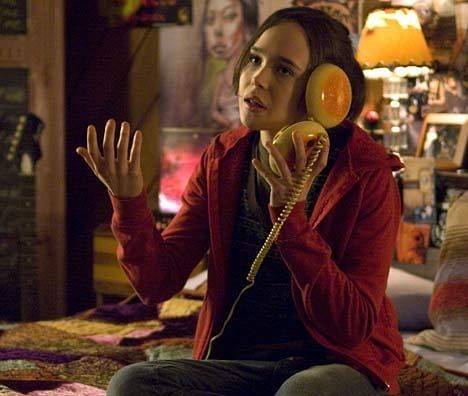
Jason Cuthbert follows up on my Friday post with his take on Juno MacGuff:
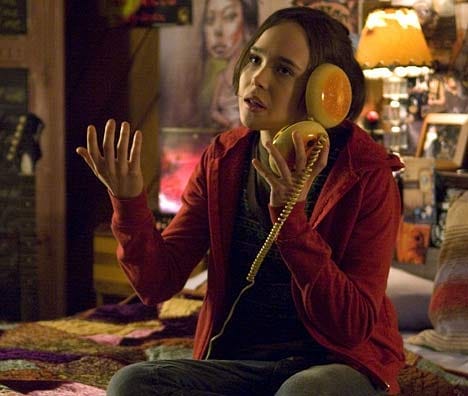
Canadian cinema had its shining moment in the sun in 2007 with the unexpectedly huge smash hit that became Juno. Director Jason Reitman (Montreal, Quebec), Ellen Page (Halifax Nova, Scotia), Michael Cera (Brampton, Ontario) and a Canadian production crew shot Juno entirely in British Columbia, Canada and had its premier at the coveted Toronto International Film Festival. But some how Juno wasn’t eligible for Canada’s Genie Awards, but hey… that’s another story.
The real story that made it to the screen was written by a contagiously opinionated ex-stripper super blogger named Diablo Cody. Juno was not only her first screenplay — but also her first Academy Award. Cody’s own high school experiences inspired the John Hughes meets Mad Magazine Midwestern pop culture colors that Juno MacGuff paints her thoughts with. But Ellen Page did the honors of making the ingredients in Cody’s recipe refreshing and ultra gourmet.
Juno plot summary from IMDB:
Faced with an unplanned pregnancy, an offbeat young woman makes an unusual decision regarding her unborn child.
Let’s face it; what makes Juno MacGuff such an extremely well written character is dialogue. She interprets her world with a voice so vividly distinctive that you almost become convinced that she is a fictional stand-in for her author — a burgeoning gift that could soon place Diablo Cody among the ranks of other renowned dialogue diplomats like Shane Black (Lethal Weapon), Quentin Tarantino (Pulp Fiction) and Aaron Sorkin (The Social Network).
Juno speaks in a continual verbal series of bumper stickers, retweets, hilarious headlines, and quotable text messages. For anyone who complains that “people don’t really speak like that in real life” — I would argue — “so what?” Juno isn’t a documentary on realistic American small talk — let her dare to be different. Maybe if more people did speak this interestingly then maybe we would actually remember what they say and stop tuning them out with our digital devices.
Juno never claims to be normal, nor strives to pick a “cheerleader”, “hot chick” or “math wiz” high school mold to adhere to. She is just really into music, obscure horror movies, blue frozen beverages and Paulie Bleeker — the co-pilot of her unexpected pregnancy.
JUNO MACGUFF: As far as boyfriends go, Paulie Bleeker is totally boss. He is the cheese to my macaroni. And, I know that people are supposed to fall in love before they reproduce, but… I guess normalcy isn’t really our style.
Even though Juno has a solid adoption plan in motion, and the complete support of her parents and best friend Leah — her self-effacing pregnancy humor just barely keeps her floating above the societal shame and emotional void that is rapidly rising above her head.
VANESSA LORING: Your parents are probably wondering where you are.
JUNO MACGUFF: Nah… I mean, I’m already pregnant, so what other kind of shenanigans could I get into?
JUNO MACGUFF: Wait… No! I mean, can’t we just, like, kick this old school? Like, I have the baby, put it in a basket and send it your way, like, Moses and the reeds?
JUNO MACGUFF: I am giving you the gift of life, screaming, pooping life, and you don’t even have to be there when it comes out all covered in blood and guts.
JUNO MACGUFF: (talking about her mother) Oh, and she inexplicably mails me a cactus every Valentine’s Day. And I’m like, “Thanks a heap coyote ugly. This cactus-gram stings even worse than your abandonment.”
Juno pushes Bleeker away after he agrees that she should have an abortion by saying “do whatever you think you should do” — for which she feels is abandonment of his responsibility to her and their baby. Maybe deep down inside Juno wanted Paulie Bleeker to keep the baby and raise it with her.
But at age 16, having a child right after losing your virginity may scare the hell out of any high school kid. On one hand, Juno encourages Paulie Bleeker to date someone else because she assumes that he won’t. But when he does — it feels like the ultimate violation.
The feeling of fear and bewilderment comes across in “I’m pregnant” family meeting with parents, in her high school hallways amid judgmental piercing eyes, when Mark Loring seems to have second thoughts about adoption and definitely in the “Women Now” abortion clinic scene:
Juno is a protagonist that must zigzag through high school life and her own domestic home pregnant without her own real mother in her life for guidance. Following this loss with her fear of losing Paulie seems to dissipate once she stops pretending she is not in love with him. Being “ill-equipped” as she admits for the daunting emotional roller coaster that is adulthood can only be remedied by not trying to grow up so fast.
Pregnancy is a function of life that brought us all into existence, and by pushing that burden of responsibility onto an irresponsible character brought forth an aspect of coming-of-age through Juno MacGuff that may encourage many real life teens to not try to play grown-up so fast and bask in the brief moments of their carefree high school years that they may one day long for.
For spewing her own version of the English dictionary, boldly fulfilling responsibilities beyond her maturity level and for fearlessly setting out to learn what true love is — Juno is an extremely GREAT CHARACTER.
If you have any feedback for Jason or thoughts about Juno, please go to comments and post away.
Thanks to Jason for the guest post.