Hollywood’s new literary Protagonist: Screenwriter?
Interesting to have two movies out at just about the same time featuring screenwriters as Protagonists. There is Midnight in Paris:
Like many an Allen protag, Gil doubts his own intellect. Part stuttering stand-in for the director, part shallow West Coast caricature, Gil specializes in screenplays, but aspires to putting his name on a novel.
And also the remake of the movie Straw Dogs:
…and nebbishy protag David (James Marsden) has gone from math professor to Hollywood scribe composing a screenplay about the siege of Stalingrad.
Movies have featured screenwriters as Protagonists before such as Joe Gillis in Sunset Blvd.:
Dixon Steele in In a Lonely Place:

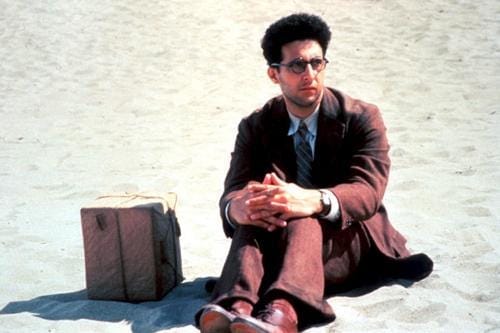
Or Barton Fink:
But these two most recent versions have me wondering whether they reflect emerging cultural attitudes about screenwriters and screenwriting:
(1) On the one hand, are screenwriters replacing novelists as the go-to literary Protagonist figure? There has been an explosion of interest in screenwriting in the last 25 years. We see this in the sheer number of books on the craft, and the enormous growth in classes and screenwriting programs at the collegiate level and graduate level. I like to joke with my university students, they seem to be more interested in writing the Great American Screenplay rather than novel of generations gone by.
(2) And yet is there still a perception that screenwriting is somehow less authentic or truly creative than novel writing, or even playwriting? This attitude is reflected in Gil’s character in Midnight in Paris when he says, “I’m having trouble because I’m a Hollywood hack who never gave real literature a shot.” His heroes aren’t Chayefsky or Goldman, but Hemingway and Fitzgerald.
Perhaps Midnight in Paris and Straw Dogs represent something of a pivot point in terms of the general perception of screenwriting. On the one hand, more people than ever know about the craft and even aspire to become screenwriters. And yet, most would probably feel that a screenplay is not the same as a novel. With the latter, a writer can present it to others as a completed work. A screenplay is a story-in-progress, a pre-movie.
Which leaves me to wonder one last thing: Is that perception evolving? If you look back at screenplays from the 40s or 50s, they were filled with camera shots, much more literally a blueprint to producing a movie. To compare to screenplays nowadays, it’s almost as if they are a wholly different narrative form. Stripped of directing lingo and having developed a language and style of its own, screenplays have, for lack of a better word, become more ‘novelistic.’ Indeed consumers can now buy contemporary screenplays in book form as with the Newmarket Shooting Script Series. If this trend continues, is it possible in 20 years time, there will be a screenplay category in the Pulitzer Prize? While that may seem far-fetched, I wouldn’t sell short the potential that exists for this narrative medium. On a purely experiential level, there have been times when I have read a screenplay and had as much joy and entertainment as with a novel.
A screenplay is its own unique way of telling a story.
So perhaps in the near future, filmmakers may present screenwriters as Protagonists who are deeply satisfied in plying their craft, not only well paid, but respected throughout literary circles.
Of course then, however, they would make for much less interesting characters than that of a dead man floating face down in a swimming pool…
Comment Archive