“How Hollywood Killed Death”
This.
Death in the blockbusters of 2013 played out something like this:
“I’m scared, Spock,” Captain Kirk says to his hyperlogical space pal halfway through his four-minute death scene in “Star Trek Into Darkness.” It’s heavy. Eyes are brimming with tears. The score swells mournfully. Kirk dies. Spock yells. Cue confrontation with the bad guy, a spaceship destroying half of San Francisco and a huge climactic finale.
Another example: “I’ll catch you, I promise,” Tony Stark says to Pepper Potts, as she dangles precariously from a crane in “Iron Man 3.” Stark breaks his promise, and Potts falls to her death. The score swells. Eyes brim with tears. Cue confrontation with the bad guy, a cavalcade of C.G.I. explosions and a huge climactic finale.
Also: “I’m sorry,” Loki says to Thor as he lies dying, having sacrificed himself to save the universe in “Thor: The Dark World.” Eyes tear, score swells, Loki dies, Thor yells. Some moments later, cue confrontation with the bad guy, the destruction of the Old Royal Naval College in London and a huge climactic finale.
Blur your eyes, and they might have all been the same tedious, manipulative movie. I felt nothing watching these characters disappear off-screen, hurtling toward whatever lies beyond. I’m no sociopath. The problem is that death at the movies has died. The movie industry has corrupted one of cinema’s — if not all of fiction’s — most emotionally taxing moments into hollow formula, the kind of thing that passes in the blink of a plot point leading to a literal, if not figurative, explosive finale that takes up half the budget. Considering this, it’s odd that death’s killer is the new, risk-averse economic logic of Hollywood.
— —
Potts’s death is a completely pro forma affair. Stark is given literally seconds to mourn before he is scooted right back into the action. It renders the moment so inconsequential, so blink-and-you’d-miss-it, that you can almost hear the writer’s pencil scratch, “Motivation for Iron Man to unleash hellfire and justify explosive C.G.I. bonanza” off the to-do list. How is an audience supposed to feel that a death matters when the movie doesn’t bother to lend it meaning? Writers are so focused on finding ways to give us crowd-pleasing destructive pyrotechnics that they undermine the required emotional setups without even realizing it. Death has become a mere transition device.
By contrast, Captain Kirk’s death at least aims for emotional resonance, lending it the full weight of its actors’ tears. Still, the moment is so transparently formulaic that its attempt to convince us of its gravity feels patronizing — all the more so because it’s impossible to believe it’s anything but a bluff. We know the “Star Trek” universe, so triumphantly rebooted, isn’t going to kill off its hero. It’s the worst kind of bluff: one so obvious, the bluffer can’t even commit.
That’s because neither Captain Kirk nor Pepper Potts actually dies (ditto Loki). These are not the routine fake-out deaths we’re used to: a character shot in the chest reveals a Kevlar vest, a drowned character bubbles up water after a few seconds of worry, a Batman explodes in a nuclear blast then resurfaces at an outdoor cafe in Italy. No, in 2013 characters were dead-dead, then . . . not so much.
Potts returns superpowered and totally fine; Kirk is resurrected by Khan’s superblood; Loki reappears, assuming the form of his father, Odin. It was a banner year for such Lazarus acts: Michelle Rodriguez died in the fourth “Fast & Furious,” only to come back alive, but amnesiac, in “Fast & Furious 6”; Patrick Stewart’s Professor X — who died in “X-Men: The Last Stand” — appears resurrected at the very end of “The Wolverine”; Tom Cruise dies in a gigantic explosion in “Oblivion,” but don’t worry, here comes a clone for the happy ending; “The Lone Ranger” kills off Armie Hammer early in the movie, digs him a grave and then has a white spirit horse that apparently resurrects him; then there’s Agent Coulson’s death in “The Avengers” which begot a television resurrection in 2013 on “Agents of S.H.I.E.L.D.”
Formula may have atrophied death at the movies, but resurrection has killed it. And an unholy coalition between comic-book publishers and an economically weakened Hollywood is to blame.
I felt nothing with any of the above noted deaths. Zero. Compare to these movies:
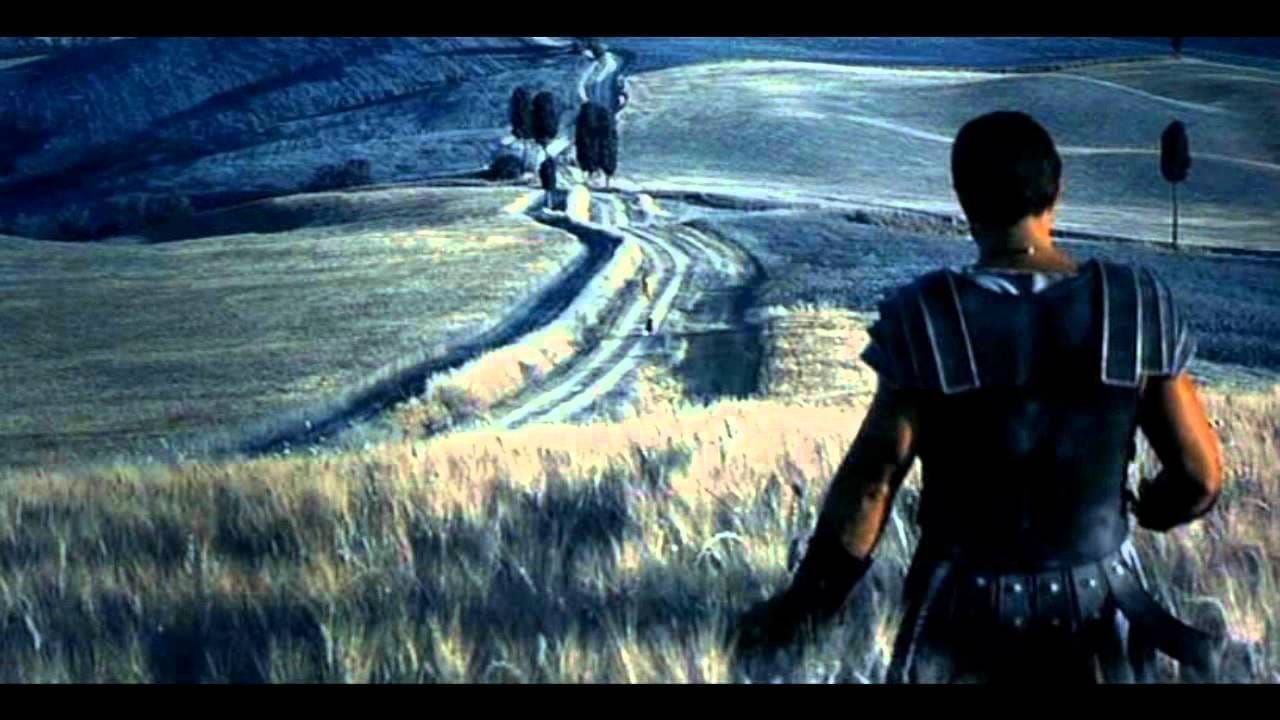
Think of some of the all-time greatest movie deaths: Obi-Wan Kenobi in “Star Wars.” Roy Batty in “Blade Runner.” Mufasa in “The Lion King.” Artax the Horse in “The Neverending Story.” Thelma and Louise in “Thelma & Louise.” Marion Crane in “Psycho.” Bambi’s mother in “Bambi.” Vincent Vega in “Pulp Fiction.” Spock in “Star Trek II: The Wrath of Khan.” Boromir in “The Lord of the Rings: The Fellowship of the Ring.” Tracy’s head in “Seven.” Maximus in “Gladiator.”
Why did these deaths carrying emotional meaning whereas others do not? The NYT article suggests the primary reason is we don’t feel anything about deaths on screen when they feel formulaic, coming off as a blatant attempt on the part of the filmmakers to manipulate the audience into having an emotional reaction. But there is a subtext at work there and in my view, too, and it is this: We must care about the character to feel anything by their demise. It’s not just the death itself. It’s about everything that has come before the death. Has the story created an authentic, compelling emotional connection between the character and the script reader or moviegoer?
What this article spotlights is one of the most onerous dangers of what I call outside-in writing, where the primary vantage point for the writer is outside the story universe, making narrative choices based primarily on the writer’s mindset. If the writer is working with a story formula, their attention is likely to be on the formula, not the actual story universe. In fact, the formula can actually stand in the way of the writer going into the story.
A writer is much more likely to have characters emerge as full-blown, complex, feeling individuals by engaging in inside-out writing, where the writer immerses him/herself inside the story universe, living with the characters, talking with them, listening to them, pondering them, observing them. When we care about the characters, that emotional resonance can come through the words we write and into the hearts of our readers.
Death is the be-all and end-all of emotion-generating events, both in life and in stories. When a movie handles a character’s death in such a way that we are left feeling nothing about the event, that often speaks to formulaic writing. But it also suggests the filmmakers didn’t have enough respect for or give enough attention to the characters.
Takeaway: Less outside-in writing… more inside-out writing.
For the rest of the NYT article — “How Hollywood Killed Death” — go here.