How I Stopped Whining and Loved the 1 Page Synopsis
We all hate writing loglines and treatments… unless they make you $$$.
We all hate writing loglines and treatments… unless they make you $$$.
Today I start teaching my one-week online class: Story Summaries: From Loglines to Beat Sheets. It’s important nowadays for writers in Hollywood to be able to craft stories in multiple narrative forms and in this class, we not only explore six story summaries — Logline, Synopsis, Breakdown, Treatment, Scriptment, Beat Sheet — we also learn how to use them to help us develop a story as an essential part of our prep process.
To provide additional appreciation of the value of story summaries, let me share a story from my own past as a screenwriter.
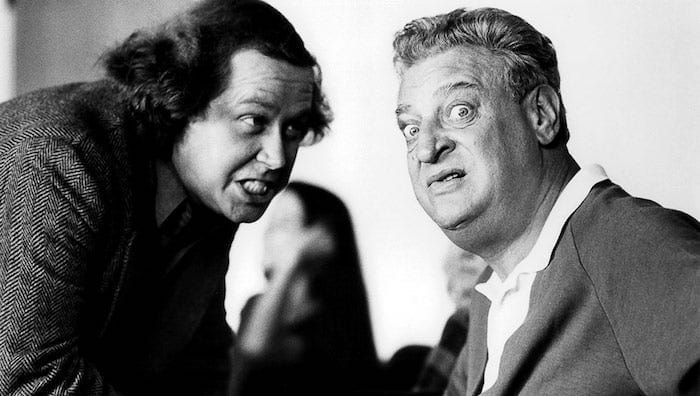
Back when Rodney Dangerfield was riding high due to the success of Back to School, my writing partner and I met with Rodney’s people. As we walked out of the meeting, I turned to my partner and said, “Dangerfield is known for his whole ‘I don’t get no respect’ thing, right? What better job for that kind of guy than to be President of the United States?”
We drove to our agents’ office and blurted out, “Rodney Dangerfield: Mr. President.” They loved it.
We worked out the story. Our agents set a meeting for us at Warner Bros.
In order to wrangle the story, we had started to draft a treatment. We figured why not condense it into a synopsis which we could give to the execs as a leave-behind. That way, instead of relying on them to pitch it to their higher-ups, they would have our words on paper to do their job for them.
So we take the meeting and do our pitch. They execs are excited. Then we produce the 1-pages synopsis. This really gets them worked up. The whole story laid out in three paragraphs. “This is really great. Thanks!”
The next day, we are in a meeting with screenwriter Jeffrey Boam (Lethal Weapon 2, Indiana Jones IV) and his then partner Carlton Cuse (who went on to co-create “Lost”). In the middle of the meeting, their assistant enters.
“Sorry to interrupt, but it’s your agent. He wants to talk to you. He says it’s urgent.”
She points at me.
All eyes on me. Kind of awkward to be interrupted like that. I pick up the phone and as my partner kibbitzes in the background with Boam and Cuse, I have the following conversation with my agent:
“Okay, Scott, I’m gonna tell you something, but you gotta promise not to say anything. Not a word until it’s official, promise?”
“Uh huh.”
“Warners bought it.”
Beat.
“Mr. President. They loved it. They bought the pitch.”
“Uh huh.”
“You want to know how much?”
“Uh huh.”
“Four hundred thousand all in.”
Beat.
“And that thing you left behind… the uh…”
“Synopsis?”
“Yeah, that sold it. Everybody read it and they totally got the story.”
“Uh huh.”
“Okay, have a good meeting. And remember… don’t say a word.”
I hang up. And for the next half hour, I nod my head and chat casually with Boam and Cuse, all the while sitting on that good news.
So whenever you find yourself writing a logline, treatment, beat sheet, or synopsis, and you are having a hard time motivating yourself, just remember that one time, Myers sold a 1-page document for $400K.
For more information on the Story Summaries: From Loglines to Beat Sheets class, go here.