How They Write A Script: Ring Lardner Jr.
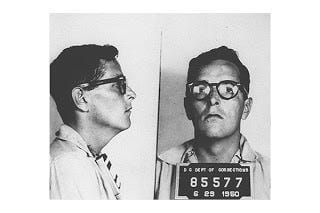
“At the age of twenty-six, Ring Lardner Jr. shared the 1943 Academy Award for Best Original Screenplay for Woman of the Year. Five years later, he was cited for contempt of Congress for refusing to state whether he was a member of the Communist Party. He was then blacklisted and sent to prison for a year.”That’s how the forward to the interview with screenwriter Ring Lardner Jr. begins in the book “Backstory 3: Interviews with Screenwriters of the 60s,” one of a 4-part series edited by Patrick McGilligan.
Ring Lardner Jr.’s writing credits include Woman of the Year (1942), The Cincinnati Kid (1965), and M*A*S*H (1970), but he wrote uncredited on dozens of movie projects A Star is Born (1937), Laura (1944), and Semi-Tough (1977).
Lardner was one of “The Hollywood 10,” leftist screenwriters who were blacklisted during the late 40s and 50s. I don’t include much of that in the following interview excerpts, but it is a fascinating if sad chapter in history — you can learn more by going here.
ON HOW HE BECAME A WRITER
“Well, there was always athe possibility of writing in our household, particularly newspaper writing… my father always thought of himself as a newspaperman, even after he ceased much active newspaper work. The four of us boys published a family newspaper, which we all wrote. We all did various kinds of writing. I was the editor of the literary magazine at Andover.
“I wasn’t sure that I was going to be a writer even by the time I went to Princeton. I was still thinking about the possibility of either teaching history or studying law, both of which had some appeal to me. But by the end of that sophomore year, I left college, which ruled out anything that required an academic background, and like my two older brothers before me, I got a job on a newspaper in New York.
“Scott Fitzgerald certainly was an influence. I think I went to Princeton because he told me I should. I found both him and his wife quite glamorous figures…
“We did know a lot of people who worked as writers. Dorothy Paker came at my father’s invitation and stayed a week in our guest room because she said she had to be alone to write. And Charles MacArthur and Heywood Broun and Alexander Woolcott and Sinclair lewis and a number of other writers.”
ON HOW HE MADE HIS WAY TO HOLLYWOOD
“One weekend David Selznick was a guest, and I got to talking to him. He asked me if I was interested in working in Hollywood, and I said that I might be. I didn’t know. He was starting a new company; he had just left MGM. And then I got a letter from him suggesting that I send him some stuff that I had written, and I sent him some of the material that had appeared in the humor magazine at Princeton, the Princeton Tiger; and some other things I don’t remember, quite a bunch.
“Anyway, in the fall came this offer to sign a seven-year-contract, which was then standard in Hollywood. The only thing that wasn’t standard about it was that it started at forty dollars a week, with options every six months.
“I was making twenty-five dollars a week on the Mirror, so that was a distinct raise. It didn’t say specifically what I was supposed to do; they could use me almost any way. But he had mentioned the publicity department or something like that, which was tied in. So I decided to sign the contract and flew out to Hollywood.”
ON HIS INVOLVEMENT WITH THE MOVIE “WOMAN OF THE YEAR”
“It started with Garson Kanin, really. A friend of mine, Paul Jarrico, had written Tom, Dick and Harry (1941), which Garson was shooting. And I visited him on the set one day. Garson said he had this idea for [Katherine] Hepburn… Garson knew she needed something after the film version of The Philadelphia Story (1940). So he came up with a sort of Dorothy Thompson character. Dorothy Thompson was the only woman columnist at the time. I said I thought it might work, and Garson suggested that I get together with his brother Mike and see if we could work out a story.”
ON HOW HE APPROACHED COLLABORATION
“Generally, by talking out a whole scene or sequence in considerable detail, so that we were substantially agreed on it, and very often two scenes, so that one of us could sit down and write a first version of each. And then we would switch them, and the other one would rewrite the scene. Each would rewrite the other’s work, and then we would go at it again together. The process of setting it down for the first time has always required one person being at the typewriter by himself. The collaboration takes place in the plotting and then in the rewriting.”
ON WORKING WITH DIRECTOR OTTO PREMINGER
“Otto was a very bright man with a lot of humor and curiosity about almost everything. He was very good company, and we spent a lot of time talking about people and the world in general rather than about the work at hand. He had the minor defect of possessing a fair amount of ego and the major one of a really bad temper. The temper could be confusing because sometimes it was almost exclusively against actors in the course of their work on his set.
“It would always tart comparatively mildly after a rehearsal or a take, with something like, ‘No, that wasn’t right,’ and build to ‘What are you trying to do to me?’ to “You’re deliberately sabotaging the whole picture!’ I described the process as Otto-intoxication — a phrase he first took offense at and then found amusing.
“His approach to a draft of a scene was to go after it word by word, detail by detail, questioning everything, and often being satisfied with the answer. His instincts often turned out to be right, but sometimes he stuck stubbornly to a bad idea and insisted on the scene being rewritten his way. Occasionally, he would admit later that he had been wrong, sometimes after the picture was released.”
ON HIS INVOLVEMENT WITH THE MOVIE M*A*S*H
“I had written a blurb for my friend Roger Kahn’s book about Jews in America, The Passionate People, which the publishers, William Morrow, apparently liked so much they asked me to do one or a mew book they were publishing called MASH [by Richard Hooker]… I saw a way to put together what were really separate short stories about the same people in the same location and make a movie of it, and I gave the book to my friend [the agent-producer] Ingo Preminger [Otto Preminger’s brother], who shared my enthusiasm. We gave it and a pitch to Richard Zanuck and David Brown, and they made a deal with Ingo’s company to buy the rights and produce a movie.
“The book was uneven in style and credibility, with some incidents that were just too wild and improbable to be acceptable in a movie. I took some of the main incidents, invented a couple more, and organized them into a continuity that I thought would work, even though it violated the cardinal rule that a story involves a change of character in one or more of the principals. In my adaptation, the main characters were the same all the way through, and the illusion of a story had to be sustained by the action and the comedy.
“For about two minutes, Ingo and I discussed making it Vietnam instead of Korea and quickly realized the war that was still going on was just too close to many people for us to be funny or properly irreverent about it. By keeping it the Korean War, we could satirize the whole idea of American involvement in Asia, which consisted to a large extent of bringing American institutions like football over there instead of learning what asia and its institutions were all about.
“[Robert] Altman made many changes in the script, and most of them were, in my opinion, beneficial… He added the business of the stolen jeep at the beginning and the subplot of an affair between nurse Leslie and Colonel Blake. He greatly expanded the use of the public address system; he kep the character of Hot Lips in the latter part of the story; he cut the death of Ho Jon after shooting it; he revised the ending; and he added several significant piece of dialogue, including what is probably the biggest laught; Dago Red’s “He was drafted.”
ON WHAT THEMES RUN THROUGH HIS WORK
“If we include my two novels and my unproduced screenplays, it could be said that a recurrent theme is the struggle of individuals with unconventional values to find expression for them in a society that prizes conformity. Just a few years ago, I was attracted to a true story of two innocent men who spent eight years in death row largely because of their associations with marijuana and motorcycle gangs. The screenplay I wrote was widely praised, but no one wanted to sponsor it, largely, it seemed, because it questioned that popular institution, the death penalty.
“Like a great many other people on the Left, I came to realize belatedly in the postwar period how wrong our image was of Stalin and what was called Communism. The collapse of the Soviet Union dashed my last hope that there was any possibility of regeneration from within. The lack of freedom, the inefficiency, and the corruption make me at least consider the possibility that these defects may be inherent products of bureaucracy.
“Still, my basic answer is that Communism, like Christianity, is a beautiful theory that has yet to be tested, because it has never been put into practice.”
Comment Archive