How to make the perfect car chase
When Edgar Wright (Baby Driver) talks… filmmakers listen!
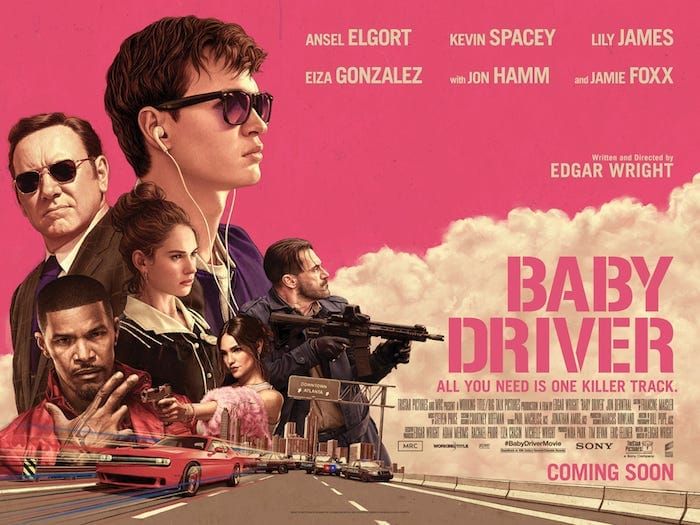
When Edgar Wright (Baby Driver) talks… filmmakers listen!
I saw Baby Driver this week and it’s fantastic! In all respects. Script, casting, directing, and hugely inventive in one amazing way: It’s a musical!
That’s right, Baby Driver is an action-crime-musical. But a musical like no other. Writer-director Edgar Wright uses music in a way… well… you know how in traditional musicals, there’s that weird transition from reality to where someone just starts singing, like this is the way the world works. Orchestra swells. People dance. Characters sing.
That’s not Baby Driver. The music arises organically in the context of the physical world in which these characters exist — a gritty, realistic story universe. Radios, iPods, tape recorders, the music emerges from these natural sources. There’s no soundtrack, the music just is. I can’t describe it better than that, you just have to see the movie to understand. And when you do, you may come away from the theater like I did, wondering if this is the way musicals should have been done all along.
Of course, the movie is not all music. Well, it is all music. There are over 30 songs featured over the course of the 113 minute runtime. But I mean there’s also stuff like…
CAR CHASES!
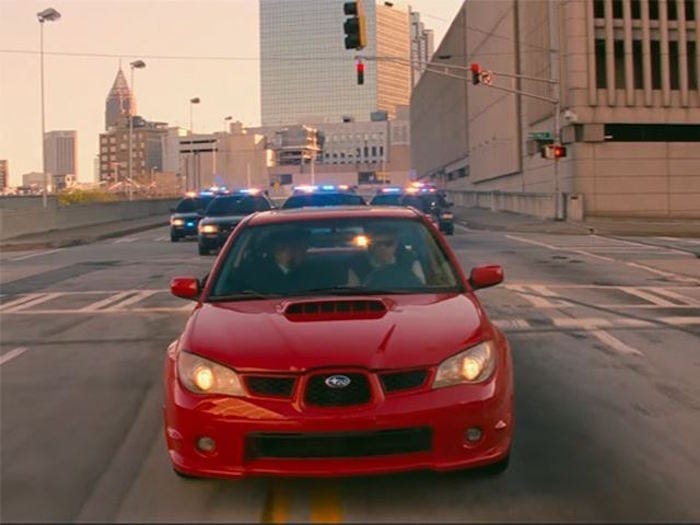
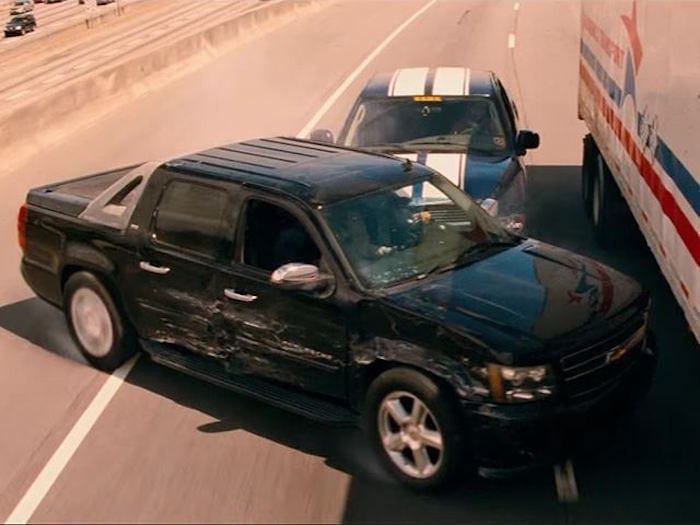
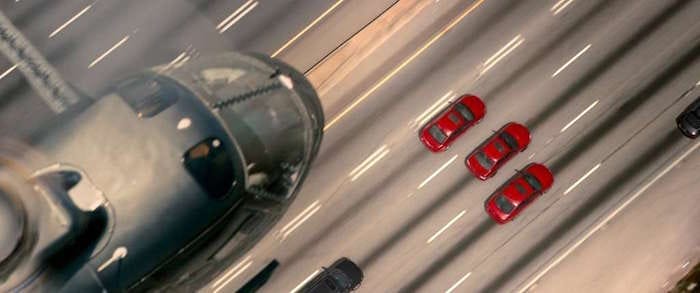
BFI has an article featuring Wright’s observations on the subject: How to make the perfect car chase. The filmmaker spotlights 5 requirements:
- The Stakes
- The Vehicle
- The Driver
- The Music
- The Location
Here’s one take from Wright about the stakes:
“The stakes need to be very clear and very vivid. That’s why The French Connection (1971) is always brought up as one of the greatest ones. Popeye Doyle commandeers a car because the other guy’s on a train, so it’s out of necessity. Then you’ve got a great car chase where it’s car versus train. It’s not like they’re just tooling around in their cars and then a car chase starts.
“That’s kind of how Bullitt (1968) starts. Frank Bullitt is being tailed, and then he decides to lose them. It is an iconic sequence. A lot of the best car chases look well shot, spatially correct, with geographically clear action.
“The Blues Brothers (1980) would be another example, because they have to get to the court offices before a particular time, and they’ve got the money — their winnings from the concert — so things are linked together. It’s quite schematic in that movie.”
The interesting thing is apart from perhaps the music, screenwriters can impact those key aspects of a good car chase in what we write. Here’s an excerpt from a draft of the Baby Driver script:
Baby’s car sails into busy traffic, the track blasting on the car stereo, building in speed and energy.
Despite the velocity of the getaway, our driver is calm at the wheel, weaving through traffic like an android.
The other gang members lay low in their seats, shrug out of their business attire. They trade looks as Baby swerves.
WOOP WOOP. One BLACK & WHITE cruiser screams the opposite way.
It zooms past, then makes a 180 behind them.
Baby sees the Black & White BEHIND. A light turns red AHEAD.
He FLOORS it through the stop light. Other drivers break hard around him. Cars crash, rear end in time with kick drum hits.
The Black & White flies through the intersection, gaining.
Baby nears 70 mph, the track building with cracking snares. The lone Black & White still dogs behind. Sirens wailing.
Baby HITS 70 mph. Then 80. Comes up to an intersection. Eases off. Makes a hard right at the last second into -
A side street. Loses the Black & White. Baby TEARS down the narrow street, dodges dumpsters.
On the adjacent artery, the Black & White can be seen in parallel. Baby floors it to the next cross street and SWERVES a hard left, directly into the path of the Black & White pursuing.
Baby plows through this intersection, forcing the Black & White and all other traffic to brake VIOLENTLY HARD.
The Honda Civic leaves the Black & White in the dust and tears down another straight with less traffic.
All this action is grounded in a terrific opening. We see the vehicle (hot). We have a sense of the location (urban). We get to know the driver (Baby). The connection of music to action is made clear with the movie’s first song ‘Bellbottoms’ by the Jon Spencer Blues Explosion. The way Baby bobs, weaves, and sings to the song not only indicates how music will be used in the movie, the scene also immediately ingratiates Baby to us.
The stakes in the opening car chase? Because we like Baby immediately, we don’t want him to get arrested. And in ensuing scenes after we learn more about who Baby is, why he’s a driver, and his backstory — which makes the stakes “very clear and very vivid” — we really like him. As a result all of the action scenes and car chases, they actually mean something, they carry emotional heft, not just tires squealing and bullets flying. We are invested in Baby’s fate and hope he can extricate himself from increasingly dangerous situations.
Yeah, Baby Driver is all kinds of awesome. So if you care about original stories and inventive filmmaking, spend actual money at an actual theater, preferably opening weekend (it goes wide starting June 28 in North America), and see this movie.
Congrats to Big Talk Productions (I’m looking at you, Rachel Prior!), Working Title Films, Sony Pictures Entertainment, and especially Edgar Wright for producing a truly entertaining film.
For the movie’s website, go here.
For the BFI article cited above, go here.