Interview: Barry Jenkins, “Moonlight”
A WGA interview with Barry Jenkins, writer-director of the indie drama Moonlight. IMDb plot summary: “A timeless story of human connection…
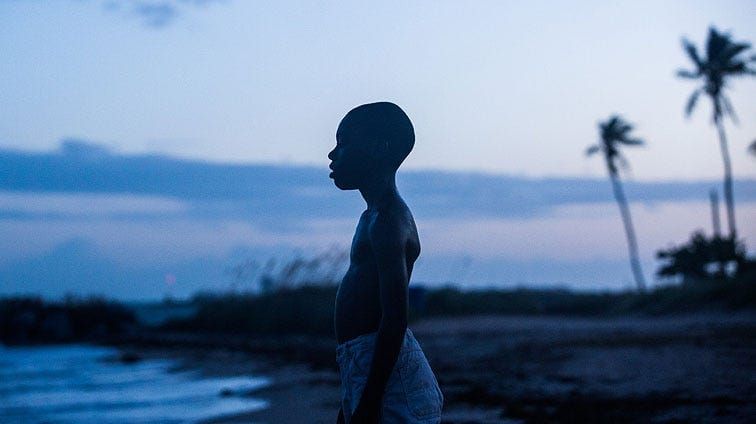
A WGA interview with Barry Jenkins, writer-director of the indie drama Moonlight. IMDb plot summary: “A timeless story of human connection and self-discovery, Moonlight chronicles the life of a young black man from childhood to adulthood as he struggles to find his place in the world while growing up in a rough neighborhood of Miami.”
Shortly before he passed away, the author John Updike said, “The only reason to tell stories or to read stories is to generate empathy.” Does that resonate for you as an artist?
I approached this whole piece, Moonlight, from that perspective. I wanted to very actively and deeply access my own empathy, to create this path of empathy for these characters, this story, the artists I’ve been lucky enough to work with on this film. I wanted to create that kind of space. Empathetic, but actively empathetic.
Most of us are done with empathy as soon as we’ve felt another person’s pain. That’s it: mission complete. What do you mean by active empathy?
You know in life there are passive allies and there are active allies. There are people who are kind about what you do or who you are, there are those who are encouraging or are in some way supportive, and then there are people who feel you so deeply that they get in it with you. They become active, mobilized, and then you’ve really got something. For all of the similarities between Moonlight and the world I grew up in, making this film really required that I find my own empathy, and then to grow it.
In what ways?
Here’s an example: I’m straight. So when I look at this film, its source material is a play by Tarell McCraney and his sexuality is a key component of his work and a key component of this main character’s identity. In the beginning, I felt a little bit like, “Well, shit…Can I even take authorship of this?” Is this my story to tell? Because of a difference like sexuality is it even possible for me to take authorship? You have to find your empathy. You have to find the places that you connect with other people. Because there I am with this story that has turned me inside out, but there is this important aspect to this character that I, personally, cannot relate to. So what do you do with that? So you go back to when the Supreme Court passed the same-sex marriage bill and Facebook let everyone change their profile photo to that rainbow overlay, and I was, like, “That’s cute…” It’s cool, but it’s cute. It’s passive empathy. That’s being a passive ally.
It’s like hashtags.
It is like hashtags, yeah, which definitely have their use and have their place in the world. Moonlight has definitely benefitted from hashtags, for sure. At the same time, I saw in Moonlight an opportunity to very actively employ empathy, to cultivate it, to expand it, to grow it, to invite change and feeling and growth into my own heart, and hopefully to do that for others with the film. But it had to be active. I didn’t just want to stir feelings in people. I wanted to make a film that would be active, that would be an active ally for anyone in the world feeling the things these characters feel, no matter where they are or who they are or what their circumstance. That was important to me.
For the rest of the interview, go here.