Interview: David Koepp (Jurassic Park, Panic Room, Mission: Impossible)
A Collider interview with screenwriter David Koepp (Jurassic Park, Mission: Impossible, Panic Room, Spider-Man, War of the Worlds, Indiana…
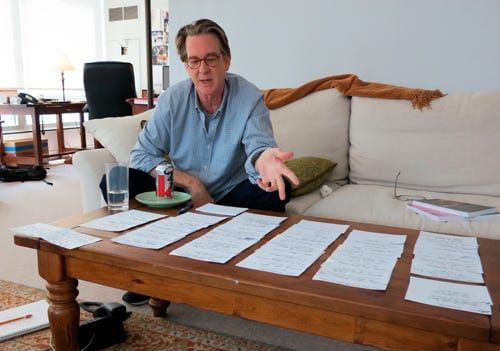
A Collider interview with screenwriter David Koepp (Jurassic Park, Mission: Impossible, Panic Room, Spider-Man, War of the Worlds, Indiana Jones 5).
You’ve been working in Hollywood as a screenwriter for a very long time, how has your process changed at all or do you still have a very typical routine?
KOEPP: I have a typical routine. I mean, you know, I think writing scripts for me hasn’t changed since my early twenties, which is…you know there’s thinking, research –Thinking is just like when you have an idea that’s just rattling around in your head for a year, or a week, or two years or whatever. Research, which can be extensive or not depending on the subject. Outlining, first draft, and perpetual rewrites. So that has not tended to change, the only thing that really changed was I used to work at night, and since I have kids I work in the day. Because you know kids force you into more of a regular schedule. But I think that still screenwriting, the best that tends to come from fewest people in the room and so that’s why I thought it would be nice to work with successful directors, because they tend to get the space that you need and you get a lot of other people in the room. I know that like the writers rooms is very popular in TV and certainly there’s a lot of per TV, like everyone else I watch a lot of TV these days but I don’t think the writers room approach has ever really worked for movies or maybe I’m just not good at it. I like the push and pull of two people talking, you know I try to go and seek out those situations although they’re harder and harder to find because of the way the movie business has changed.
When you’re writing a script like Inferno or maybe any of your other scripts, how cognizant are you of writing with a budget in mind and how much are you, “I’m gonna write the script and I’m gonna let the director and the studio figure out how to pay for it.”?
KOEPP: You know, I used to worry about budget and then [Steven] Spielberg told me on one of things I was writing for him, “Don’t worry about that. There are no limits except your imagination.” So I really try not to think about it at all and I write what I want to see. The only thing I care about is what I want to see when I’m at the movie, and then I hope that other people want to see that too. Because they’ll tell you if something’s a problem and you just think of another way to do it, but I think that you can’t self-sensor that way unless something’s ridiculous. But usually if you write a twelve page chase, that’s gonna be a budget problem and structurally also because that’s an awfully long chase, are you sure you want that there? So the demands of the story often takes care of budget problems themselves.
For the rest of the interview, go here.