Interview: Don Winslow (“The Cartel”)
One of the joys of having hosted this blog for over 7 years and being an active Twitter participant is getting to know writers I would never have met if I were just shut up all day in my office. I am particularly glad to have become acquaintances with Don Winslow, novelist and screenwriter.
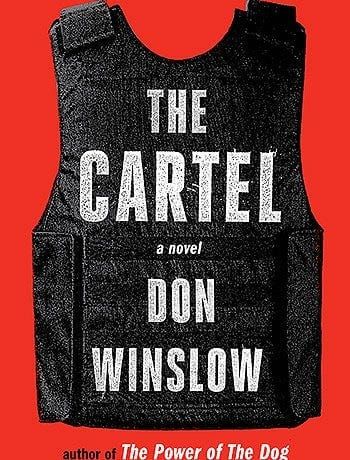
Don is a New York Times bestselling author who has written 17 novels including The Kings of Cool, Savages, The Winter of Frankie Machine and the acclaimed epic The Power of the Dog. A Raymond Chandler award recipient, his latest novel is The Cartel which has been receiving fantastic reviews. For example, here is a quote from the New York Times: “‘The Cartel’ is a big, sprawling, ultimately stunning crime tableau.”
The Cartel went on sale Tuesday and Don is embarking on a nationwide book tour, but I was fortunate enough to grab him for an interview. Here it is in its entirety:
Scott: Let’s start with your background. Son of a sailor and a librarian. In school, studied journalism, African studies, and military history. Lived in California, Idaho, Montana, New York City, Kenya, and traveled all across Europe, Africa, and Asia. Wide variety of jobs including movie theater manager, safari guide, private investigator, and trial consultant. How much of that was intentional and how much was serendipity?
Don: Intentional in the general, serendipity in the details. From the time I was a kid, I knew I wanted to travel, especially to Africa. Not coming from ‘money’, I also knew that I’d have to find a way to make the trips pay for themselves, so most of the travel you allude to was for work. I got a job as a research assistant to a professor at the University of Cape Town, and made extra money as a stringer to newspapers. As you know, I went to Kenya and worked as a guide on photographic safaris. NYC, I managed movie theaters and was a PI. Idaho, I stripped logs, herded cattle and, are you ready for this, drove vans of salad dressing to towns in Montana. I got a gig at Oxford, England, directing Shakespeare for international students in the summers. China, I was leading groups looking for pandas. Most of these jobs were just opportunities that came up and I took them. I had no real plan except to experience the world while I was trying to be a writer.
Scott: Amidst all of those various adventures, how did your desire to become a writer emerge? Was it always there and you were just waiting for the right moment to take the plunge or did the instinct suddenly just hit you?
Don: I always wanted to be a writer. From the time I was a young kid. I grew up around storytellers — my dad was a sailor and would have his buddies over to the house and I’d sit literally under table and listen to their tales. My mom was a librarian, so we always had books in the house and were encouraged to read. (My older sister is also a writer.) But in all the travels and jobs you mentioned, that ambition got a little lost. It was always there, but I was so busy doing what I was doing that I couldn’t find the time to write. Finally, a friend at Oxford (he’s a professor of literature at Columbia now) told me I should just get on with it. Around that same time, I heard Joseph Wambaugh (now a friend) say on a radio interview that when he was a cop trying to be a writer, he decided to write ten pages a day, no matter what. I didn’t think I could do ten, but I thought I could do five. One pre-dawn in Kenya, I was sitting at the fire, shivering from malaria with a dysentery kicker, and I thought I’d better finally get on it. I wrote five pages a day no matter what or where — in tents, on planes and trains, in hotels, in rooms at Oxford. Three years later, I had a book.
Scott: Your first novel was “A Cool Breeze On The Underground” which was nominated for an Edgar Award. How long did it take you to go from first draft to the manuscript you submitted to publishers?
Don: I think it was about three years. Listen, I had no clue what I was doing, other than having read the greats of the genre — Elmore Leonard, Lawrence Block, James Ellroy and others. I knew nothing about structure, I was just typing away at a story with no idea where it was headed. And doing it while I was working as a PI, or directing plays, or running around a bamboo jungle looking for cute little black-and-white bears. So it took a while.
Scott: You tweeted something a few weeks back that “Cool Breeze” was rejected by, I believe, over 40 publishers. Did receiving those responses create any doubts in your mind and if so, how did you fight back those voices of negativity?
Don: Actually, I think it was 14 publishers, but it probably felt like forty. I’d be lying if I said it didn’t create doubts, sure it did, but I had to make a clear decision that I was right and they were wrong. So I was writing my second ‘Neal Carey’ book while everyone was rejecting the first. How’s that for arrogance? I wasn’t one of those guys who collected rejection slips — I crumpled them up, threw them away, and went back to writing. When St. Martin’s accepted ‘Cool Breeze’, they wanted a two-book deal and asked me how soon I could have the second one ready. I said, “Next week.” They thought I was kidding. I wasn’t.
Scott: Subsequent to “Cool Breeze,” you’ve published many other novels as well as written both TV and movies. Looking back at your first novel and your latest “The Cartel,” how has your approach to writing changed over the years?
Don: In some ways, it’s still the same, in other ways it’s changed drastically. Since about 1996, I’ve had the economic leisure to be a full-time writer, work mostly from an office in my house, and have a routine. (The book that got me to that point, I wrote on a commuter train — a chapter going up and a chapter coming back.) So, in a sense, that has changed my approach. But my approach to the work itself really hasn’t changed that much — I still believe in the same elements of story and character, I still believe that you have to sit down and get to work, I still write fast on the first draft and slowly on the last. Of course, you evolve — I haven’t read my early stuff in years, but I’m sure my style has changed. At first, I’m sure I either subconsciously or maybe consciously imitated my heroes. Later on, I think I found more of my own voice. I think it’s probably leaner. I’d like to think that I know more what I’m doing than when I started, but there are some days I’m not so sure about that. I have a routine, but I’d hate to get to the point where the writing itself is routine. I want to be open to surprises. I want to try different things.
Scott: “The Cartel,” a sequel to your 2005 best selling novel “The Power Of The Dog,” has been described as “a gripping, true-to-life, ripped-from-the-headlines epic story of power, corruption, revenge, and justice spanning the past decade of the Mexican-American drug wars.” Several of your books deal with the so-called “war on drugs”. Why is that particular area of interest for you?
Don: It’s the most important issue in the world of crime, if not in the world itself. It’s a gigantic story with a few hundred moving parts. It’s a story of tragedy, treachery, honor, loyalty, love, struggle, good, evil, power, helplessness. It can take you from the streets of New York, to Mexico, to the jungles of Guatemala, the five-star hotels of Europe, the corridors of Washington. Also, I live close to the border. It has proximity for me — both physical and emotional. And once I started writing about it, learning how it evolved, learning about our role in it, I think I just got angry. And anger is a hell of a motivation. I want people to know what’s going on, I want Americans to know what the real human consequences are of both our insatiable appetite for drugs and our so-called ‘war’ on them.
Scott: I would imagine that for both “The Power Of The Dog” and “The Cartel,” you did a lot of research. How extensive was that and did you find yourself using any of your private investigation chops to facilitate that process?
Don: Well, you imagine right. The two books together, comprising something like 1300 pages, tell a forty-five year story. So the research behind that is immense. I’m not bragging about that — that’s the way it should be. You can’t just look at what the cartels are doing, or what DEA is doing, you have to look at deeper social, cultural, economic and political developments that drive what we see in the headlines. That’s the ‘macro’, if you will. Then you have to get down to the individual stories — not just what they did, but what they thought and how they felt. As for my PI experience, it helped in the sense that a lot of investigative work is going through documents and trying to organize them into a pattern. That definitely helped in doing these two books. The other big help was the experience in interviewing people. Now, you’re doing it for entirely different purposes, with a different endgame, but many of the techniques are the same. You learn to start broad and then narrow your questions, you learn to let the ‘witness’ talk and not interject your own preconceptions, you do develop a kind of bullshit detector for lies and evasions, you learn to compare witness statements against documentation.
Scott: Let’s talk about two of the main characters in “The Cartel”. On one side is Art Keller, a Vietnam vet-turned DEA agent. What are some key dynamics going on with him?
Don: Keller was a true believer in the War on Drugs — he really wanted to take the drugs off the street that he had seen destroy his neighborhood. He went to Mexico with that mission, then saw his best intentions corrupted by the Barrera family, and his partner brutally tortured and murdered. After that, it was personal — although he had lost a lot of his belief in the War on Drug, as well as his faith, his new mission — his obsession really — became revenge against the Barreras. He was willing to do anything to bring them down.
Scott: On the other side is Adan Barrera, head of El Federacion, the world’s most powerful drug cartel. What’s the nature of his connection to Keller?
Don: Adan and Keller started as friends. In fact, Keller saved Adan’s life from brutal Mexican cops and DEA personnel. But it turned when Adan blamed a raid of Keller’s for the birth defects of his daughter. And Keller blamed Adan for the murder of his partner. Now the two men are locked into a blood feud — they are connected by the drive for revenge
Scott: Among your screenwriting credits is the adaptation you co-wrote with Shane Salerno and Oliver Stone for your novel “Savages” which Stone also directed. How do you compare the experience of writing a screenplay to that of a novel?
Don: I’m not one of those novelists who looks at screenwriting as a lesser form — it’s an extremely demanding art that requires incredible creativity. The experiences are quite different — writing a novel is basically a solo experience, writing a screenplay is usually collaborative. I had the luck to collaborate with my good friend, Shane, a gifted writer, so that was less of an adjustment. Shane has worked with the best — Steven Spielberg, James Cameron, Michael Mann, William Friedkin, Ron Howard and so many other great directors. He really took the lead on the script and the script was the subject of an aggressive three-studio bidding war. Much later Oliver made some changes I didn’t particularly agree with at all. But the two forms have such different needs — the clock is always running on a screenplay — you have to compress scenes and characters. In a novel, a chapter can do just one thing if you want, in a screenplay a scene has to do several things at once — move the story forward and develop character. It’s also kinetic — experienced in a continuum, while the reader of a novel can pick the book up, set it down, and pick it back up again. So the experiences were very different for me as a writer. The learning curve is steep. It’s an enjoyable experience, certainly educational, but at heart I’m a novelist. I think that’s what I do best.
Scott: I saw an interview in which you described how you changed to writing some of your novels from the past tense to the present tense, as you’ve done with “The Cartel”. What is your rationale for that and was this choice influenced by your experiences writing screenplays which are also in the present tense?
Don: My rationale is that I got bored (and boring) writing in the past tense. I switched to the present years before I ever wrote (or maybe even read) a screenplay. I was writing the book on the train and was just flat out bored. I deleted it and started over again, writing in the present tense. Bam. It was a revelation and a revolution. All of a sudden I was having fun again. Here’s the thing — the present tense stands the narrative up, so it’s vertical, in your face. Now the events unfold in front of you and you can’t see what’s behind them. It has an immediacy and a suspense that the past tense doesn’t. The present tense doesn’t assume inevitability, as the past tense has to do. Anything can happen. Also, the reader isn’t hearing about something that already happened without him or her, the reader is coming along with you for the ride. That’s a huge difference. Now sometimes I find stories that are better written in the traditional past tense, but for the most part, I like to stand the story on its feet.
Scott: At some point, you intersected with Shane Salerno (Armageddon, Savages, Avatar 4) and you have done several projects together. Could you talk about your partnership and what The Story Factory is?
Don: The Story Factory is Shane’s company. I’m only a client and a very happy one. Shane is primarily known as a writer and producer but he is also involved in the careers of some major authors and played an instrumental role in a number of bestsellers, here and around the world. He is a guy who loves books. He wrote his own, his first in 2013, a wonderful biography of J.D. Salinger (with David Shields) that was a big bestseller. He reads five books a week and has a personal library of over 20,000 books. He’s co-writing Avatar 4 now with James Cameron who he worked with previously on another project and he works with Michael Mann on various projects. He’s working on something now I can’t talk about that I think is going to really blow people’s minds.
Shane and I have been friends for seventeen years. We were introduced by a smart agent at CAA name Joe Cohen. Joe thought we would hit it off and he was right! He sent Shane my novel California Fire and Life and he sent me a script Shane wrote about Sonny Liston that William Friedkin was directing and Tom Cruise was producing. It was a remarkable script. I called Joe right up and said I want to work with this guy and Shane told him the same thing and seventeen years later we’re still at it. We co-created the NBC television series, UC: Undercover together. Shane served as showrunner. I was a writer and EP. Shane also has a fantastic eye for talent. He found and gave a young writer his first job on that series name Stephen Adly Guirgis who went on to become a celebrated playwright and last month he won the Pulitzer Prize for drama! No one wanted to hire him. Shane fought for him, hired him and after just a few weeks said he’s too good to be a staff writer and promoted him on the spot to story editor. Shane also fought for Vera Farmiga. The studio wanted another actress and Shane said “then find another showrunner” so they hired her and she’s obviously gone on to have a terrific career. There were other examples.
Scott: You and Shane set up your novel “Satori” at Warner Brothers and Appian Way with Leonardo DiCaprio attached to star and produce the movie adaptation. What’s the backstory and current status of that project?
Don: It is in active development at Warner Brothers. John Lesher who just won an Academy Award for producing Birdman is the producer and Shane is the executive producer as he was on Savages. Shane and I wrote the script and it was very well received but it is a very expensive period film and all the pieces have to come together perfectly for a picture like to happen and in this blockbuster climate of reboots and remakes and frankly we knew that when we set it up. DiCaprio is a brilliant actor, really gifted but he is also extraordinarily selective when it comes to directors so finding the right person who he also approves and then aligning schedules and budget — that’s a lot of challenges.
Scott: You’re active on Twitter (@donwinslow). Is that strictly as a social media platform to promote your work or do you get something else from those interactions online?
Don: I live way out in the country most of the year. It isn’t uncommon for me to not talk to another person than my wife for a week at a time. So it’s nice to reach out, get away from the current book a little, and interact with people with a lot of interesting people I would otherwise have no conversations with and, most importantly, I try to encourage aspiring writers. I tell them my first book was turned down by 14 publishers. I tell them to persevere. I want to encourage aspiring writers. I want them to succeed. We need new voices.
Scott: I’ve read where the longest stint you’ve had without writing after finishing a book is 5 days. In fact, you’ve describe writing as an “addiction”. Could you unpack what you mean by that?
Don: It’s pretty simple — sometimes I try to stop writing and I can’t for very long. That sounds like addiction. On the biochemical level, I’m sure that there’s a release of dopamine that comes from writing well — it’s a real high, isn’t it, when it’s going great. And there’s an awful letdown — not unmixed with relief — when you finish a book. That fun’s over, you’ll never get to do it again. So I think you do look for that next rush. Also, storytellers are storytellers — it’s been that way since our cavemen days, and it’s not going to change.
Scott: What is your typical writing day like?
Don: Very routine. I start work at 5:30 AM, work until about 10, go out and walk or run or a combination of the two for 4–6 miles, come back, have lunch (usually at my desk) and then work until 5:30 PM. Exciting, huh? But that’s the way I have to do it, that’s the way I’m most productive. I’m not saying that every writer has to work that way, or even should, but I will say that almost every successful writer I know has a routine and is very disciplined.
Scott: I’ve also read where you prefer to work on two books at the same time. Could you describe how that process works for you?
Don: I like to have more than one horse in my corral. When one gets tired, I can jump on the other and ride it for a while. I think it keeps me fresh. Having said that, when I’m coming to the final stages of a book, I drop everything else and just work on that. This was especially true of a huge work like The Cartel, which was all absorbing. I simply couldn’t afford to lose my focus on it.
Scott: Some more craft questions for you. How do you come up with story ideas?
Don: There’s an old saying in surfing — ‘Sometimes you ride the wave, sometimes the wave rides you’. I think that sometimes you tell the story and sometimes the story tells you. I’m sure there’s a more prosaic explanation for this — something has been working in your subconscious for a long time and then shows up in your awareness as something completely new and you wonder, “Where did that come from?” Other times, I’m more intentional — I want to write a novel about a certain subject or place and then it’s a matter of finding the characters. Sometimes it’s the reverse — I’ll start thinking about a character and then build a novel around him. To tell the truth, and butcher grammar, I think writing a book is like getting married — you shouldn’t do it unless you can’t not do it.
Scott: How much time do you spend in prep-writing (i.e., brainstorming, character development, plotting, research, outlining)? Which of the aspects of prep do you tend to devote the most time and focus to?
Don: A lot of time on research. Research, research, research. Then more research. As a writer in the crime genre, I have to get the details right, and they can vary from the evolution of a drug cartel to the preservation of DNA samples. You can really screw up a story by getting one of those things wrong. You screw something up on page 16 and I guarantee it will come back to bite you on the ankle on page 263. I’ve had it happen. It’ like that old carpenter’s cliché ‘Measure twice, saw once.’ As for brainstorming, I think that usually happens pretty naturally and starts long before I’m really planning a book. Characters, or story, or dialogue starts popping into your head and then it’s sort of a matter of paying attention and storing it away. If a book is meant to be written it will come up again.
Scott: How do you go about developing your characters? Any specific tips or tools?
Don: Details. Character comes from detail, because detail makes things real. I need to know everything about a major character, even if I don’t use most of that knowledge in the book. They inform my awareness of that character and affect what he or she would or wouldn’t do. Also, characters have to want something — humans beings always want something, even if it’s a glass of water or the next breath. In crime fiction it’s sometimes handed to us — the character wants to solve the crime — but it should be better and deeper than that. I the best of what we do, that character wants something inside him or herself as well, and that’s what makes them really interesting.
Scott: What about dialogue? How do you go about finding your characters’ voices? How can a writer develop their ability writing dialogue?
Don: It’s the hardest thing we do. By far. First of all, I listen. I go the places I’m writing about, sit, be quiet and listen. After I’ve written dialogue, I read it out loud to myself, and/or I repeat it many times in my head, refining each time. Then I read it out loud again. If it sounds awkward or phony, it is. Then I cut, reducing it to its essentials so that it has pace and immediacy. But it’s tough.
Scott: How would you define theme? How important is it? Do you start with themes or do they arise in the context of developing and writing the story?
Don: I never start with theme. If I started with theme, I’d be writing characters to fit that theme, and then they’d be chess pieces, not people. For me, the theme has to emerge from the characters and the story. If they’re real, if they do real things, then a real theme will emerge. Doing it the other way around, I’m really writing an essay with some crappy stereotypes.
Scott: What do you think about when writing a scene? What are your goals?
Don: This is going to sound glib, but I don’t mean it that way. I don’t do a lot of thinking, I try to let the characters do the thinking and get out of their way. I want something natural, organic, without the author intruding himself into it. My goals? Write a good damn scene.
Scott: When you finish a first draft, you are faced with the inevitable rewriting process. Are there some keys you have to rewriting your stories?
Don: I rewrite as I go. If I’m not being particularly creative with new material, I’ll go back and rewrite the older stuff. A lot of times, that kick-starts me into the new. The original writing is about the author, rewriting is about the reader. Is the work clear? Vivid? Understandable? Am I using the fewest words possible? Have I set the scene for the reader? Have I been redundant? Does the dialogue flow naturally to the reader’s ear? Do characters sound like who they are? (Would I know who’s talking without identification?) As a basic rule I like to write fast and rewrite slow.
Scott: What do you love most about writing?
Don: The writing itself. Maybe that begs the question, but it’s the truth. I love the physical act of creating, making things up. I like the empty page.
Scott: “The Cartel” has received glowing reviews. Do you have plans down the road to write another sequel in this ongoing saga?
Don: Thank you. At this point I don’t have plans to do that, but I said the same thing after ‘Dog’ and Shane convinced me to do it. He was really nagging me about it constantly and finally I agreed to do it. So never say never, I suppose.
Scott: Finally what advice can you offer to aspiring writers about the learning the craft and breaking into the business?
Don: Before it’s a noun, it’s a verb — writers write. You can talk about it, think about it, fantasize about it, plan it, organize it — but at the end of the day writers sit down and do it. And if you do that — if you sit and struggle with the written word — you are a writer and don’t ever let anyone — editors, publishers, agents, writers, friends, family — tell you that you aren’t. You are.
As for breaking into the business. Write first. Finish something. Then kick the door down.
Twitter: @donwinslow.