Interview: James DiLapo (2012 Nicholl Winner, 2012 Black List)
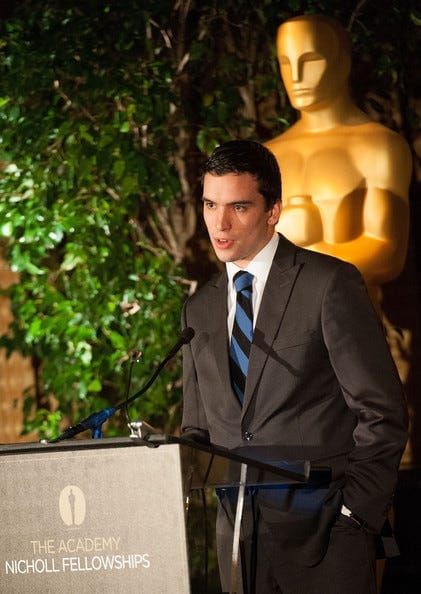
The Academy Nicholl Fellowships in Screenwriting competition is the most prestigious of its kind and holds a primary place of importance in Hollywood movie development circles. With the announcement on Friday of the 2014 Nicholl Fellowship winners, I thought it would be a good idea to reprint all of the interviews I have done with previous Nicholl winners since there’s a lot to be learned from these talented writers. Today: James DiLapo, interview originally posted May 2013.
James DiLapo’s original screenplay “Devils at Play” not only won the young screenwriter a 2012 Nicholl fellowship, it also landed on the 2012 Black List, garnering 28 votes, the 9th highest total of any script on the list this year. In January, Warner Bros. hired DiLapo to write the futuristic re-telling of Homer’s The Odyssey.
Here are links to the six installments of the entire interview:
Part 1: “Emotional authenticity, even with a period piece, is more important than historical authenticity. If you can get the audience to feel as if they are there with the characters in that setting, experiencing the world that they are in- that’s the closest we can come to being there. We can’t recreate a world, but we can recreate the emotions of it.”
Part 2: “I said at the award ceremony that if anyone from Disney wants to bring me in to discuss working on a Star Wars film I will give them one of my kidneys. My manager wants me to negotiate on that, maybe start with a spleen and work my way up, but I disagree. Let’s show them I’m committed, I say.”
Part 3: “I’m a very big advocate of three-act structure. It doesn’t have to be terribly overt in your story, but I think it usually needs to be there, and the more you practice it the more it intuitively and naturally enters into your writing process.”
Part 4: “I think act structure is extremely important. The midpoint is very crucial. It doesn’t have to be as overt as it is in the middle of this script, but there needs to be that transition on an emotional level for the character, from reactive to active.”
Part 5: “My advice to anyone who wants to do this is don’t worry about networking, don’t worry about writing what the industry wants. Write what you want to see and write it as best as you can. If you do that with authenticity, in my experience that helps open opportunities that you would never have seen otherwise.”
Part 6: “I find that the entry point for me typically, is the setting, and the world. Getting a chance to live in that place, and flesh out the characters and story within it, is where I get the most rush.”
James is repped by Verve and Kaplan/Perrone.
I am happy to report I have interviews lined up with two more of the 2013 Nicholl winners and three of the 2014 winners.
Tomorrow: Allan Durand, 2012 Nicholl winner.