Interview (Part 1): Matt Manfredi and Phil Hay (“The Invitation”)
I’m a big fan of producer Mynette Louie and what she and her cohorts are doing at Gamechanger Films, a film fund for women directors, so when I saw their newest movie The Invitation was coming out in April this year, I made it a point to watch it on VOD the week it went into distribution. I loved it! So I got in touch with Mynette who connected me with the movie’s screenwriters Matt Manfredi and Phil Hay, and we ended up having a great conversation about their careers, the craft of writing and their thriller movie The Invitation.
Today in Part 1, I talk with Matt and Phil about their backgrounds, and two of the movies they wrote: Crazy/Beautiful and Æon Flux:
Scott Myers: You two met in college and had a background in improv comedy.
Matt Manfredi: That is correct.
Phil Hay: We went to Brown University. We were in the improv group there. That’s how we started becoming a team. Matt and I immediately became a duo within that.
Scott: Were you the same year?
Matt: No. I am one year younger than Phil. I was going to say one year behind Phil, but whatever. Look, age is just a number, but it’s a number. My number is lower than Phil’s.
Scott: Did you get involved in sketch writing?
Matt: There was a great exercise while we were there called Once Upon a Weekend.
Phil: Yeah, that’s it.
Matt: A theater professor would post a topic on the door of the theater, and then you would have a night to write a short play. If yours was chosen, you’d then produce it that weekend with limited rehearsal.
Phil and I did a couple of those and had a good time doing that. In addition to performing together, we started writing together there, too, and seemingly enjoying it.
Phil: It was interesting because we didn’t really ever do sketch. It might have seemed like a logical connection, but we were straight improv.
Scott: How did you get into long form and specifically writing movies?
Phil: There’s no future in short form.
[laughter]
Phil: I don’t know. I know for me when I was growing up, I really loved movies and that was my thing. I grew up outside of Akron, Ohio. I didn’t necessarily see any path from where I was to actually making movies. I was reading “Premiere Magazine” and reading “American Film Magazine” and it was just a dream world for me.
When I got to college and Matt and I started working together, there also happened to be a bunch of our good friends who wanted to make things. A lot of them are still making movies. Either directing, or acting, or writing ‑‑ one of them is a composer — it was just how we had fun then, but a lot of us have turned it into our lives.
We did a lot of plays together. You could study film theory at our college, and I studied Semiotics, but there was no way to formally study film production. What there was was a culture of just grabbing friends and making art. We were always making stuff, and somewhere in there Matt and I started thinking about trying to write films. Once Matt graduated and we both were out in Los Angeles, that we’d take a shot at trying to write some scripts together.
Matt: Even once we got out here, we were writing short films. I was at AFI in the screenwriting program. You write a lot of what they call cycle films, which are basically short films. At some point, you need to think about, if this is going to be a career, we need to lengthen these out a little bit.
Scott: As I understand it, you used a spec script to break into the business.
Matt: Yes, a number of them, actually. The first thing we wrote was actually a mock documentary that was not studio fare, but it did get optioned. There was an entertainment lawyer who we knew, it gave him some confidence in us. When we had a proper spec script to go out to the studios, and to find an agent with, we had his confidence.
Phil: He’s still our lawyer to this day.
Matt : The first script we went out with went to maybe 40 buyers. 40 production companies. It didn’t sell, but we met with all those guys, and they passed it to number 41. That was the Henson company, and they had a rewrite job that we were up for, and we got it. That was our start, with the Henson company.
Scott: And what year was that?
Matt: ’97, I think.
Phil: It was ’97, yeah.
Scott: I’d like to touch on three of the movies you’ve written which have gotten produced. They’re an interesting mix of movie types. First was Crazy Beautiful. That was your first produced feature‑length credit, is that right?
Matt: Yes.
Scott: Matt, you’re from southern California, right?
Matt: I am.
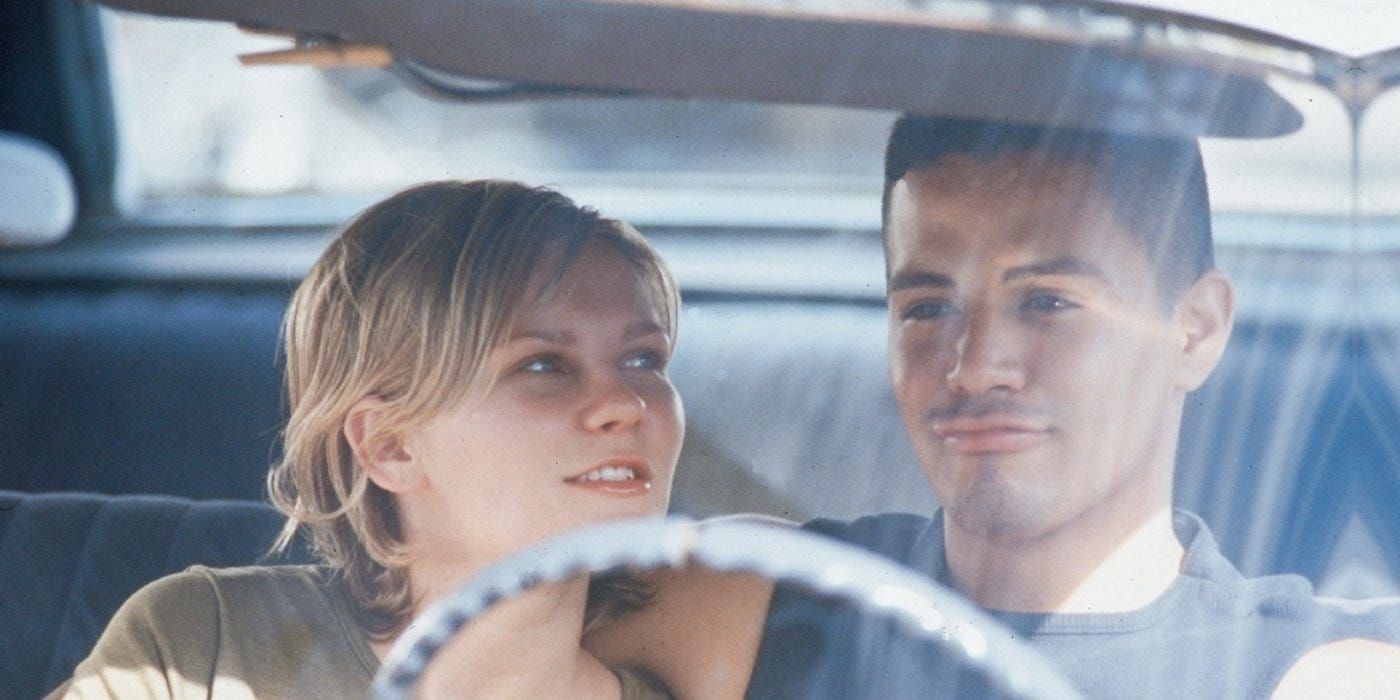
Scott: Because the premise of the movie is, “At Pacific Palisades High, a poor Latino falls hard for a troubled girl from the affluent neighborhood.” Was that something that arose from your experience?
Matt: It was a combination of things. We were working with the Uflands, the producers on that, Harry and Mary Jane, on another project which fell apart once the studio changed regimes. They had mentioned that Disney was looking for a wrong‑side‑of‑the‑tracks romance, a serious drama for teens.
It tapped into some stuff that, from my growing up here and remembering about when the busing started in Los Angeles and being from a neighborhood very much like the Palisades, there was a lot to mine.
Kirsten Dunst and Jay Hernandez in Crazy/Beautiful
Phil: There were a lot of things that made that story really personal for us and made it click. It’s also deciding what the “wrong side of the tracks” means and changing that, going deeper into those assumptions, in terms of that movie.
We wanted to talk about just the tracks, basically, [laughs] that everybody’s on. Like Matt, I had some very personal stuff in there, parts of me and parts of people I knew. The broad feelings and the broad emotions and some specifics came really directly from experience.
In another way, it was just our desire to tell a serious story about teenagers and a serious story about how it feels to be in love when you’re that age, when it is apocalyptically important.
Matt: And which, also, no one takes seriously. It was an attempt to take that time of life and that love at that time seriously.
Scott: Let’s jump to another movie. This is a bit later, 2005 ‑‑ Æon Flux. A complete departure from Crazy Beautiful. How’d you get involved in that project?
Phil: It’s interesting, we had been working on many different things. We’ve always worked in a lot of different genres and styles, which I don’t think is… it’s not necessarily typical. I think a lot of times people choose or are told to really try to focus on one thing or the other.
For better or for worse, we always were interested in so many different types of films. Aeon Flux came about because we were very big fans of the series on MTV. We were really big fans of its weirdness and its unconventional nature.
When we came in to talk about it, first with Gale Ann Hurd, we decided that our angle was that we were the underdogs and had nothing to lose by taking a big swing at the bizarreness and oddity at the heart of it. And Gale, and then the studio, really actually seemed to connect to that.
We were maybe the people with the weirdest idea, and in that case that’s what won out, because I think that they were really searching for what made that project stand out and what made that original material stand out. It went through many, many twists and turns, obviously, but I think we were willing to from the beginning to try to explore the nooks and crannies of the oddity of it.
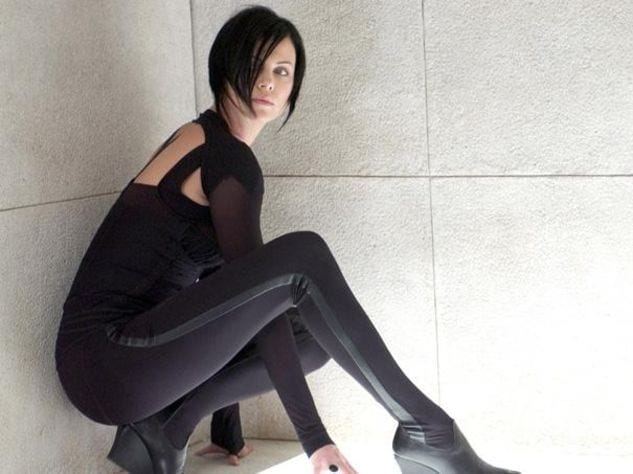
Charlize Theron in Æon Flux
Scott: Phil, is that where you met Karyn [Kusama]?
Phil: Yeah, that’s where we really got to know each other and became a couple eventually. But we had met years before at Sundance when Karyn had Girlfight there. Our good friend, Teddy Shapiro, who is a composer and who was the composer on “The Invitation,” among many other things, he introduced us. I was there for all her amazing stuff involving Girlfight.
I met her and we thought each other were cool, I guess. [laughs] Then it was years later that she got this script that Matt and I had written for Aeon Flux and was like, “Oh, I know that guy.” Many twists and turns later, [laughs] here we are.
Scott: So I guess you could say The Invitation was like fate that was going to happen at some point, something like that.
Phil: Yeah, maybe.
Matt: Yeah.
Note: Karyn Kusama was the director of Æon Flux. She and Phil later got married, and Karyn ended up directing The Invitiation, a subject we get into in Part 2 of our interview.
Matt and Phil are repped by UTA.
Twitter: @phillycarly, @MattRManfredi.
The Invitation website.