Interview (Part 2): Joshua Golden
Joshua Golden wrote the spec script “Road to Oz” which was not only a finalist in the 2014 Nicholl Fellowships in Screenwriting competition, it sold in September to New Line. From THR:
New Line Cinema has preemptively scooped up spec script Road to Oz, written by hot rising talent Josh Golden.
Recently I interviewed Josh and learned how he had taken an interesting proactive approach to marketing “Road to Oz,” something from which all writers can learn.
Today in Part 2, Josh reveals his inspiration to write “Road to Oz” and talks about two of the main characters in the script: Frank Baum and his wife:
Scott: Was “Road to Oz” something you started at DePaul?
Joshua: No. “Road to Oz” was something that I started actually pretty much right when I made the official move to LA about a year ago, that was the project that I had started working on. That was after DePaul.
Scott: The script was a 2014 Nicholl finalist and sold as a spec script to New Line Cinema in September. Here’s a plot summary: “Based on true events, ‘Road to Oz’ details the experiences of ‘Wizard of Oz’ author L. Frank Baum which led to him writing the beloved American fairy tale as he draws inspiration from the people he meets, specifically his sickly, fatherless niece, Dorothy.”
First off, what was your original inspiration for writing this story?
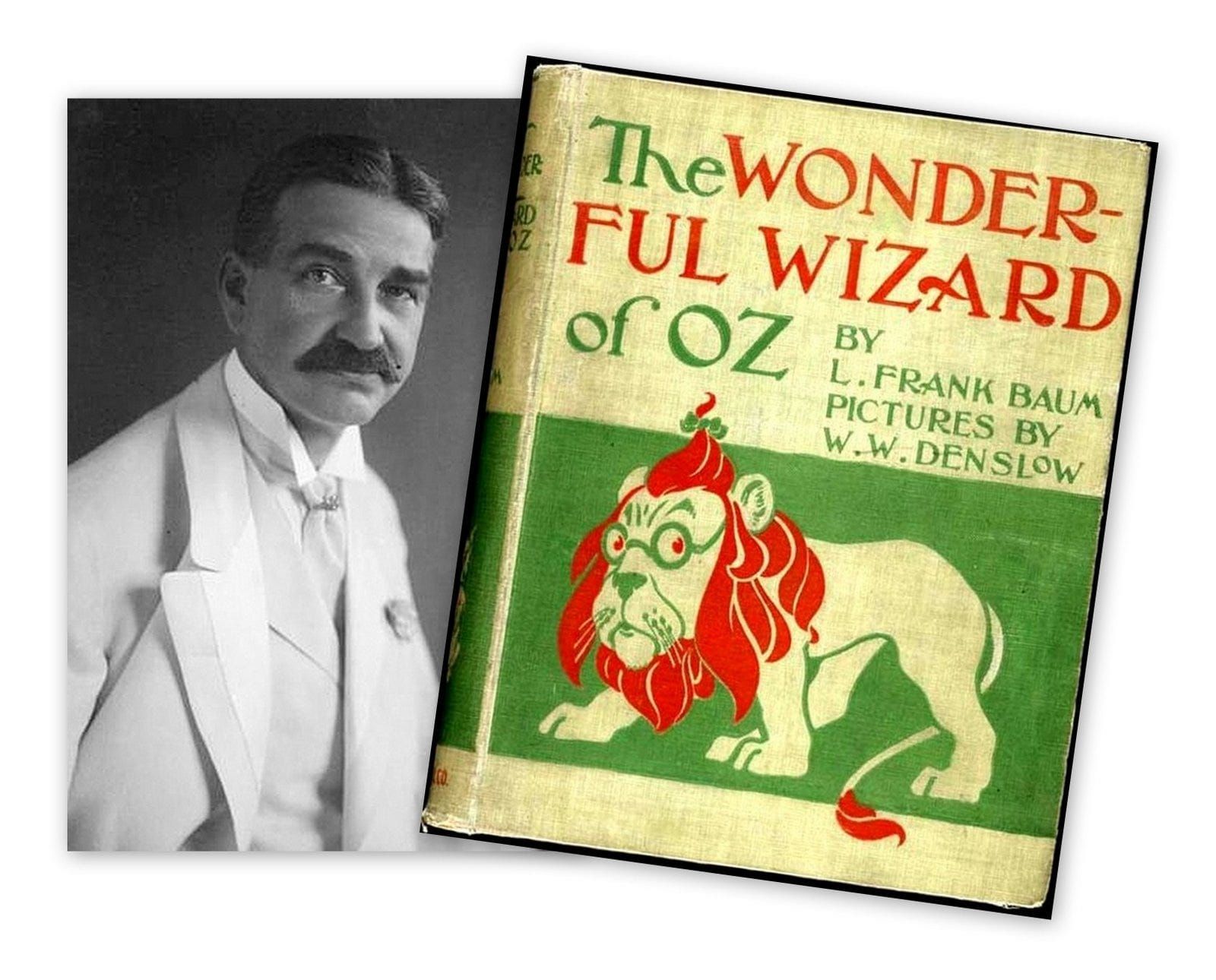
Joshua: My original inspiration for writing “Road to Oz,” I loved The Wizard of Oz books growing up. Obviously, the 1939 film I think holds a special place in all of our hearts and childhoods. But I wanted to tell a grounded, realistic story. I was at, I think, Barnes and Noble and I was looking through one of their new editions of “The Wizard of Oz” book, the first one. On the inside cover, there was a blurb about the author, L. Frank Baum.
It was just an image of him, and underneath it said something like, “L. Frank Baum would spend many hours telling stories to the neighborhood kids.” For some reason, that sparked something in me, maybe because I’ve spent so much time working with kids myself and I maybe could relate in some way. That sparked something in me, so I did some research. That’s what really started it all.
Scott: I’m curious as to if you put your producer’s hat on during this process and maybe at what time you might have done that. Because, as you mentioned, you’ve got the 1939 movie, which is one of the most beloved films of all time, and so with the current climate of Hollywood, talk about brand recognition, The Wizard of Oz is one of the most pre‑branded things I can think of.
There’s “Wicked,” the Oz story which is told from the perspective of the Wicked Witch of the West, which is one of Broadway’s biggest hits. There’s the Disney movie, Oz the Great and Powerful, a prequel which did $500 million. There’s Saving Mr. Banks and Finding Neverland, two other movies about authors of famous children’s books.
There’s even the 2013 Nicholl winning script “Queen of Hearts” by Stephanie Shannon, which explored the author Lewis Carroll and how he came to write “Alice in Wonderland” and “Through the Looking Glass.” I’m curious, did any of that impact your thinking, how they might increase the commercial viability of your story, or was it strictly, “I just love L. Frank Baum and these stories,” and that was your primary passion?
Joshua: I’d say that was my primary passion. I’d be lying if I said that the commercial aspect of it didn’t appeal to me at all. I’m a fan of pretty much all of those other projects you mentioned. I think Disney did a great job with Oz the Great and Powerful. The world of Oz is just so rich, an exciting playground for any writer.
I really was excited to play in that world, to get to incorporate characters that everyone knows and loves. In Finding Neverland, they did a great job with telling the story of J.M. Barrie, and that’s what I wanted to do with this one.
A big part of it was wanting to tell this story about this man that a lot of people really don’t know anything about. You’d be surprised how many people don’t even know the Oz books came before the movie.
Scott: How much did you find yourself in the writing of the script inventing characters and situations and scenarios versus how close to Baum’s life story?
Joshua: My goal was to honor the man. To honor L. Frank Baum and the type of person he was. That was first and foremost. I did a good amount of research, and there is a lot in the story that is true and factual and historically accurate. But I did take some liberties for the sake of the story and for the sake of compelling narrative. I wanted to tell the best story possible to honor this person.
Scott: I’d like to consider some of the key characters in the script. Obviously, Frank Baum is the most important, the story’s protagonist. You introduce him early on. He’s a writer, albeit a playwright of sorts, but for a long time he lets the writing drop away. What are some of the most important aspects of his persona as he enters into the story in developing that character?
Joshua: It’s interesting, because The Wizard of Oz is really the first American fairy tale. Frank’s story is kind of a fairy tale in and of itself. There’s something very American about this story, I think. He is a man whose first priority is to take care of his family, his wife, his kids. Everything else, his imagination, his ability to tell a story, I think takes a back seat for a while because of that.
When we first meet Frank, he is someone who sees the world in a very interesting way. Some might say maybe the same way a child sees the world. He learns to use that in different ways. Like when he opens a bazaar in town, it’s something that people haven’t seen before. In a nutshell, it’s a man who’s balancing his responsibility to his family with his passion, which is storytelling.
Scott: That’s interesting because he does have that tension. It’s like he’s acutely aware of wanting to and needing to provide for his family. Yet, when the family moves to South Dakota to live with his sister‑in‑law, Emily, instead of trying to write for a living or even secure a steady job, he invests much of the family funds in buying a curio shop. Was that actual historical fact?
Joshua: That was. Yeah. He owned and operated a bazaar in town with items and trinkets that were imported and that many people had never seen before. That element of it is historically accurate. Honestly, there were all sorts of other odd jobs in town that he had worked that, for the sake of story and for the sake of time, I couldn’t include. But there were many, many more.
Scott: That curio shop essentially reinforces his instinct for flights of fancy, right?
Joshua: Yes. Right. But he also sees promise in it. He sees profit.
Scott: Then his wife, Maud. You’d think because they were married, she would serve as more of a romance figure, what I’d call an Attractor. But really, it seems like her primary narrative function is more of Mentor because she’s the one consistent voice to keep pushing Frank to write. She really believes in him, even when he doubts himself. Did you think of her as kind of a Mentor figure?
Joshua: Very much so. Maud Gage was a very strong-willed woman. Kind of Frank’s guiding light, in a way. Maude came from a family of progressive feminists. Her mother was a very well-known suffragette who marched alongside Susan B. Anthony. I wanted that to be reflected in Maud’s character.
Tomorrow in Part 3, Josh discusses some of the other key characters in his script.
For Part 1 of the interview, go here.
Please stop by comments to ask any questions you may have for Josh.
Josh is repped by ICM and Heretic Literary Management.
Twitter: @joshmgolden.