Interview (Part 3): Amy Tofte (2015 Nicholl Winner)
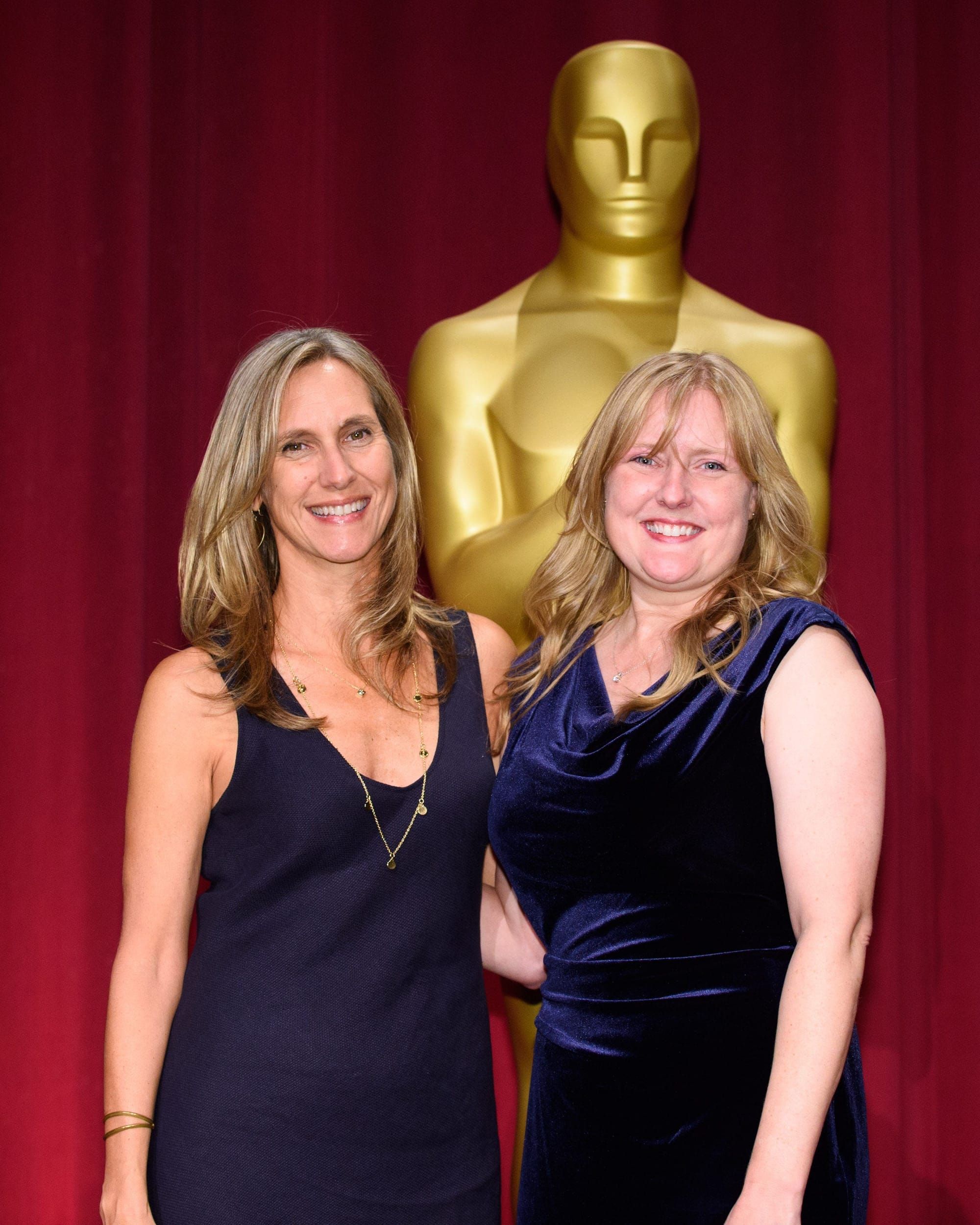
Amy Tofte wrote the original screenplay “Addis Abeka” which won a 2015 Nicholl Fellowship in Screenwriting. Recently I had the opportunity to chat with Amy about her background as a writer and her award-winning screenplay.
Today in Part 3, Amy and I delve more deeply into her Nicholl Award-winning script:
Scott: He has a little bit of a Forrest Gump in this story, intersecting with people who take him in and do things, which you could look at, as we mentioned, this idea of fate. I think you were cognizant enough, having learned screenwriting, that this was going to be running against the grain of this thing, the active protagonist. Yet it works because at the end, you’re right, it’s a quite dramatic moment at the very end. He’s got a conscious goal all along, which is he wants to save his brother, get his brother out of prison.
Can you maybe talk a bit about that? Were you cognizant of the so‑called screenwriting rules, and saying, “You know what, screw it. I’m just going to tell this story?
Amy: I have a writing group, and we fight all the time. [laughs] I think the smartest thing you can do as a writer is to get smart people in your circle willing to read your work and be brutally honest with you. And some willing to be in your corner.
Because even if you know you’re right, and there are times when I’m like, “I know I’m right. I know I’m right,” it’s really important to get that affirmation, or, if someone doesn’t agree, to hear why, and hear that point of view, and say, “OK, I get your point of view, but that’s not what I’m doing.” I had to tell a few people that with this one. Trusting your gut. No one can teach you that. It’s so hard.
It’s also hard because I think reading a lot of the foundational stuff about screenwriting is really important when you start because it helps you wrap your mind around it, it helps it feel obtainable. It gives you some tools to talk about craft. And helps you break down what can be so overwhelming.
Then, once you’ve done that, the most important thing to do is write, and write, and write, and write, and write, and read scripts. Throw out all the books. I love reading about process. But the struggle of writing is where you make progress.
Some of my favorite movies, like Aliens, I’ve watched Aliens while reading the script with it. It’s fascinating what you learn about what’s on the page. Or see how other people have broken rules, and how it’s worked. I think in some ways that’s the hardest part.
Dana Stevens and Amy Tofte at the Nicholl Awards Ceremony
Scott: I completely agree. Rules…they restrict. I look at this script, because it’s terrific, and I’m saying, “Yeah, there’s many choices you make I’m sure some sort of person trained in that kind of formulaic thinking, would critique it for this and that, but to me it works. A, you’ve got a wonderfully compelling protagonist character. He’s imminently lovable and you root for him. B, you’ve got an equally compelling situation, his life circumstance and the arc of his journey. C, you’ve got a great subculture here. I don’t know Ethiopia, and so I’m always interested to learn about places that I don’t know about. I felt like you hit the verisimilitude button on that a hundred percent. It really felt authentic and real.
The main thing is you landed on this very strong emotional core, that there is a strong emotional center there that really is sustained all the way through. Your perspective is very much tied to this kid. It’s the entire way through.
Let me ask you a question, how important is that to you when you’re writing, to find that emotional center and stay with that?
Amy: For me, and I don’t know if this comes from being an actor first, I haven’t acted in a very long time, but I was pretty deep in it when I did it. I loved the homework.
I wasn’t a method actor. [laughs] I wouldn’t starve myself for five days or anything like that to play shipwrecked, but to me the most fun in acting was getting into the skin of somebody else, experiencing life as a different person with a different set of circumstances.
I think some of that is what fuels me as writer. It’s why I enjoy writing more than acting. I would be limited as an actor, but as a writer I can go into the skin of anyone, or at least I can try. I can only rely on other people to tell me if it’s truthful or not.
That’s the other thing I think about this script, is that of course my circumstances were not as extreme as Abeka’s, and I had a wonderful family growing up. I didn’t have any abandonment, any of that. I can’t claim any of that, but I know other people who have.
I still read a lot. I think reading about psychology is important. I’m curious about people. That’s the real art of writing, how you synthesize all those things you experience in life into something compelling and dramatic to others.
I’ll write and I will start crying because I will get so invested in what’s going on with the characters. I don’t know if that’s healthy. [laughs] I don’t know what other writers do. I definitely know the difference between reality and not reality, but I think that’s also part of why we do what we do. We get to go there for a time.
Does that answer your question?
Scott: Yeah, absolutely.
Tomorrow in Part 4, Amy and I discuss three themes running throughout her script “Addis Abeka”.
To read Part 1 of the interview, go here.
Part 2, here.
Twitter: @AmyTofte.