Interview (Part 5): Eric Heisserer (2012, 2014 Black List)
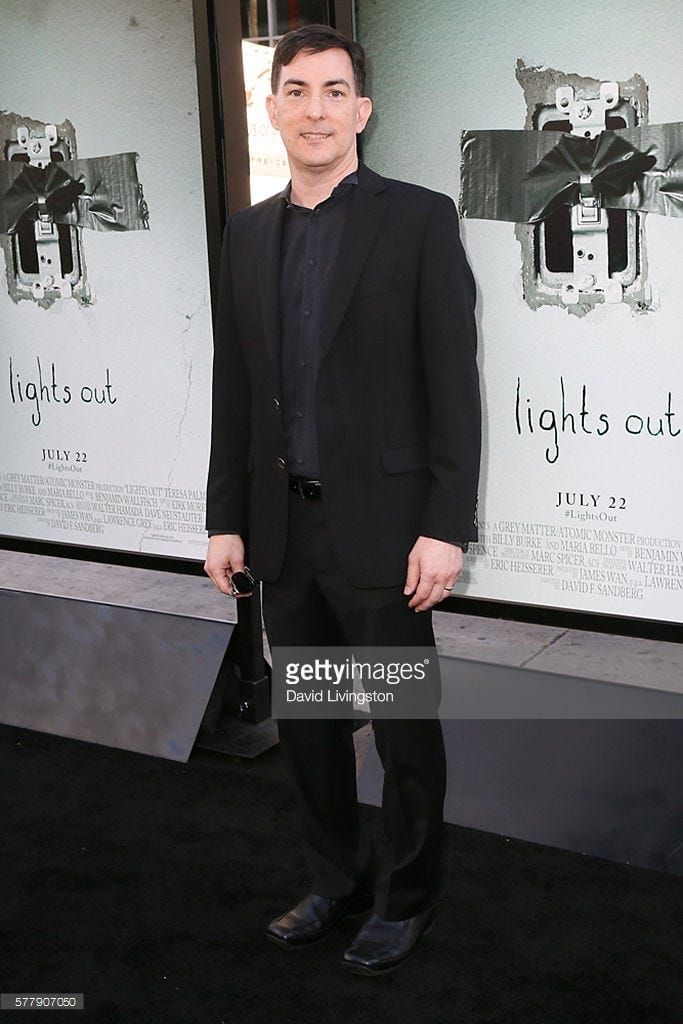
This weekend, the horror movie Lights Out rolls out in movie theaters across North America. Starring Teresa Palmer and Maria Bello, directed by David F. Sandberg, the screenplay was written by Eric Heisserer. I thought it was a good opportunity to reprise a 2013 interview I did with Eric and reach out to him with some questions about Lights Out.
Today in Part 5, Eric reveals some of his keys to the craft of screenwriting:
Scott: Some craft questions. How do you come up with story ideas?
Eric: [laughs] If I could figure that out then I would be able repeat that process ad nauseam until I had a giant library of ideas. I don’t know how they come or where they come from. Sometimes I’m seized by one in the middle of the night. Sometimes it’s a slow accumulation of different little pieces that Voltron up to give me a story. Sometimes it’s during a conversation or an argument. It happens at random times. They can show up in my brain fully formed, or I have to work long and hard at it. The end product is no better or worse, but there doesn’t seem to be one way to map the genesis of an idea. I guess that’s probably good, because if there were then a lot more people would do this, and I don’t need the competition.
Scott: How important do you think the story concept is to the overall strength and commercial viability of a screenplay, specifically a spec script?
Eric: I think it’s more important than we’d like. I think a really strong script that has a crackling voice and a unique character can go a long way. But it if it has a solid story concept that suggests a poster or a trailer, a story concept you can pitch to a friend in an elevator…that will make you a lot of money in this town. It used to be that there were two types of stories, two types of movie pitches. Pick the pitch that starts with “What if?” What if we’re all just plugged into some computer system, for example. And there’s another story that starts with “There’s this guy.” The indie movie world has a lot of movies that start, “There’s this guy,” and a lot of big studio tentpoles that start out with “What if.”
But I’ve discovered that my favorite stories are the ones that start out, “What if there’s this guy,” and somehow it merges those two together. You get a lot of interesting comic book character movies like “Spider-man.” That makes a giant concept movie still character‑centric. That’s what I try to write these days.
Scott: How much time do you spend in prep writing? What do you focus on the most? Brainstorming? Character development? Plotting? Research? Outlining?
Eric: It varies from project to project. I outline with note cards. I have a cork wall that I use and abuse regularly. I tend to split it into two groups, sometimes three. One will start the spine of the story and will map out the main narrative engine. The other part will be the flotsam and jetsam I feel are germane to the story. Sometimes it’s photos from magazines that I’ve cut out. Sometimes it’s lines of dialogue that I come up with while I’m at the grocery store. Sometimes it’s headshots of actors when I start to cast the story.
At some point I reach a critical mass where I have enough of the structure down and I have typically an intimidating amount of flotsam and jetsam on the other half of the board. I pull all that down and collect it into one document and begin the process of writing my first draft from there.
Eric Heisserer at the premiere of Lights Out
Scott: How do you go about developing your characters? Do you have specific things you go to time and time again when you’re developing, or do you feel your way through that process?
Eric: I have a few standard tools. One is the table read. Once I have a draft that I feel is ready for eyes beyond my own, I gather a group of trusted friends together and assign them roles. I just listen to them read the script and see what they infer and what they don’t get from the characters. I find dialogue that works or doesn’t. We have discussion afterwards. That helps a lot, because you’re putting these words into someone’s mouth. You’re hearing how it sounds out loud. That helps immensely.
Then I’ll think about the behavior that the characters have. If I just go out to a coffee shop for a day I tend to come home with a handful of observed behaviors that I’ll decide I want to use for characters later. Sometimes it’s just grabbing a behavior based on a friend or family member, like I have a friend who believes that he sees celebrities just about every time he and I go out somewhere. He always says, “Hey was that…? That looked like Tom Selleck, didn’t it?” or “I think that’s Anne Hathaway.”
They never are. [laughs] He’s always wrong, but he has this way of thinking that he’s always close to a celebrity. There’s something about that behavior that I think, “That’s going to end up in a character at some point.”
Those get me a good deal of the way. If at that point I need to develop the character further, typically that’s the harder work of trying to figure out what part of the story I’m not writing about. If I have to…and I hate it, but I’ve had to do this before…I will write act zero — what happens to a character before the story in my script begins — so I have a deeper understanding of where this character came from.
Scott: How do you deal with dialogue?
Eric: My wife polishes my dialogue. [laughs] Honestly, dialogue isn’t really a skill set that you can learn. You have to have at least some sense of how people speak in real life. If you don’t have that, it’s going to be really hard to build a career as a writer. I have just enough of that to get me through the hard part of character development. The table read does the rest of the work.
Scott: What are your thoughts about the concept of theme?
Eric: [laughs] Theme. That’s something that I have such a hard time engineering. If I were given nothing but the tool of “Here’s the theme. Write something with this theme,” that’s an impossible task for me. I can’t start a story with that. I can figure out later on, after I’ve written a story, what the theme is. I can’t start with that in the forefront of my brain. It doesn’t work for me as a storyteller. I think other people can. I’m not saying that it’s impossible for anybody else. I’m just saying it’s not how I’m wired.
Scott: What do you think about when you’re writing a scene? What are your goals?
Eric: Oh God. Get through this scene alive, Eric. [laughs] When I’m writing a scene, and if I’m blocked, it’s typically because there’s nothing in the scene I’m excited about. I’m dreading it somehow. My goal is always to find something compelling that I’m excited about writing in the scene, so that I don’t have any scenes that are just interstitial pieces or redheaded stepchildren. I know I’m in trouble if all I’m looking forward to is the scene that comes two or three scenes later and I’m just trying to mark time or connect the dots so I can get to that moment I really want to write.
When I see that I’m doing that I kind of check myself and say, “Alright, make this the scene you’re excited about. What are you exposing? What are you doing here? How does this advance the character and the story? And if it doesn’t do those things, why in the hell are you writing it?” Sometimes that helps.
Here is my another question to Eric about Lights Out and his response:
Scott: What are some of your keys to writing a horror script? Do you ever scare yourself with scenes you write in a horror-thriller project?
Eric: The biggest takeaway I’ve learned is: The scares alone don’t make a horror movie great. When you aren’t making audiences lose their popcorn, you can also build dread. And dread is a non-scare, slow-burn effect that culminates in a very unsettled viewer if done right. The best way to build dread is, simply, to show that things don’t work well in this world. A fluorescent light flickers and buzzes. There are “out of order” signs on things. Doors jam. Engine lights wink on. None of it even has to feed into a scare or complicate an escape for your character. It just reminds the audience: Nothing is perfect. Stuff can and will fail. It’s unnerving.
Here is an interview Eric did about the movie Lights Out:
Tomorrow in Part 6, Eric offers advice to aspiring screenwriters.
For Part 1 of the interview, go here.
Part 2, here.
Part 3, here.
Part 4, here.
Eric is repped by UTA and Art/Work Entertainment.
Twitter: @HIGHzurrer.