Interview (Written): Charlie Kaufman
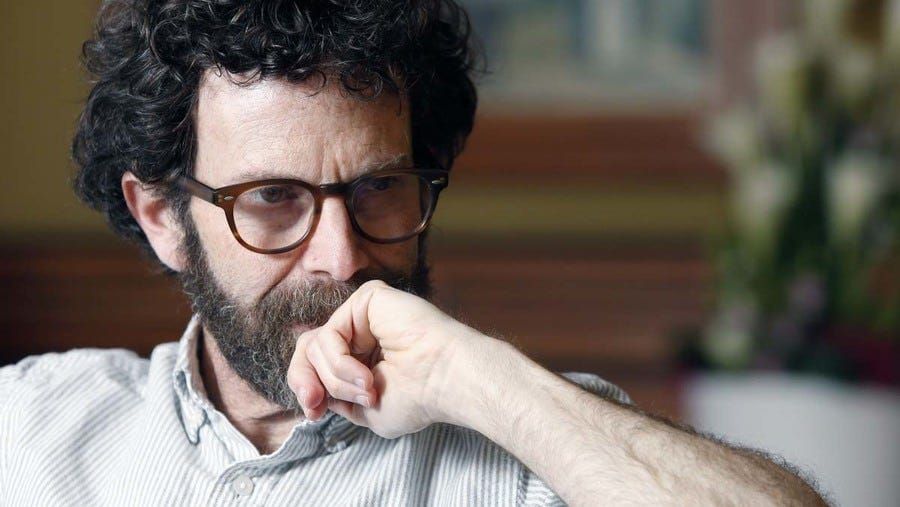
A Criterion interview with screenwriter Charlie Kaufman (Being John Malkovich, Adaptation, and Eternal Sunshine of the Spotless Mind):
What are the main differences between writing a screenplay for someone else to direct and directing your own screenplay yourself?
With the exception of Eternal Sunshine of the Spotless Mind (2004), I haven’t written specifically for any director. Spike was not initially engaged to be part of Adaptation (2002); that was for Jonathan Demme, and then he decided not to do it. Being John Malkovich (1999) was written before I knew Spike.
I think the difference is that, once I began directing, I started thinking, how am I going to do this? Practically, how am I going to make this happen on film, which is something I had never thought about. When I worked with Spike, if I had been doing a rewrite and I had an idea, he would say, “Well, don’t worry about what it costs. We’ll figure it out.” So I was kind of given carte blanche. But when I’m on my own, there is this feeling of, well, am I going to know how to shoot this scene? Am I going to be able to afford to shoot this scene? That’s the difference.
I’m interested in how you build and structure your screenplays. Do you follow a similar pattern every time?
It depends on the piece. When I’m on my own and I’m doing something for myself, I don’t do an outline. I build it, little by little, as I’m working on it. I think about it for like six months, and I’ll think, “Oh, that’s interesting here!” It’s going in a cool direction, but I don’t know in advance how it’s going to end. I like to have the freedom to see where it goes. I don’t like to cement myself into something.
Sometimes it can take me a few years; it’s not an efficient way to work. I do like the idea that sometimes I come to a new thing, six months into writing it, and that changes everything. Adaptation is an example of that. It was a struggle for me in the first six months, until I came up with the idea of putting myself in, and then suddenly I knew how to write it. If I had forced myself to write any more, it wouldn’t have been the same, and I don’t think it would have been as good.
For the rest of the interview, go here.