Interview (Written): Lisa Joy and Jonathan Nolan (“Westworld”)
A /film interview with Lisa Joy and Jonathan Nolan, co-creators and executive producers of the new HBO series “Westworld”.
You both save some exposition that’s expected of a pilot for the second episode. How did you want to establish the world with the first? What were some lessons learned in making this pilot?
Nolan: Yeah, I tend to prefer film or TV where I’m allowed as an audience member to do some of the math myself. At the same time, I also like stuff that’s layered and dense. We knew we wanted to tell a complicated story, but we also knew from the beginning, when J.J. first approached us for the project, his suggestion had been to consider the perspectives of the hosts. We took that suggestion and ran a country mile with it, up to and including and turning inside out the entire narrative where we could.
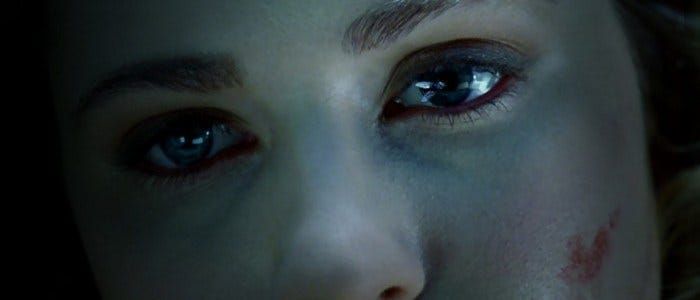
The really interesting thing that we ran into, and we should have anticipated it and wrote in that direction… As we were cutting the episodes and working, especially with the visual effects, the very subtle visual effects with the actors’ performances … Most of the brilliant acting is done by the actors themselves, but we also did tiny little adjustments to their performance that the speed at which their eyes would blink or their cheeks bulge.
What we found validated the approach that we took was that the second you went too far with that, the second you push their performance too far into the uncanny valley by fiddling around with those effects… This maybe says as much about the audience as anything else, but people who were watching the episodes would immediately stop empathizing with it, right? Not all of the people watching, but it sort of speaks to how much empathy I think the audience member has.
You would approach this really interesting moment where you could adjust a blink or a smile or a glitch to a certain point, and past that point, the audience stops thinking of Dolores or Maeve. What was interesting is that the second you stop thinking of the hosts as alive and start thinking of them as robots, you did not empathize with them anymore.
For us, starting with the hosts and starting with their story was critically important, even if it might leave some audience members hungering for a little more conventional explanation of how the world works. They’ll get a little more of that in episode two, but it was important for us that the audience buy-in with the hosts right out of the gate. It’s really just trying to make sure that you’re sympathizing with the hosts rather than the guests who are coming in. Hopefully, in episode two, you approach the guests with a little more suspicion because you’re already rooting for the hosts to rise up or escape.
And what the guests do the hosts is often unsettling to watch. It’s interesting, though, that someone could have a completely different reaction to those images, thinking that’s what the hosts are there for.
Joy: We found the same thing. It reinforced for us that entertainment is very subjective. We have what our interpretation of what you should feel and what we’re trying to say here, but once you put it out into the world, it becomes communal property, and each individual internalizes it differently. I have to tell you, I was quite shocked myself when there would be scenes that we would write where I would think of it as this tragic scene and my empathies would be so rooted with the hosts.
I would talk to people, people I like, who would come at it much more from the gaming perspective of saying, “Well, what does it matter? They’ll be wiped, and they’ll be put back in the park the next day, and it doesn’t really matter. They’re just playing the game. They’re just fulfilling their role.” It was definitely a conscious calibration to try to combat that kind of wall that people have between themselves and the other, especially if that other is thought of as a robot or a gaming NPC, and to really enliven their plight and root ourselves as the audience with them and their condition.
For the rest of the interview, go here.