Interview (Written): Matt Reeves
Writer-director of War for the Planet of the Apes.
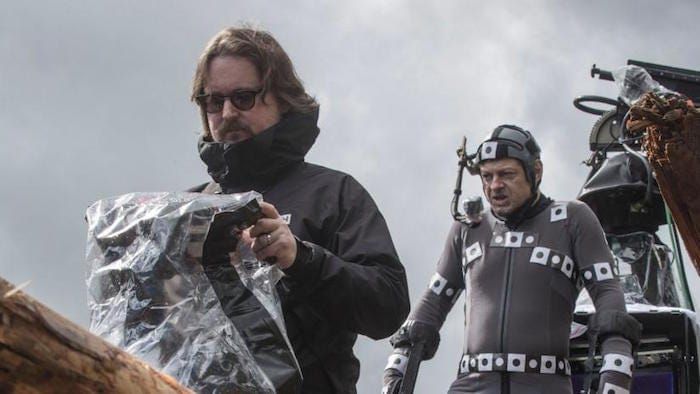
Writer-director of War for the Planet of the Apes.
An Alex Billington (FirstShowing.net) interview with Matt Reeves whose directing credits include Cloverfield and Dawn of the Planet of the Apes, and writing-directing credits Let Me In and the final installment in the “Planet of the Apes” trilogy, War for the Planet of the Apes.
Did you encounter a lot of pushback from the studio trying to make this movie the way you wanted to make it? It seems so challenging to typical Hollywood expectations, yet you still could do exactly what you wanted. How did that work?
Matt Reeves: I have to say I was incredibly fortunate… Both of these movies are the movies I wanted to make, flaws and all. My fear in doing a blockbuster, which I had never done before… Cloverfield was really an independent movie that we made through Paramount. And it was a lower budget movie. We made it in this crazy, very fast way. And I had resisted getting involved in blockbusters because I worried that there would be some kind of Faustian bargain. Right? That they would be saying, well you can do a bit of what you want to do, but then you really have to do what we want to do. And my problem with that is that I’m a very emotional filmmaker. I do everything based on my emotional compass, like I know where the camera goes based on how it feels to me. And I know how to talk to the actors based on how it feels to me. And so if I can’t relate to the story or what it’s about, I can’t really do it.
When they first came to me on Dawn [of the Planet of the Apes] they had an outline for something, because they had reached an impasse with Rupert [Wyatt] who didn’t want to do the movie. And they had spent a year doing that. So then they put together this other outline, which was not Rupert’s outline. And they said, this is what we propose we’re going to do. And I was excited to meet with them because I loved what Rupert had done. But I read the outline and I said, “Oh, this is not for me.” And I was thinking this is going to be another time that I’m going to say no. Because I had said no every time I’d ever been approached about a franchise. And they were like “Wait, why are you saying no? You said you love this world.” And I said, “Well yeah, but that’s not the story I want to tell.” And they said, “Well, but what story would you tell?” And I said, “Well I don’t want to do that, because I’m going to tell you the story I want and you’re going to try to give me some percentage [of that]. And I don’t want to do it that way.” And they said, “Look just tell us the story.”
So I took a week and I met with [producer] Dylan Clark, who — actually we had met because of another project, another franchise that he offered me, but I noticed a poster on his wall. And it was Planet of the Apes. And I said, “oh God, I was obsessed with Planet of the Apes.” At the time they were making the movie with Rupert. And I said, how is that going? And he said, “Oh it’s really great.” And we had this connection about Planet of the Apes, because his grandfather was involved in the television series. He was head of physical production at Fox TV when they did it. And so he’d been obsessed since he was a kid. And so when Rupert fell out, he said “you know, I had this meeting with Matt. We should meet him.” And I had meetings with Fox about other movies. And none of them I felt I had the way in emotionally. So I spent a week figuring out what I would do and then Dylan’s like “let’s go in,” and Peter Chernin called and we went in.
I thought it was going to be one of these things where at the end they make some kind of bad bargain that I was going to have to decline. And amazingly, [producer] Emma Watts said to me, she goes: “That sounds great. Are you in?” And I was like, “what do you mean?” She goes, “Do you want to do it?” And I said, “well let me just be clear on this, you’re going to let me make that movie?” And she said, “yeah, I’m going to let you make that movie.” And I was stunned, because they didn’t give me what I had every other time when I was doing a blockbuster meeting, which was the opportunity to say no. ’Cause how do I say no when you’re telling me you’ll do the story I want do. And I said, “okay, so what’s the catch? There has to be some other catch.” And they said, well, the catch is that we’ve spent a year and that movie we were talking about with Rupert we’re not making, we’re willing to make this movie but you have to make it on the same release schedule. And I was like, wow, I’ve never done performance capture, I don’t know if I can do that. But I’ll try. And so I jumped into it because I thought — well, when is it, if I’m ever going to try to make a blockbuster film, when is it going to align so much with my sensibilities? I not only loved [Apes] as a kid, but there was something very personal to me.
When I saw Rise and Andy [Serkis], there’s that moment where he says “No!”, that moment really resonated with me about being a father. My son, when I saw the movie, was one and just learning how to speak. And Andy played the character in a way that so connected to me as a father looking at my son. You can see the intelligence behind his eyes and then that emotional kind of impulse that came when the words finally, it’s like he’d been waiting to say “no” for a year. That’s the way it was with my son. So I was like wow, not only do I love this world, but this is going to be a way to explore the way in which we are animals. And to explore our nature. And I thought wow, that’s a very special subject for a summer film. To be able to hold a mirror up to ourselves by looking into these faces of these photo-real apes. So I said yes. And we made it — it was very challenging for me. Because the time crunch was such that — there was a point at which I was working seven days a week for many, many months on end. It was very intense. And at the end of this, the amazing thing was, any time we would talk about things and they might propose something that was quite significantly different from what the story was, I said, hey, you guys told me we could make this story. That’s why I’m here. And in each case they backed off and let us tell the story.
Here is a trailer for War for the Planet of the Apes:
For the rest of the interview, go here.